
Published by Panhandle Real Estate Investments, a locally owned real estate solutions company serving Escambia County, Santa Rosa County, Okaloosa County, and Bay County. We buy houses and land across the Florida Panhandle.
Last Updated: November 2, 2026
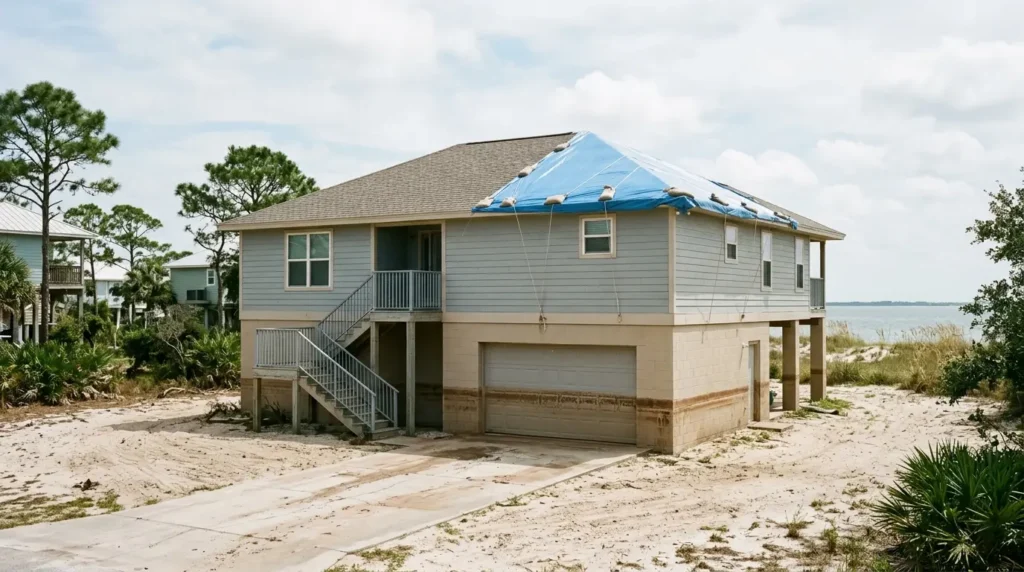
When Hurricane Isaias came ashore near Destin on October 9, the National Hurricane Center reported 105 mph winds, life-threatening storm surge along the Gulf Coast, and flash flooding spreading inland. A gauge in Panama City Beach showed water about 5.6 feet above the normal high tide line. For homeowners in Pensacola, Gulf Breeze, Navarre, and Fort Walton Beach, that meant one storm and two very different kinds of damage.
That difference matters more than most people expect, because wind and water are usually covered by two different policies, with two deductibles, two adjusters, and two sets of deadlines. Plenty of owners only learn how the split works after the first claim check arrives.
This guide covers what your homeowners policy and a flood policy each pay for, what happens when wind and water hit the same house, why the split matters when you sell, and the deadlines Isaias owners need to watch.
Key Takeaways
- Homeowners insurance covers wind, not flood. Florida’s own flood disclosure form says so in plain words.
- Storm surge is flood. Water that rises from the Gulf, the sound, or a bayou is a flood policy claim.
- Two policies mean two deductibles. Your hurricane deductible applies to wind, and the flood policy has its own.
- Flood claims have a short deadline. A federal flood policy requires a signed proof of loss within 60 days after the loss.
- Citizens is changing the rules. By January 1, 2027, Citizens wind policyholders will need flood coverage in place.
Table of Contents
- One storm, two kinds of damage
- What each policy covers
- When wind and water hit the same house
- Why the split matters when you sell
- Your options if the claims fall short
- How selling to Panhandle Real Estate Investments works
- Pensacola Bay, Navarre, and Destin specifics
- Frequently asked questions
One Storm, Two Kinds of Damage
Insurance sorts hurricane damage by what caused it. Wind that peels off shingles, snaps a tree onto the roof, or blows out a window is a wind loss. Water that rises from outside, whether it is storm surge from Santa Rosa Sound, an overflowing bayou, or runoff that pools around the foundation, is a flood loss.
The standard homeowners policy only handles the first one. Florida’s seller flood disclosure form, written into state law, opens with the plain warning that homeowners insurance policies do not include coverage for damage resulting from floods. Flood coverage comes from a separate policy, either through the National Flood Insurance Program or a private flood insurer.

The same form defines flooding broadly. It includes the overflow of inland or tidal waters, the unusual and rapid buildup of runoff from a river, stream, or drainage ditch, and sustained standing water from rainfall. In other words, storm surge is flood, and so is a yard that turns into a pond for days.
What Each Policy Covers
Here is how the two policies usually divide a hurricane loss. Your own declarations pages control, so treat this as the general pattern.
Homeowners policy vs flood policy after a hurricane
| Question | Homeowners policy (wind) | Federal flood policy (NFIP) |
|---|---|---|
| Roof or windows damaged by wind | Yes, after the hurricane deductible | No, wind is excluded |
| Storm surge or rising water inside | No, flood is excluded | Yes, after the flood deductible |
| Deductible | Hurricane deductible, usually a percentage, per calendar year | Separate deductibles for the building and for contents |
| Coverage limit | Your dwelling limit | Up to 250,000 dollars for the building and 100,000 dollars for contents |
| Temporary living costs | Depends on your policy | Not covered |
| Key claim deadline | Report within 1 year of the date of loss | Signed proof of loss within 60 days after the loss |
The sources behind that table: Florida’s hurricane deductible law applies the deductible once per calendar year to all covered hurricane losses, and our guide to how the Florida hurricane deductible works runs the numbers. Federal law sets the flood insurance limits at 250,000 dollars for a one to four family home and 100,000 dollars for contents.
The standard federal flood policy spells out the rest. It excludes wind, it excludes additional living expenses while the home is repaired, it applies separate deductibles to the building and its contents, and it requires your proof of loss within 60 days after the loss.
When Wind and Water Hit the Same House
In a storm like Isaias, many homes near the water took both. Wind tore at the roof, then surge or flash flooding came through the first floor. Each policy pays only for its own share of the damage, so the claim becomes a question of what caused what.
Expect two claims, two adjusters, and two deductibles. The homeowners adjuster will look for wind damage and may point to the water line as flood. The flood adjuster will measure the water damage and exclude anything wind did. Damage that sits in the middle, like soaked drywall under a leaking roof in a house that also flooded, is where most disagreements happen.
How to protect both claims
- Report to both insurers. File the wind claim with your homeowners insurer and the flood claim with your flood insurer, even if you are unsure which one applies.
- Photograph the water line. Measure and photograph the high-water mark on interior and exterior walls before anything is cleaned.
- Document the roof and openings separately. Photos of missing shingles, broken windows, and ceiling stains help show what came in from above.
- Write down the timeline. When the wind peaked, when the water came in, and how high it rose.
- Watch the flood deadline. Send the signed flood proof of loss within 60 days after the loss, and ask your flood insurer in writing whether any extension applies.
If you have no flood policy, the flood share of the damage is uninsured. Federal help may cover some of it, but only if FEMA approves assistance for households in your county. Our guide to what FEMA help covers after Hurricane Isaias explains where that stands and how to apply.
Why the Split Matters When You Sell
The wind or flood question follows the house. Florida sellers must give the flood disclosure at or before signing the contract, and it asks whether you know of flooding that damaged the property, whether you filed a flood insurance claim, and whether you received flood assistance, including from FEMA. A wind claim does not go on that form. A flood claim does.
Flood damage can also trigger the federal 50 percent rule. If a home in a flood zone has repair costs that reach half of its market value, the county can require the whole structure to be brought up to current flood standards. Read our guide to FEMA’s 50 percent rule in Florida before you start repairs on a flooded house.
And the insurance market is moving. Under the Citizens Property Insurance law, personal residential policyholders with wind coverage must have flood coverage in place for policies effective on or after January 1, 2027, and homes in a FEMA special flood hazard area already need it. For a buyer who will insure with Citizens, that is one more cost on a house near the water. If your home sits in a mapped zone, our guide to selling a house in flood zone AE in Escambia County covers what buyers ask about.
Your Options If the Claims Fall Short
When wind and flood claims are both in play, the payouts often land below the real repair cost, especially with two deductibles and no flood coverage for living costs. You have three honest paths.
Repair with both payouts. If the two claims cover most of the work and the home is not facing the 50 percent rule, repairing and staying usually makes the most financial sense.
Repair, then sell. A repaired house sells to the full retail market. The tradeoff is months of carrying costs, and a flooded house may also need elevation or code work first.
Sell as-is. A cash buyer can take the house with wind and water damage in place, and you can usually keep your claim rights in writing. In Santa Rosa County, you can sell your Navarre house as-is without repairing either kind of damage first.
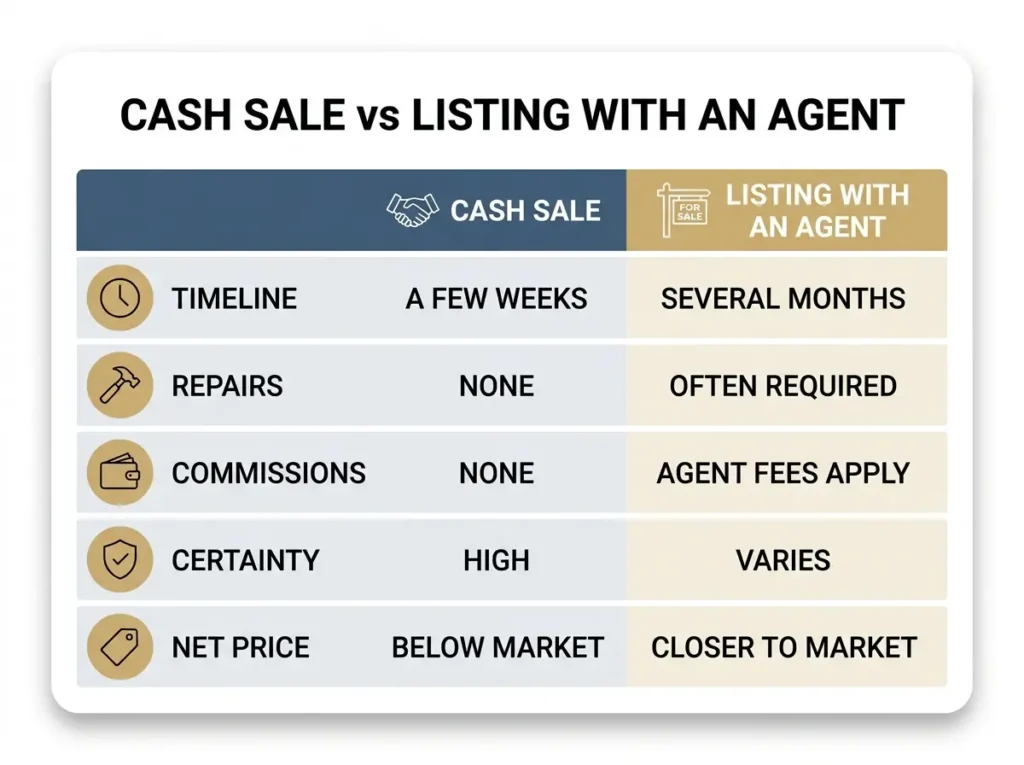
| Factor | Cash Sale (As-Is) | Listing With an Agent |
|---|---|---|
| Timeline | Often within a few weeks | Typically 60 to 120 days or more |
| Wind and flood repairs | None, we buy as-is | Usually needed before a financed buyer can close |
| Open claims | You can keep the claim rights in writing | Have to be disclosed and often settled first |
| Commissions | None | Typically 5 to 6 percent |
| Certainty of close | High | Subject to financing, inspection, appraisal |
| Net price | Below market, no repairs or fees | Closer to market, after repairs and costs |
For a side-by-side on the tradeoffs, we keep an honest cash offer versus agent listing comparison that lays it out without the sales spin. If both claims will pay for the repairs, fixing the house is usually the better financial move.
How Selling to Panhandle Real Estate Investments Works
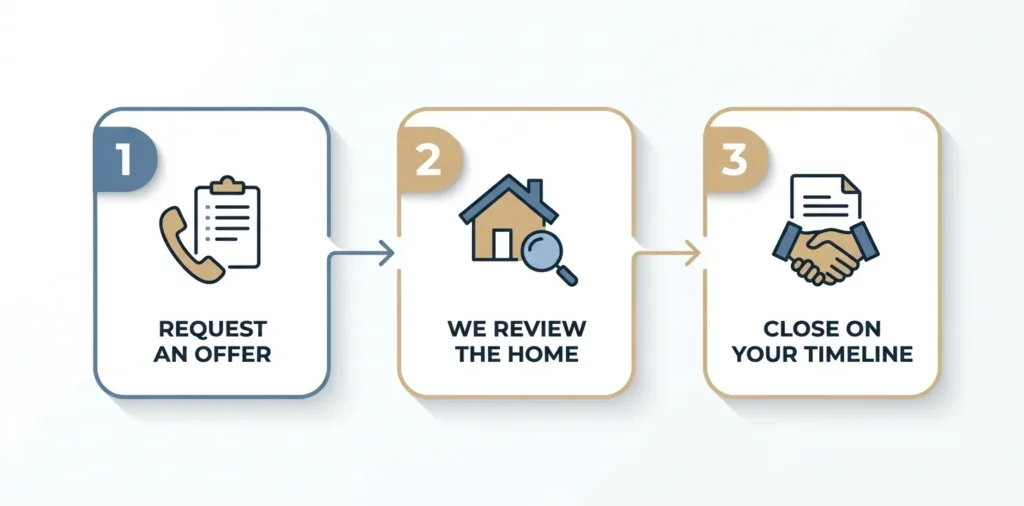
If selling as-is turns out to be the right fit, the process is short and there is no obligation to accept anything.
- Request an offer. Tell us about the house, the wind and water damage, and where each claim stands. It takes a few minutes and there is no commitment.
- We look at the damage and the numbers. We estimate the repairs, including any flood zone requirements, and build them into a fair cash offer, with the math shown rather than hidden.
- Close on your timeline. If the offer works, we handle the paperwork, your claim rights stay with you in writing if you want them, and you close when you are ready.
If your claims will cover the repairs and you want to stay, that is usually your best move, and we will tell you so.
Pensacola Bay, Navarre, and Destin Specifics
The Panhandle’s surge risk sits along the water: Pensacola Bay and Gulf Breeze, Navarre and Santa Rosa Sound, and Destin and Fort Walton Beach along Choctawhatchee Bay. During Isaias, the National Hurricane Center reported a wind gust of 116 mph at a station near Santa Rosa Sound, so many homes there have both a wind story and a water story.
Isaias dates for wind and flood claims
- About December 8, 2026: 60 days after the October 9 landfall, the standard deadline for a federal flood proof of loss.
- October 9, 2027: last day to report a new or reopened wind claim, since Florida sets the date of loss as the landfall date.
- January 1, 2027: Citizens wind policies effective on or after this date need flood coverage in place.
Flood zones here do not follow the coastline neatly. Homes along bayous and low streets inland can sit in a mapped zone, and an elevation certificate often decides what flood insurance costs. If you are not sure where your home stands, the county property appraiser and floodplain office in Escambia, Santa Rosa, or Okaloosa County can tell you.
Frequently Asked Questions
Does homeowners insurance cover flood damage from a hurricane in Florida?
No. Standard homeowners policies cover wind damage from a hurricane, after the hurricane deductible, but not flood. Florida’s own seller flood disclosure states that homeowners policies do not include coverage for flood damage. Flood coverage comes from a separate policy through the National Flood Insurance Program or a private flood insurer.
Is storm surge considered wind or flood damage?
Storm surge is flood damage. Water pushed in from the Gulf, a bay, or a sound counts as the overflow of tidal waters, which is flooding. That part of the loss goes to a flood policy, not your homeowners policy, even though the hurricane’s wind drove the water ashore. Wind damage to the roof and windows stays with homeowners insurance.
Can I file a wind claim and a flood claim for the same hurricane?
Yes. If the storm caused both kinds of damage, file with both insurers. Expect two adjusters and two deductibles, with each policy paying only its share. Photograph the water line and the roof damage separately, and send a signed flood proof of loss within 60 days after the loss.
What if I do not have flood insurance?
Then the flood share of the damage is not insured. FEMA can help with basic repairs only if it approves assistance for households in your county, and SBA disaster loans may be available after a declaration. Your homeowners policy still pays for wind damage, so file that claim either way.
Do I have to disclose flood damage when I sell my house in Florida?
Yes. Florida sellers must give a flood disclosure at or before signing the sales contract. It asks whether you know of flooding that damaged the property while you owned it, whether you filed a flood insurance claim, and whether you received flood assistance, including from FEMA.
Wind and flood are two separate claims, even when one storm caused both. Report to both insurers, document the damage in layers, watch the 60-day flood deadline, and decide on repairs only after you know what each policy will pay.
If the claims will not cover the repairs and you want to know what your Pensacola, Gulf Breeze, Navarre, or Fort Walton Beach house is worth as-is, we are happy to give you a straightforward answer. No obligation, no pressure. Request a cash offer from Panhandle Real Estate Investments.

About Panhandle Real Estate Investments
I’m Peyton Saluto, founder of Panhandle Real Estate Investments. For over seven years, I’ve helped homeowners across the Florida Panhandle find fair and stress-free ways to sell their homes—no repairs, no commissions, and no pressure. My goal is always to put people first and make a real difference in our communities by restoring distressed properties and rebuilding neighborhoods.
If you’re thinking about selling, reach out for a no-obligation cash offer. I’d love the opportunity to help you find the best path forward.