
Published by Panhandle Real Estate Investments, a locally owned real estate solutions company serving Escambia County, Santa Rosa County, Okaloosa County, and Bay County. We buy houses and land across the Florida Panhandle.
Last Updated: October 5, 2026
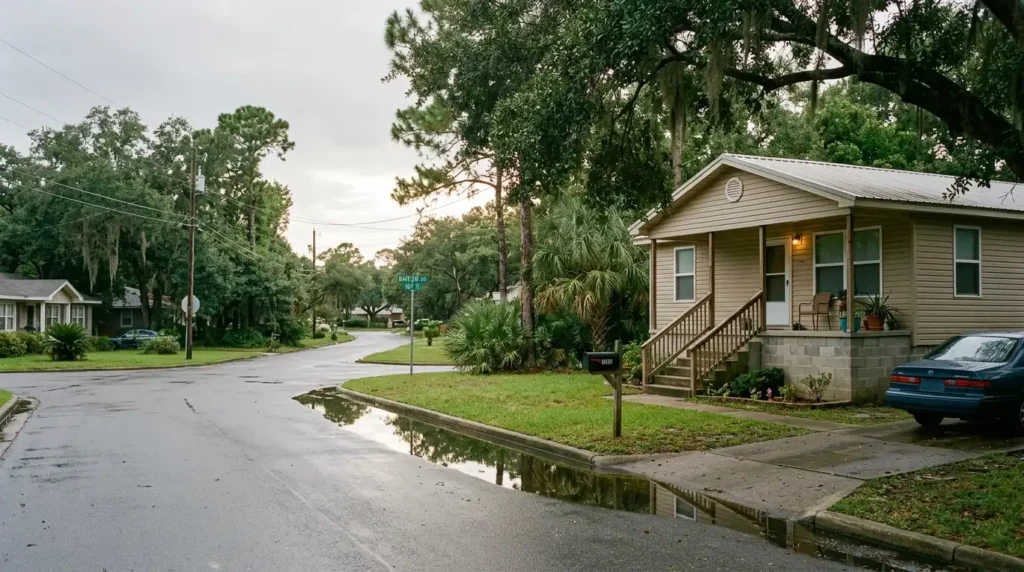
If your Pensacola or Perdido Key home sits in flood zone AE, you have probably noticed it comes up in every conversation about selling. Agents ask about it, buyers’ lenders ask about it, and the first question on almost every showing is what the flood insurance costs. None of that means the house will not sell. It means the flood zone changes who can buy it, what they will pay, and what you have to hand them before they sign.
Zone AE is the most common high-risk flood designation in Escambia County, and it carries real rules: mandatory flood insurance for most financed buyers, a flood disclosure Florida now requires from sellers, and premiums that are priced house by house. Sellers who understand those rules before they list tend to sell cleaner and faster than sellers who learn them from a buyer’s lender.
This post covers what zone AE actually means, how it shapes your buyer pool, the paperwork that makes a flood-zone sale easier, and when listing makes more sense than a cash sale, and the other way around.
Key Takeaways
- Zone AE is a high-risk flood area with a known base flood elevation. It is part of FEMA’s special flood hazard area, the zone with a 1 percent chance of flooding in any given year.
- Most financed buyers must carry flood insurance. Government-backed lenders require it in high-risk zones, so the premium becomes part of the buyer’s approval.
- Florida requires a flood disclosure from sellers of residential property, delivered at or before the contract is signed.
- Your flood policy can transfer to the buyer, and under Risk Rating 2.0 that can carry your discount with it, which is a real selling point.
- A flood zone alone is not a reason to sell for cash. Flood history, a high premium, or damage is what usually tips the math.
Table of Contents
- What flood zone AE actually means
- How zone AE changes who can buy your home
- Your options for selling in zone AE
- How selling to Panhandle Real Estate Investments works
- Pensacola, Perdido Key, and Escambia County specifics
- Frequently asked questions
What Flood Zone AE Actually Means
Flood zones come from FEMA’s Flood Insurance Rate Maps, usually called FIRMs. The high-risk zones together make up the special flood hazard area, which FEMA defines as the area with a 1 percent chance of flooding in any given year. That sounds small until you remember it applies every year you own the house.
Zone AE is the version of that high-risk area where FEMA has done the detailed study. FEMA describes zone AE as the base floodplain where base flood elevations are provided, which means your map shows how high floodwater is expected to reach. That number, the base flood elevation, is the one that matters for insurance, renovation, and resale.

Zone AE is different from zone VE, which covers coastal areas exposed to storm-driven waves and carries stricter building rules. Along the Escambia County coast you will find both, so check which one your map actually shows. Homes that sit above the base flood elevation are treated very differently from homes that sit below it, even inside the same zone, and that difference follows the house into every sale. For owners with damage on top of the flood risk, we also cover selling storm damaged or hard to insure homes in more detail.
How Zone AE Changes Who Can Buy Your Home
The biggest effect of zone AE is on financed buyers. FEMA states that homes in high-risk flood areas with mortgages from government-backed lenders are required to have flood insurance. That covers most conventional, FHA, and VA loans, so the buyer’s flood premium gets counted in their monthly payment and can shrink what they qualify for.
What that premium looks like depends on the house, not just the zone. Under Risk Rating 2.0, FEMA prices flood insurance using flood frequency, distance to water, elevation, and the cost to rebuild, so two AE homes on the same street can carry very different quotes. The same FEMA page notes that most existing policies cannot rise more than 18 percent per year, which is why a long-held policy is often cheaper than a brand new one.
That last point is where sellers have an edge. FEMA confirms that policyholders can transfer their discount to a new owner by assigning their flood policy when the property changes hands. If your current premium is lower than what a buyer would be quoted fresh, offering the assignment can make your listing noticeably easier to finance.
Florida has also added a seller obligation. Under section 689.302 of the Florida Statutes, a seller of residential property must complete and provide a flood disclosure at or before the time the sales contract is executed. It asks whether you know of past flood damage, filed flood insurance claims, or received federal disaster help such as FEMA assistance.
Who handles what in a zone AE sale
| Item | Who typically handles it | Why it matters |
|---|---|---|
| Flood disclosure form | Seller | Required by Florida law at or before the contract |
| Elevation certificate | Seller if one exists, otherwise often the buyer | Shows where the home sits against the base flood elevation |
| Flood insurance policy | Buyer, new or assigned from the seller | Required by government-backed lenders in high-risk zones |
| Policy assignment | Seller and buyer at closing | Can carry an existing discount to the new owner |
| Letter of map amendment | Seller, before listing, if the home sits above the base flood elevation | Can remove the federal flood insurance requirement for lenders |
That last row is worth a look if you think your home sits higher than the map suggests. FEMA says a letter of map amendment eliminates the federal flood insurance purchase requirement as a condition of federally backed financing when the structure is shown to be at or above the base flood elevation. It takes survey data and time, but for the right house it widens the buyer pool.
Your Options for Selling in Zone AE
A flood zone designation by itself is not a reason to sell below market. The honest question is whether your specific house has a problem the retail market will punish.
List it with an agent. If the home sits above the base flood elevation, has no flood history, and carries a reasonable premium you can assign, listing is often the right call. Gather the elevation certificate, your policy declarations page, and the completed flood disclosure before you go live, so buyers and their lenders see answers instead of question marks.
Sell directly to a cash buyer. If the home sits below the base flood elevation, has flooded before, carries a premium that scares off financed buyers, or needs repairs, a cash buyer removes the lender requirement from the equation entirely. You can sell your Pensacola house as-is or sell your Perdido Key house as-is without waiting on a buyer’s flood quote or appraisal.
Fix first, then list. If you are planning a renovation to help the sale, check the cost against the structure’s value before you start. In a special flood hazard area, a large enough project can trigger FEMA’s 50 percent rule and require the whole home to meet current flood code, which can turn a cosmetic refresh into an elevation project.
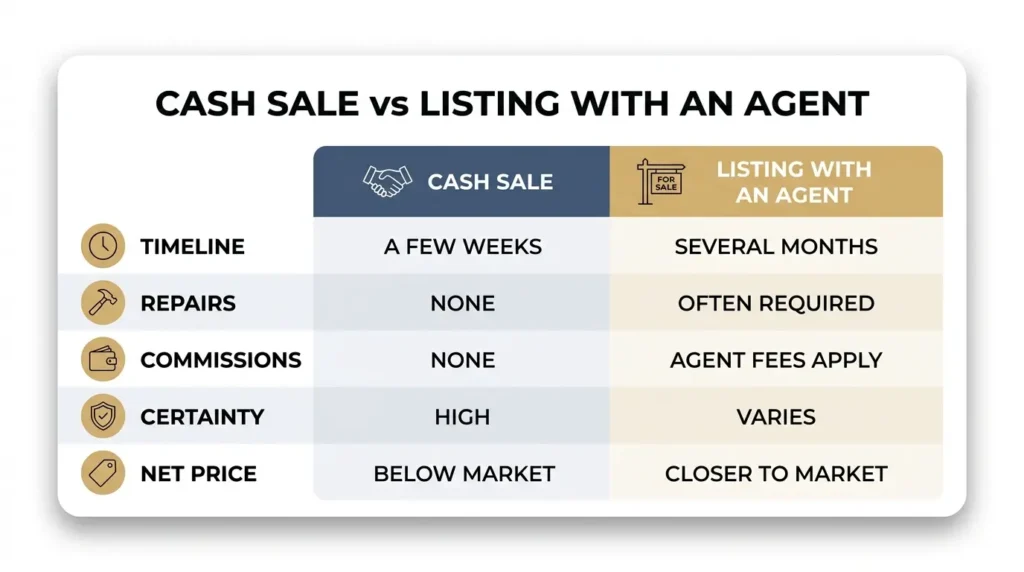
| Factor | Cash Sale (As-Is) | Listing With an Agent |
|---|---|---|
| Timeline | Often within a few weeks | Typically 60 to 120 days or more |
| Flood insurance requirement | No lender, so no required policy | Buyer’s lender requires a policy in a high-risk zone |
| Flood history or damage | We buy with it disclosed, as-is | Can shrink the buyer pool or trigger repair requests |
| Repairs | None, we buy as-is | Often negotiated after inspection |
| Commissions | None | Typically 5 to 6 percent |
| Certainty of close | High | Subject to financing, flood quote, inspection, appraisal |
| Net price | Below market, no repairs or fees | Closer to market, before costs and concessions |
For a side-by-side on the tradeoffs, we keep an honest cash offer versus agent listing comparison that lays it out without the sales spin. For a lot of AE homes the listing column wins, and we would rather you know that before you call us.
How Selling to Panhandle Real Estate Investments Works
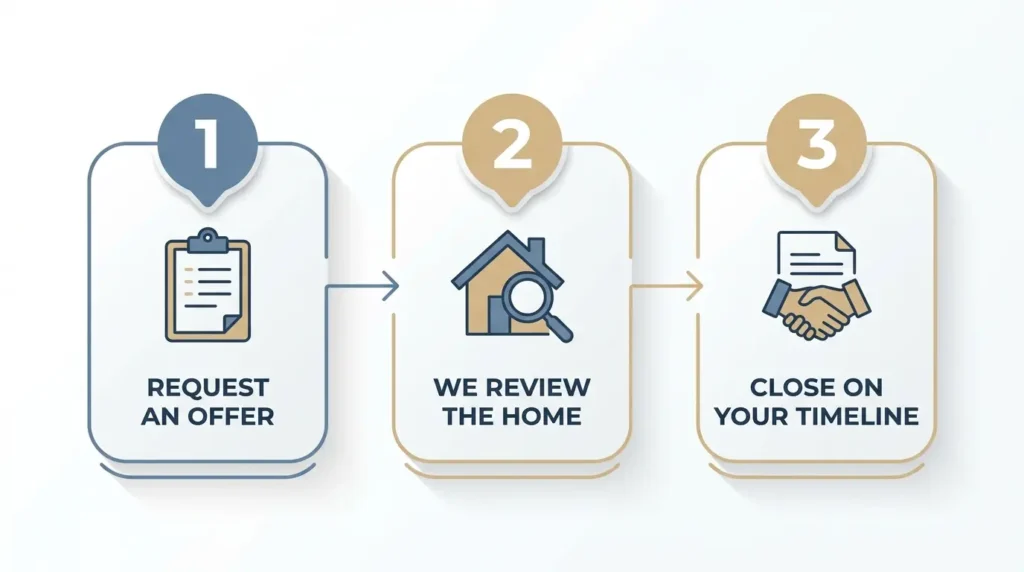
If a cash sale is the right fit, the process is short and there is no obligation to accept anything.
- Request an offer. Tell us about the home, its flood zone, any flood history, and your current flood policy if you have one. It takes a few minutes and there is no commitment.
- We look at the house and the numbers. We factor in the elevation, the flood risk, and any repairs, and build them into a fair cash offer, with the math shown rather than hidden.
- Close on your timeline. If the offer works, we handle the paperwork, including the flood disclosure side of closing, and close when you are ready.
If your home is elevated, dry, and insurable at a fair price, a traditional listing may well net you more, and we will tell you so plainly when that is true for your situation.
Pensacola, Perdido Key, and Escambia County Specifics
Escambia County has lived with flooding for a long time. Hurricane Ivan reshaped Pensacola Beach and Perdido Key, and Hurricane Sally in 2020 brought heavy rain and surge flooding into downtown Pensacola and neighborhoods along Pensacola Bay, Bayou Chico, and Bayou Texar. Buyers here know those names, and they ask about them.
Perdido Key is its own case. As a barrier island, parts of it fall in coastal VE zones, while other lots sit in zone AE, so two homes a short walk apart can face very different insurance and building rules. Around Pensacola, the AE areas tend to follow the bays, bayous, and creeks rather than the open coast, which is why flood zones surprise inland buyers.
Insurance is the other pressure point. Citizens, which insures many Escambia County homes, now requires flood coverage on personal residential policies with wind coverage in the special flood hazard area, with the requirement phasing in for its remaining wind policies by January 1, 2027. Put that together with how Panhandle insurance costs have shifted, and the total cost of owning an AE home is a big part of what buyers weigh. To confirm your zone, you can search your address on FEMA’s Flood Map Service Center, and Escambia County’s floodplain management staff can help you read the map.
Frequently Asked Questions
What does flood zone AE mean in Florida?
Flood zone AE is a high-risk flood area on FEMA’s flood maps where a base flood elevation has been set. It is part of the special flood hazard area, which has a 1 percent chance of flooding in any given year. In Escambia County, AE zones commonly follow Pensacola Bay, the bayous, and creeks, while the open coast is often zone VE.
Is flood insurance required in zone AE?
It is required if the home has a mortgage from a government-backed lender, which covers most conventional, FHA, and VA loans. A cash owner with no mortgage is not required by federal rules to carry it, though Citizens now requires flood coverage on its wind policies in special flood hazard areas. Most AE owners carry it either way.
Does a flood zone lower my home’s value?
It can, but the zone alone rarely decides it. What moves value is the flood insurance premium a buyer will face, whether the home sits above the base flood elevation, and whether it has flooded before. An elevated AE home with no flood history and a transferable policy can sell close to comparable homes outside the zone.
Can I transfer my flood insurance policy to the buyer?
Yes. FEMA confirms that an NFIP policyholder can assign the flood policy to the new owner when the property sells, and under Risk Rating 2.0 that can carry your existing discount with it. If your premium is lower than a new quote would be, offering the assignment can make your home easier for a financed buyer to afford.
How do I find out what flood zone my house is in?
Search your address on FEMA’s Flood Map Service Center, which shows the official flood map for your property. Your elevation certificate, if you have one, shows the zone and how your home sits against the base flood elevation. Escambia County’s floodplain management staff can also help you read the map for your parcel.
A zone AE designation is something to plan around, not something to panic over. Get your disclosure, elevation certificate, and policy details in order, compare what a listing and a cash sale would really net you, and pick the path that fits your house.
If you want to know what your Pensacola or Perdido Key home is worth as-is, flood zone and all, we are happy to give you a straightforward answer. No obligation, no pressure. Request a cash offer from Panhandle Real Estate Investments.

About Panhandle Real Estate Investments
I’m Peyton Saluto, founder of Panhandle Real Estate Investments. For over seven years, I’ve helped homeowners across the Florida Panhandle find fair and stress-free ways to sell their homes—no repairs, no commissions, and no pressure. My goal is always to put people first and make a real difference in our communities by restoring distressed properties and rebuilding neighborhoods. If you’re thinking about selling, reach out for a no-obligation cash offer. I’d love the opportunity to help you find the best path forward.