
Published by Panhandle Real Estate Investments, a locally owned real estate solutions company serving Escambia County, Santa Rosa County, Okaloosa County, and Bay County. We buy houses and land across the Florida Panhandle.
Last Updated: October 26, 2026
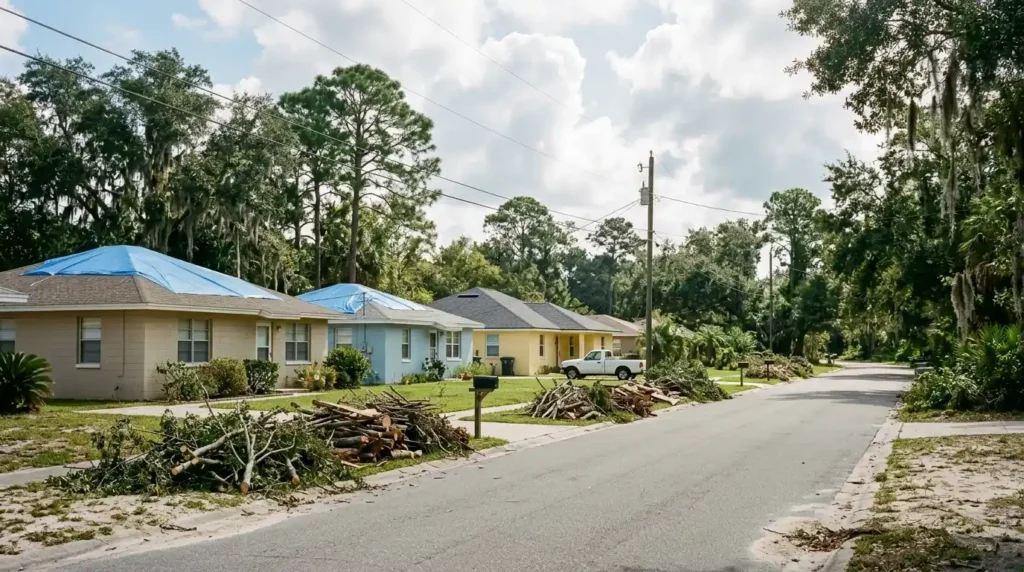
After Hurricane Isaias, one of the first questions in Pensacola, Milton, Navarre, and Fort Walton Beach is the same: is FEMA going to help? It is a fair question, and the answer is more complicated than most people expect. FEMA help for households is not automatic, it does not replace insurance, and it is not designed to rebuild your house.
That does not mean it is worthless. For the right household, FEMA can help with temporary housing, basic repairs to make a home livable, and some other storm costs. Knowing how the program actually works, and where it stands for Isaias, keeps you from waiting on money that may not come, or missing a deadline for money that will.
This guide covers where FEMA help stands for Isaias, what it covers and does not, why your insurance claim comes first, how to apply, and what to do if federal help leaves a gap.
Key Takeaways
- FEMA household help depends on a declaration. Your county has to be approved for Individual Assistance before you can apply.
- Insurance comes first. FEMA will not pay for anything your insurance covers, so file your claim no matter what.
- FEMA repair help is basic. It aims to make a home safe and livable, not to restore it to how it was before the storm.
- There are deadlines. Registration usually closes 60 days after the declaration, and appeals are due within 60 days of a decision.
- SBA disaster loans can cover more, up to 500,000 dollars to repair a primary home, once they are made available.
Table of Contents
- Where FEMA help stands for Isaias right now
- What FEMA help covers, and what it does not
- Why your insurance claim comes first
- How to apply, and what happens next
- When federal help will not cover the gap
- How selling to Panhandle Real Estate Investments works
- Escambia, Santa Rosa, and Okaloosa specifics
- Frequently asked questions
Where FEMA Help Stands for Isaias Right Now
As of October 26, 2026: FEMA’s emergency declaration for Hurricane Isaias covers public assistance for local governments, such as debris removal and emergency response. Individual Assistance for households has not been approved, so homeowners and renters cannot apply to FEMA for repair or housing money yet. That can change if the state requests a major disaster declaration and FEMA approves it, and we will update this page if it does.
Either way, the steps below are worth doing now: file your insurance claim, photograph the damage, and keep every receipt. Those records matter for insurance, for FEMA, and for any sale.
If you are still deciding what to do with the house, our guide to whether you should repair, file a claim, or sell after Hurricane Isaias lists the local damage report forms, free cleanup help, and hotlines.
What FEMA Help Covers, and What It Does Not
FEMA’s household program is built for basic needs, not full recovery. Under federal law, FEMA can help pay for repairs that restore an owner-occupied home to a safe and sanitary living or functioning condition, along with temporary housing and some other disaster costs. The total a household can receive is capped by law, and that cap is adjusted every year for inflation.

FEMA household help at a glance
| Usually can help with | Usually does not cover |
|---|---|
| Money to rent temporary housing if you cannot live at home | Anything your insurance already pays for |
| Basic repairs to make the home safe, sanitary, and functional | Restoring the home to its pre-storm condition or finishes |
| Some disaster-related medical, funeral, and child care costs | Second homes and vacation rentals |
| Some personal property and transportation needs | Losses already paid by another program |
The practical takeaway is that FEMA help can get you through the worst weeks, but it is rarely enough to fix serious storm damage on its own. Plan around your insurance claim, and treat FEMA as a backstop.
Why Your Insurance Claim Comes First
Federal disaster law is built to prevent double payment. The Stafford Act bars federal disaster assistance for any part of a loss covered by insurance or any other source. So if your homeowners or flood policy covers the damage, FEMA will not pay for that same damage.
FEMA’s rules spell out when it can step in for an insured household. Under 44 CFR 206.113, FEMA may help when your insurance claim is denied, when the insurance money is significantly delayed through no fault of your own, or when your insurance is not enough to cover a serious need. If FEMA helps while your insurance is delayed, you agree to pay FEMA back out of the insurance money later.
That is why filing your insurance claim early matters even if you hope FEMA will help. Florida gives you 1 year from the date of loss to report a new claim, and the deductible often decides how much the claim pays. If you are thinking about selling before the claim is settled, read what to know before selling with a claim still open before you sign anything.
How to Apply, and What Happens Next
Once your county is approved for Individual Assistance, the process looks like this:
- Register. Apply at DisasterAssistance.gov, by phone, or through the FEMA App. Have your insurance information, a description of the damage, your address, and bank details for direct deposit ready.
- Watch the deadline. FEMA’s standard registration period is 60 days after the major disaster declaration, and late registrations are accepted for another 60 days if you explain the delay.
- Allow the inspection. FEMA may send an inspector to verify the damage. Keep your photos and receipts handy.
- Read the decision letter carefully. A denial is often about missing paperwork, like an insurance settlement letter, not a final no.
- Appeal if needed. You have 60 days after FEMA notifies you of its decision to appeal in writing, and FEMA must respond within 90 days of receiving the appeal.
FEMA is not the only federal option. The U.S. Small Business Administration makes low-interest disaster loans to homeowners and renters after a declared disaster, and homeowners may apply for up to 500,000 dollars to repair or replace a primary residence, plus up to 100,000 dollars for personal property. A loan has to be paid back, but it can cover far more than FEMA’s household cap.
When Federal Help Will Not Cover the Gap
For a lot of Isaias damage, the math ends up the same way: insurance pays part, FEMA pays little or nothing, and a loan means new debt on a damaged house. When that gap is too big, you have three honest choices.
Repair and stay. Combine the insurance payout, any FEMA help, and possibly an SBA loan, and rebuild. This is the right move when you plan to stay for years and the numbers close.
Repair, then sell. A repaired house sells to the full retail market. The tradeoff is months of carrying costs and repairs before you see the proceeds.
Sell as-is. A cash buyer can take the house with the damage in place, and in most cases you keep your insurance claim rights in writing. In Santa Rosa County, you can sell your Milton house as-is without waiting on repairs or federal decisions. If your home is in a flood zone and the damage is severe, check how a substantial damage letter changes the picture first.
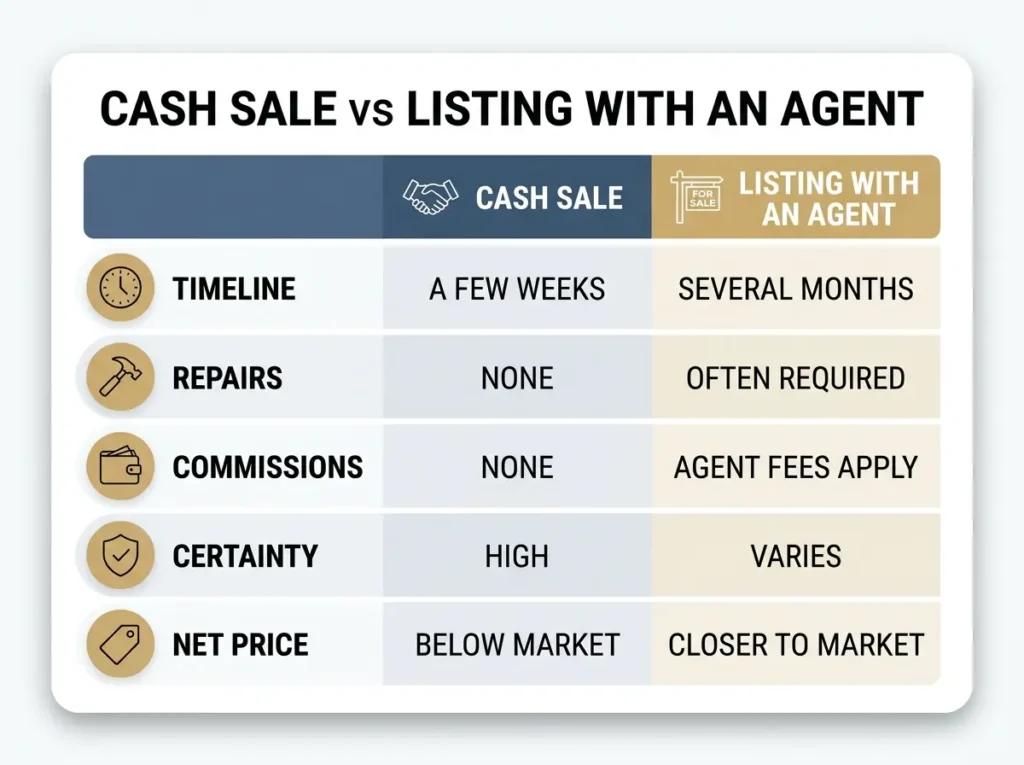
| Factor | Cash Sale (As-Is) | Listing With an Agent |
|---|---|---|
| Timeline | Often within a few weeks | Typically 60 to 120 days or more |
| Storm repairs | None, we buy as-is | Usually needed before a financed buyer can close |
| Open insurance claim | You can keep the claim rights | Has to be sorted out and disclosed for the buyer |
| Commissions | None | Typically 5 to 6 percent |
| Certainty of close | High | Subject to financing, inspection, appraisal |
| Net price | Below market, no repairs or fees | Closer to market, after repairs and costs |
For a side-by-side on the tradeoffs, we keep an honest cash offer versus agent listing comparison that lays it out without the sales spin. If insurance and aid cover the repairs, staying is usually the better financial call.
How Selling to Panhandle Real Estate Investments Works
If selling as-is turns out to be the right fit, the process is short and there is no obligation to accept anything.
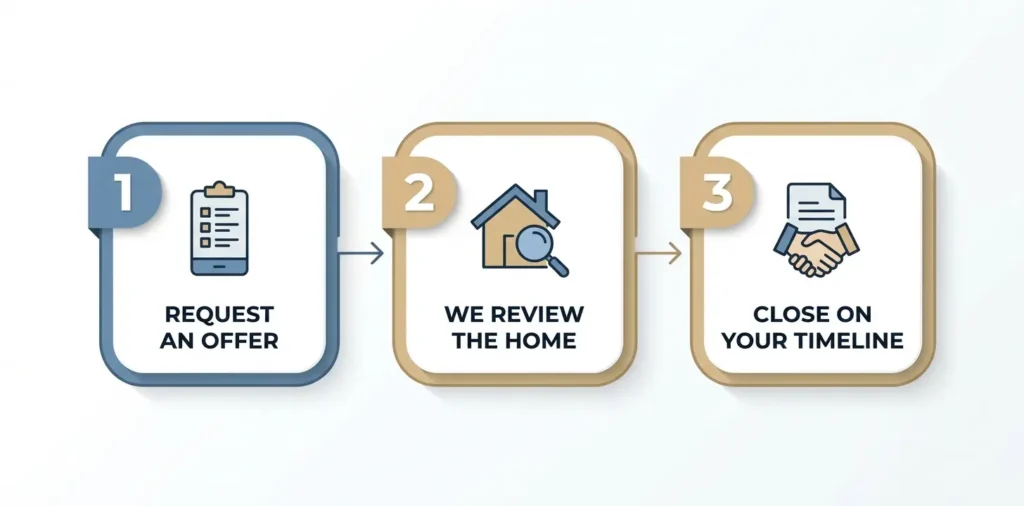
- Request an offer. Tell us about the house, the storm damage, and where your insurance claim and any FEMA application stand. It takes a few minutes and there is no commitment.
- We look at the damage and the numbers. We estimate the repairs and build them into a fair cash offer, with the math shown rather than hidden.
- Close on your timeline. If the offer works, we handle the paperwork, your claim rights stay with you in writing if you want them, and you close when you are ready.
If insurance, FEMA, or a loan will realistically cover your repairs, you probably do not need us, and we will say so.
Escambia, Santa Rosa, and Okaloosa Specifics
Hurricane Isaias came ashore near Destin on October 9, and Escambia, Santa Rosa, and Okaloosa were among the hardest hit, with Bay and Walton also in FEMA’s emergency declaration. All three counties have asked residents to report damage through their own online forms, and those reports are part of how the state measures the damage when deciding what federal help to request.
So even while FEMA household help is pending, reporting your damage to the county is worth doing. In Santa Rosa that means the “Report Damage” button on your parcel page at the property appraiser’s site, and in Escambia and Okaloosa it means each county’s online damage form.
If a tree caused your damage, start with our guide to who pays when a tree falls on your house, because tree claims have their own removal limits and deductible rules.
Frequently Asked Questions
Can I get FEMA assistance for Hurricane Isaias damage?
Only after FEMA approves Individual Assistance for your county, which usually comes with a major disaster declaration. Check DisasterAssistance.gov or your county’s storm page for the current status. Once it opens, registration usually runs 60 days from the declaration, so file your insurance claim and document the damage now.
Does FEMA pay for home repairs if I have insurance?
Not for anything your insurance covers. Federal law bars paying twice for the same loss. FEMA may help if your claim is denied, if the insurance money is significantly delayed, or if insurance is not enough for a serious need. If FEMA helps during a delay, you repay it from the insurance money later.
How much does FEMA give for home repairs?
FEMA repair help is meant to make a home safe, sanitary, and functional, not to restore it fully. The total a household can receive is capped by federal law and adjusted every year for inflation, and most serious storm damage costs far more. SBA disaster loans of up to 500,000 dollars can cover more.
What if FEMA denies my application?
Read the decision letter first, because many denials are about missing documents, like an insurance settlement letter. You can appeal in writing within 60 days after FEMA notifies you of its decision, with an explanation or supporting documents. FEMA must respond within 90 days of receiving your appeal.
Can I sell my house if I applied for FEMA help?
Yes. Applying for FEMA help does not stop a sale. Use any FEMA repair money for the repairs it was meant for, keep your records, and disclose the damage and any assistance to buyers, since Florida’s flood disclosure asks sellers about FEMA aid. A cash buyer can take the house as-is.
FEMA help is real, but it is narrower and slower than most people hope. File your insurance claim, report your damage to the county, watch for the declaration, and build your plan around numbers you can count on.
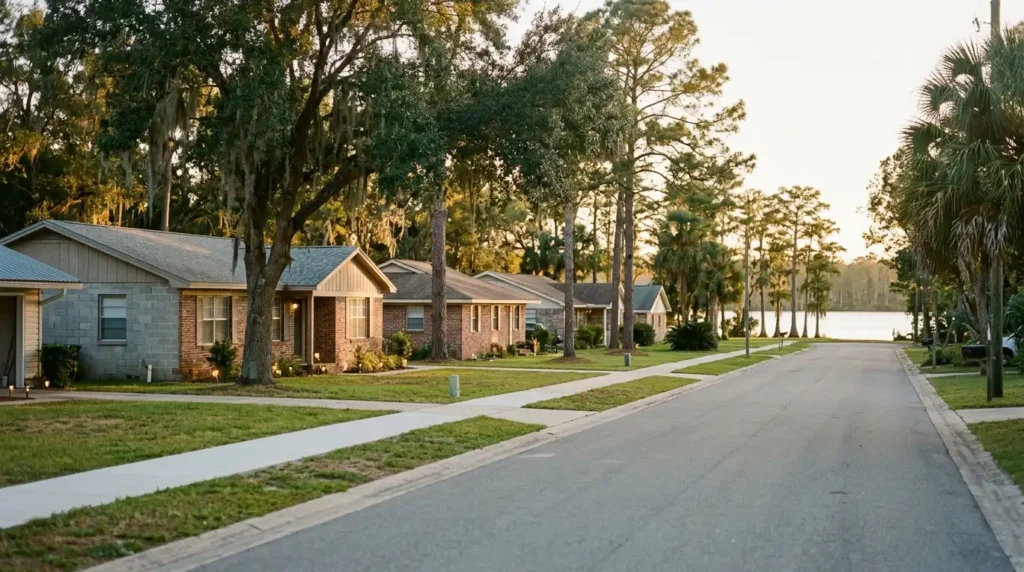
If the gap between insurance, aid, and repairs is too big and you want to know what your Pensacola, Milton, Navarre, or Fort Walton Beach house is worth as-is, we are happy to give you a straightforward answer. No obligation, no pressure. Request a cash offer from Panhandle Real Estate Investments.

About Panhandle Real Estate Investments
I’m Peyton Saluto, founder of Panhandle Real Estate Investments. For over seven years, I’ve helped homeowners across the Florida Panhandle find fair and stress-free ways to sell their homes—no repairs, no commissions, and no pressure. My goal is always to put people first and make a real difference in our communities by restoring distressed properties and rebuilding neighborhoods.
If you’re thinking about selling, reach out for a no-obligation cash offer. I’d love the opportunity to help you find the best path forward.