
Published by Panhandle Real Estate Investments, a locally owned real estate solutions company serving Bay County, Gulf County, Okaloosa County, Santa Rosa County, and Escambia County. We buy houses and land across the Florida Panhandle.
Last Updated: October 1, 2026
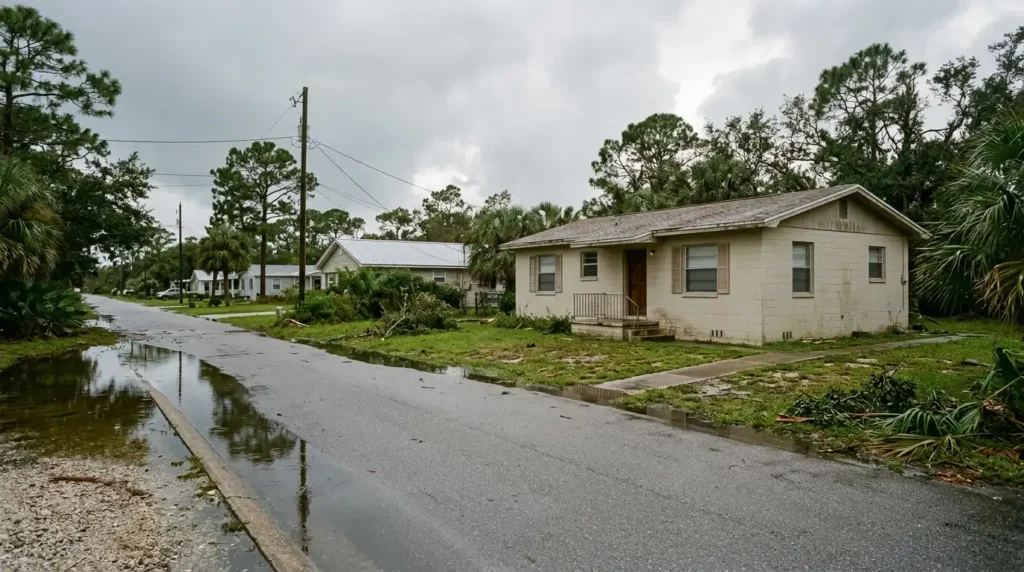
The letter arrives weeks after the storm, usually when you are already exhausted. It comes from the county, not your insurer, and it says your Mexico Beach or Panama City home has been declared substantially damaged. Buried in that language is a hard requirement: before anyone lives in the house again, it has to be brought up to current flood code, which in most of Bay and Gulf County means lifting the entire structure to the base flood elevation.
For a lot of owners that is the moment the math stops working. The cost to elevate and rebuild to code can run past what the house is even worth, and the repair you were planning is suddenly the smaller problem. A substantial damage letter does not mean you are stuck, but it does mean the easy path just closed.
This post explains what the determination actually is, whether you can appeal it, what federal help exists and where it falls short, and the honest options for owners who cannot afford to rebuild.
Key Takeaways
- The letter is a local decision, not your insurer’s. Your county floodplain administrator issues it once repair costs reach 50 percent of the structure’s market value.
- Compliance usually means elevation. In most Bay and Gulf County flood zones, meeting current code means raising the home to the base flood elevation before you can rebuild.
- You can appeal, but the appeal challenges the cost estimate or the market value, not the rule itself.
- Increased Cost of Compliance can pay up to 30,000 dollars, but only if you carry NFIP flood insurance, and it rarely covers the full elevation bill.
- When the rebuild math does not work, selling as-is to a cash buyer, or selling the lot after demolition, is often the cleaner exit.
Table of Contents
- What a substantial damage letter actually is
- Appeals and Increased Cost of Compliance
- Your options when you cannot rebuild
- How selling to Panhandle Real Estate Investments works
- Mexico Beach, Panama City, Port St. Joe, and the Gulf County reality
- Frequently asked questions
What a Substantial Damage Letter Actually Is
A substantial damage letter is the written determination that your home crossed the 50 percent line. It comes from the local building official or floodplain administrator, and it is triggered by FEMA’s 50 percent rule, which requires the whole structure to meet current floodplain code once the cost to fully repair it reaches half the market value of the structure alone. The land is not counted, which is why a modest home on a good lot can trip the rule faster than owners expect.
The reason it matters so much is what compliance costs. Older ground-level homes were almost never built at today’s base flood elevation, so bringing one up to code usually means physically lifting the house. FEMA defines substantial improvement and substantial damage at that same 50 percent of market value threshold, and once you are over it, the grandfathering that let the home sit at its old elevation is gone.
There is a short window where a few things are worth doing right away. Do not start major repairs before the determination is settled, because work you do can be counted against you, and rushing can also cost you a future Increased Cost of Compliance claim.
What to do the week your letter arrives
- Get the letter and the cost estimate in writing. Ask the building department for the repair estimate and the structure market value they used. Those two numbers are the whole determination.
- Do not begin permitted repairs yet. Once work starts under the old code, your options narrow, and premature work can complicate an appeal or an ICC claim.
- Call your flood insurer about Increased Cost of Compliance. If you carry NFIP flood insurance, a substantial damage determination is what opens that coverage.
- Decide your real path early: appeal, rebuild to code, or sell. Each one has a different clock, and the county permit timeline does not wait.
Appeals and Increased Cost of Compliance
You can appeal a substantial damage letter, but it helps to understand what an appeal actually challenges. You are not arguing that the 50 percent rule should not apply. You are disputing the two numbers behind it: the estimated cost to repair the structure, or the market value the county assigned to it. If a licensed contractor’s detailed estimate comes in lower, or an appraisal shows the structure is worth more than the county figured, the fraction can fall back under 50 percent.
File the appeal through the same local building department that issued the determination, and do it inside the deadline printed on the letter. An appeal is worth trying when your numbers are genuinely close to the line. When the damage is severe and the home is clearly past it, an appeal mostly buys time you may not have.
The main source of federal help is Increased Cost of Compliance, or ICC, coverage. If you carry flood insurance through the National Flood Insurance Program and your home is declared substantially damaged, an ICC claim can pay up to 30,000 dollars toward the cost of meeting code. That is real money, and it is the first thing every owner in this spot should ask about.
ICC coverage can go toward any combination of four things:
- Elevation, raising the home to or above the base flood elevation.
- Relocation, moving the structure to a safer site.
- Demolition, tearing down and clearing the damaged building.
- Floodproofing, which mainly applies to non-residential buildings.
Two limits are worth being honest about. ICC only exists if you had NFIP flood insurance in force, so owners who dropped or never carried flood coverage get nothing from it. And on a coastal Panhandle elevation, an ICC claim of increased cost of compliance rarely covers the whole bill. Lifting a house to code can cost well beyond the 30,000 dollar cap, and the gap is on you. That gap is exactly what pushes many owners to look at selling instead.
Your Options When You Cannot Rebuild
If the rebuild math does not work, you have three honest paths, and the right one depends on your numbers, not on which sounds best.
Rebuild to code and keep the home. Combine your ICC claim, any remaining insurance proceeds, and your own funds to do the full compliant rebuild, usually including elevation. It is the right move if you want to stay and can close the gap. If you cannot afford to elevate the house in Florida after ICC and insurance, this path is off the table, and it is better to know that early than halfway through a permit.
List it on the open market, or demolish and sell the lot. You can try to sell the traditional way, but a substantially damaged home is a hard sell in Florida to a financed buyer, because the lender will not fund a house that has to be elevated before it is livable, and how an open claim affects the sale can complicate the timing further. If the structure is too far gone to be worth saving, another route is to clear it and sell the lot on its own.
Sell directly to a cash buyer, as-is. A cash buyer can take the home with the substantial damage determination in place, so the rebuild requirement stops being your problem. This is the same approach behind how we price severely damaged homes and still close. If your property is in Gulf County, you can also sell your Port St. Joe house as-is without rebuilding anything first.
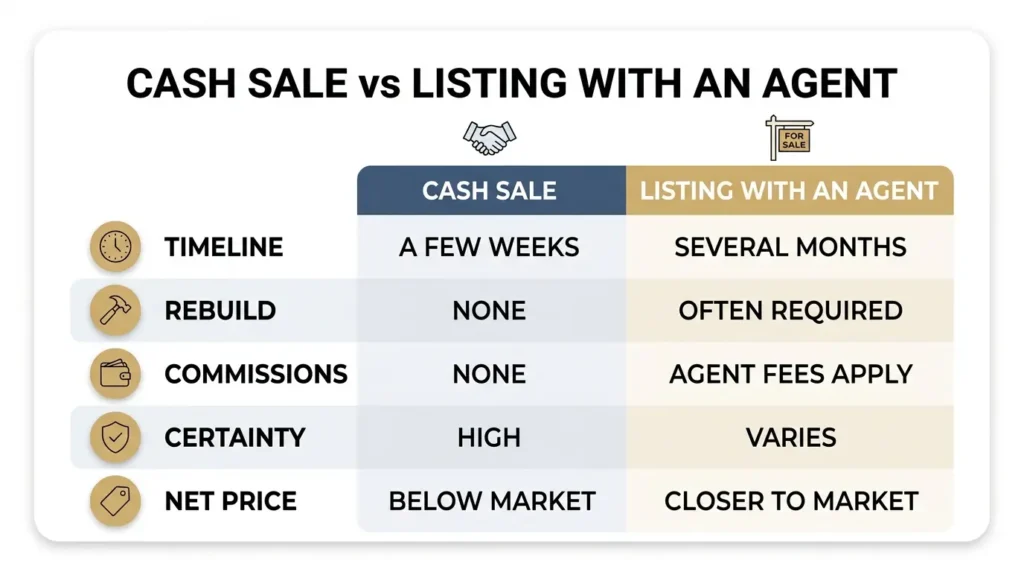
| Factor | Cash Sale (As-Is) | Listing With an Agent |
|---|---|---|
| Timeline | Often within a few weeks | Typically 60 to 120 days or more |
| Code rebuild / elevation | Not your problem, we buy as-is | Often required before a financed buyer can close |
| Substantial damage letter | We buy with it in place | Can stall or kill the sale |
| Buyer pool | Cash buyers who price the rebuild in | Mostly financed buyers whose lender needs a livable home |
| Commissions | None | Typically 5 to 6 percent |
| Certainty of close | High | Subject to financing, inspection, appraisal |
| Net price | Below market, minus no rebuild or elevation bills | Closer to market, before the rebuild and costs |
For a side-by-side on the tradeoffs, we keep an honest cash offer versus agent listing comparison that lays it out without the sales spin. The right answer is whichever path nets you the most after the elevation and code work are accounted for, not whichever headline price looks biggest.
How Selling to Panhandle Real Estate Investments Works
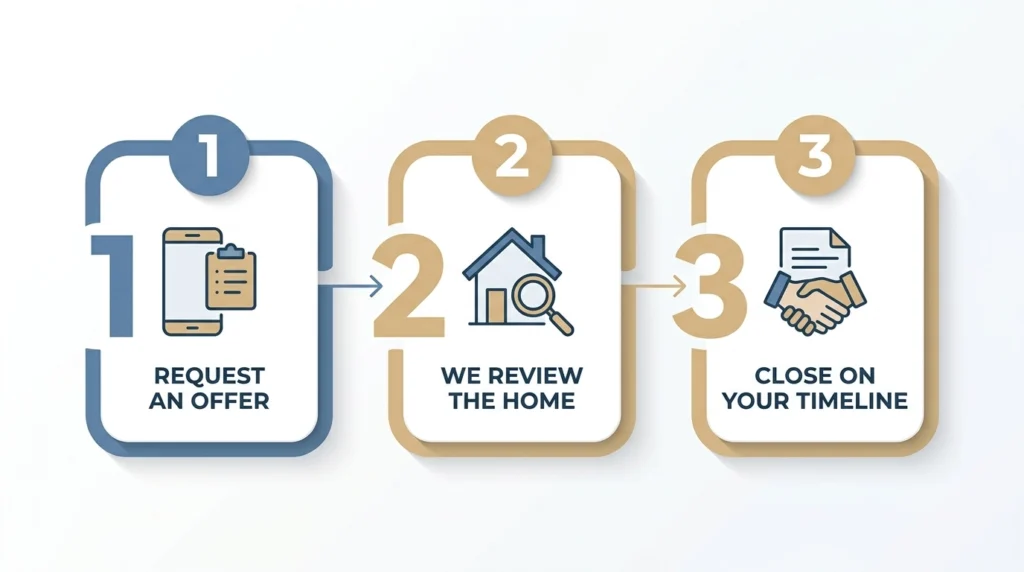
If a cash sale is the right exit, the process is short and there is no obligation to accept anything.
- Request an offer. Tell us about the home, the flood damage, and where the substantial damage determination stands. It takes a few minutes and there is no commitment.
- We look at the damage and the numbers. We estimate the repairs, the elevation, and the code requirements and build them into a fair cash offer, with the math shown rather than hidden. The substantial damage letter does not scare us off.
- Close on your timeline. If the offer works, we handle the paperwork and close when you are ready, with no rebuild to finish and no elevation to pay for first.
Not every owner should sell. If your numbers are close to the line, an appeal could bring you back under 50 percent, or ICC plus insurance covers most of the elevation, keeping the home may be the better move, and we will tell you so plainly when it is true for your situation.
Mexico Beach, Panama City, Port St. Joe, and the Gulf County Reality
Bay and Gulf County learned this rule the hard way after Hurricane Michael, when substantial damage determinations hit block after block in Mexico Beach, Panama City, Springfield, and Port St. Joe. Owners who assumed they would patch and move back in found out their homes had to be elevated to the base flood elevation first, and many could not afford it. That legacy still shapes how houses trade here.
The coastline carries the harshest zones. A home in a V zone along the Mexico Beach or Port St. Joe coast faces stricter and more expensive elevation standards than a home in an inland AE zone, and an elevation certificate is what proves where a structure actually sits. Determinations are made locally, by Bay County Building Services in Bay County and by the Gulf County floodplain administrator in Gulf County, so the office you deal with depends on which side of the county line your home is on.
The upside is that local cash buyers already understand these determinations and these zones. A substantially damaged home in Florida with an unaffordable elevation requirement in Mexico Beach or Port St. Joe is routine to an investor here, not a dealbreaker. If the 50 percent math is what is pushing you to sell, that is the part of the market that stays open to you.
Frequently Asked Questions
What does a substantial damage determination mean?
It means your local building official has found that the cost to repair your home reaches 50 percent or more of the structure’s pre-damage market value. Once that determination is made, the entire building must be brought up to current floodplain code, which in most Bay and Gulf County flood zones means elevating it to the base flood elevation before it can be occupied again.
Can I appeal a substantial damage letter?
Yes. An appeal does not challenge the 50 percent rule itself. It challenges the two numbers behind the determination: the estimated repair cost or the structure’s market value. A lower contractor estimate or a higher appraisal can pull the fraction back under 50 percent. File it through the county building department that issued the letter, inside the deadline printed on it.
What is increased cost of compliance coverage?
Increased Cost of Compliance, or ICC, is a benefit inside NFIP flood insurance. If your home is declared substantially damaged and you carry flood insurance, an ICC claim can pay up to 30,000 dollars toward elevation, relocation, demolition, or floodproofing. It only exists if flood coverage was in force, and it often does not cover the full cost of a coastal elevation.
Can I sell a substantially damaged house as-is?
Yes. A substantial damage determination does not stop you from selling. It becomes part of the property’s disclosure, and financed buyers often walk because their lender will not fund a home that needs to be elevated first. A cash buyer can take the home with the determination in place, which is why many owners in this spot sell directly rather than rebuild.
Is it cheaper to demolish or elevate?
It depends on the structure and the zone, and both can be expensive. Elevating keeps the house but can cost well beyond the ICC cap, especially in a coastal V zone. Demolishing clears the lot so it can be sold or rebuilt from scratch, and ICC can help pay for the teardown. Comparing the full cost of each against the property’s value is the only honest way to decide.
A substantial damage letter closes one door, not all of them. Whether you appeal, rebuild to code, or decide the elevation math is your signal to sell, the right move comes down to your numbers, and knowing the as-is value is the fastest way to see them clearly.
If you want to know what your Mexico Beach, Panama City, or Port St. Joe home is worth as-is, flood damage and substantial damage letter included, we are happy to give you a straightforward answer. No obligation, no pressure. Request a cash offer from Panhandle Real Estate Investments.

About Panhandle Real Estate Investments
I’m Peyton Saluto, founder of Panhandle Real Estate Investments. For over seven years, I’ve helped homeowners across the Florida Panhandle find fair and stress-free ways to sell their homes—no repairs, no commissions, and no pressure. My goal is always to put people first and make a real difference in our communities by restoring distressed properties and rebuilding neighborhoods. If you’re thinking about selling, reach out for a no-obligation cash offer. I’d love the opportunity to help you find the best path forward.