
Published by Panhandle Real Estate Investments, a locally owned real estate solutions company serving Bay County, Escambia County, Okaloosa County, and Santa Rosa County. We buy houses and land across the Florida Panhandle.
Last Updated: October 12, 2026
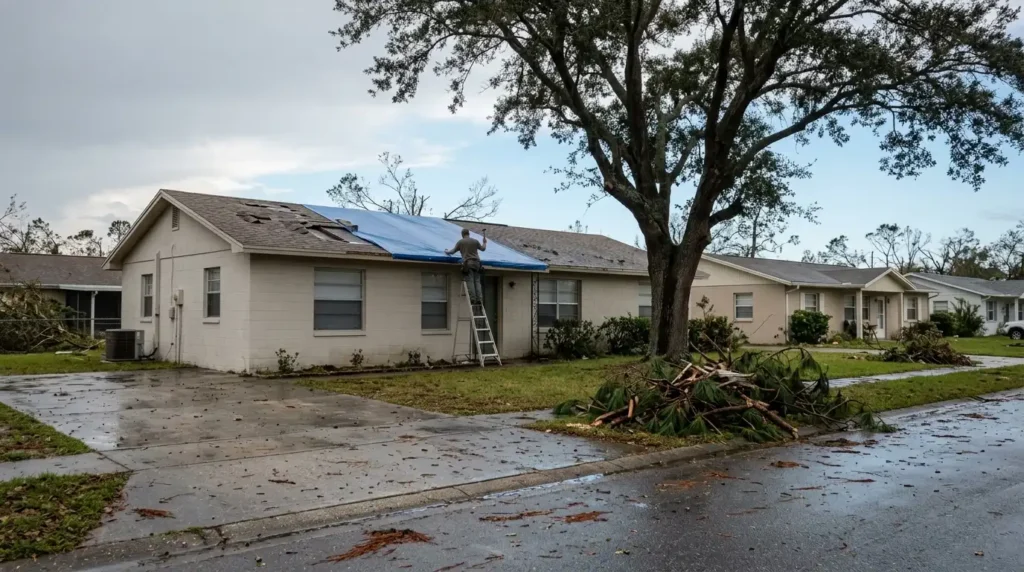
The storm has passed, and you are standing in the yard looking at the roof. Three roads are in front of you: fix it, file a claim, or sell. In Panama City, Pensacola, and Fort Walton Beach, a lot of homeowners make that choice in the first stressful week, and then the deadlines and the deductible end up making it for them.
It does not have to go that way. The choice is not really repair versus claim versus sell, because those can overlap. You can file a claim and sell. You can repair and keep the claim open. The real question is what order to do things in, and which path leaves you with the most money and the least risk.
This guide walks through the first week after a storm, the Florida claim rules that shape the decision, a simple decision path, and how each option compares when you run the numbers honestly.
Hurricane Isaias: Where to Get Help Right Now
If Hurricane Isaias damaged your home in Escambia, Santa Rosa, or Okaloosa County, start here. These are official resources as of October 12, 2026, and we will update this section as recovery moves forward.
FEMA status: FEMA’s emergency declaration for Hurricane Isaias currently covers public assistance for local governments only. Assistance for individual households has not been approved yet, so homeowners cannot apply to FEMA for repair money at this point. If that changes, applications will go through DisasterAssistance.gov.
Free help and hotlines
- Free tarping, tree, and debris help: Crisis Cleanup at 1-800-451-1954 connects Escambia and Santa Rosa residents with volunteer groups. The help is free, but a request does not guarantee service.
- Food, water, and other needs: dial 211 or visit 211nwfl.org.
- Insurance claim questions: the Florida Department of Financial Services Insurance Consumer Helpline at 1-877-693-5236.
- Price gouging or storm scams: the Attorney General’s hotline at 1-866-9-NO-SCAM (1-866-966-7226).
- Power outages: FPL at 1-800-468-8243, or your local electric cooperative if FPL is not your provider.
Report damage to your county
| County | How to report damage | Questions |
|---|---|---|
| Escambia, including Pensacola | Citizen Damage Report form | Citizen Info Line, 850-471-6600 |
| Santa Rosa | Find your parcel at srcpa.gov/search and click “Report Damage” under Owner Information | County storm updates |
| Okaloosa | Storm damage form linked on myokaloosa.com | Debris line for unincorporated areas, 1-833-495-3664 |
Before you clean up
- Photograph and video every damaged area before anything is moved or thrown out.
- Report the damage to your insurer. Florida gives you 1 year from the date of loss, covered in the deadlines section below.
- Debris pickup in Escambia, Santa Rosa, and unincorporated Okaloosa was set to begin Wednesday, October 14. Put debris at the roadside, keep tree debris and building debris in separate piles, and do not bag it.
- Check a contractor’s license at myfloridalicense.com before you pay anyone.
- If your home is unlivable for at least 30 days, Florida law allows a property tax refund. Apply to your county property appraiser by March 1, 2027.
Selling is the last thing on most people’s minds this week, and that is how it should be. When you are ready to weigh repair, claim, or sale, the rest of this guide walks through it.
Key Takeaways
- Protect the house first. Stop water from getting in, photograph everything, and keep receipts, whatever you decide later.
- Florida’s claim clock is short: 1 year from the date of loss to report a new claim, and 18 months for a supplemental claim.
- Your insurer has deadlines too. It must acknowledge your claim communication within 7 days and pay or deny within 60 days.
- Compare the damage to your hurricane deductible before filing. If the damage is close to it, the claim may pay little.
- Selling does not cancel a claim. You can sell before the claim is settled and keep your claim rights in writing.
Table of Contents
- The first week after a storm
- Florida claim deadlines that shape the decision
- Repair, claim, or sell: how to decide
- Your options, side by side
- How selling to Panhandle Real Estate Investments works
- Panama City, Pensacola, and Fort Walton Beach specifics
- Frequently asked questions
The First Week After a Storm
Before you decide anything, protect the house. Most homeowners policies require you to take reasonable steps to prevent further damage, which usually means tarping the roof, stopping active leaks, and drying out what you can. Keep every receipt, because those costs are often part of the claim.
Then document. Take photos and video of every damaged area before anything is cleaned up or thrown out, inside and out. Write down the date of loss, because Florida’s claim deadlines run from that date, not from when you got around to calling.
Be careful with contractors who knock on your door. For policies issued on or after January 1, 2023, Florida voids agreements that assign your post-loss insurance benefits to a contractor, so nobody should be asking you to sign your claim over to them. And if you are already leaning toward selling, it helps to understand selling with an open insurance claim before you sign any repair contract.
Florida Claim Deadlines That Shape the Decision
Florida rewrote its property claim rules in recent years, and the new deadlines are shorter than many people remember. Under section 627.70132 of the Florida Statutes, a new or reopened claim is barred unless notice is given within 1 year after the date of loss, and a supplemental claim within 18 months. A supplemental claim is for additional damage from the same storm that you find after the first claim was adjusted.
The insurer is on a clock as well. Section 627.70131 requires the insurer to acknowledge a claim communication within 7 calendar days and to pay or deny the claim within 60 days after receiving notice, unless factors beyond its control prevent it.
If you disagree with the result, you have options before court. The Florida Department of Financial Services runs a property insurance mediation program, and under section 627.7015 the insurer must bear the cost of conducting the mediation conference. The assignment ban mentioned above is also written in section 627.7152, and it expressly does not apply to a transfer to someone who buys the property after the loss.
Repair, Claim, or Sell: How to Decide
Work through these questions in order. Each one narrows the path.
Repair, claim, or sell: a quick decision path
- Is water still getting in? Stop it first. Tarp, dry out, photograph, and keep receipts. This step is the same no matter which road you take.
- Is the damage clearly bigger than your hurricane deductible? If not, a claim may pay little or nothing, so get a repair estimate first. If it is, report the claim, because the 1-year clock is already running.
- In a flood zone, could repairs reach half the structure’s value? If so, the substantial damage rules may force a full code rebuild, so find that out before you start repairing.
- Do you want to keep this house for the long term, and can you carry it while repairs and the claim play out? If yes, repair, then stay or list. If no, selling as-is with your claim rights kept in writing is a real option.
Two of those questions deserve a closer look. Hurricane deductibles in Florida are usually a percentage of your dwelling coverage, not a flat dollar amount, so check whether the damage clears your hurricane deductible before you count on a payout. And in a flood zone, FEMA’s 50 percent rule can turn a repair into a full elevation project.
The question people skip is carrying cost. A damaged house still costs you every month: mortgage, taxes, insurance, utilities, and the risk of more damage while repairs wait on a contractor or a check. That monthly drain is the hidden cost of the repair road, and it is the main reason some owners sell even when the claim is going well.
Your Options, Side by Side
There are three realistic outcomes, and they can mix with the claim in different ways.
Repair and stay. Best when you love the house, the claim covers most of the work, and you have a contractor you trust. The risk is the timeline: if the contractor or the claim stalls, you live with the damage longer.
Repair, then sell. A fully repaired house reaches the whole retail market and usually brings the highest price. But every month of repairs adds carrying cost, so the higher price has to beat those months. We walk through when a lower offer nets more after carry costs, with real numbers.
Sell as-is, keep the claim. You sell the house in its current condition and keep the claim rights for the loss, so any money the insurer still owes you stays yours. No repairs, no contractor, no carrying cost after closing.
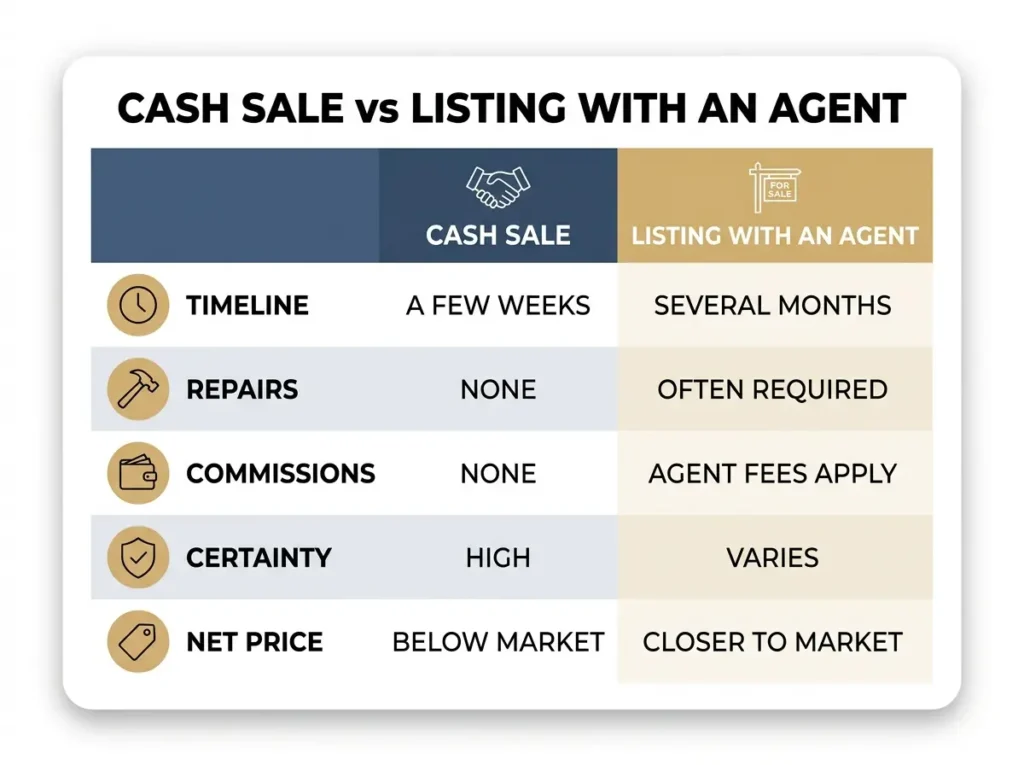
| Factor | Cash Sale (As-Is) | Listing With an Agent |
|---|---|---|
| Timeline | Often within a few weeks | Typically 60 to 120 days or more |
| Storm repairs | None, we buy as-is | Usually needed before a financed buyer can close |
| Open insurance claim | You can keep the claim rights | Has to be sorted out and disclosed for the buyer |
| Carrying costs | Stop at closing | Continue until the house sells |
| Commissions | None | Typically 5 to 6 percent |
| Certainty of close | High | Subject to financing, inspection, appraisal |
| Net price | Below market, no repairs or fees | Closer to market, after repairs and costs |
For the full picture, we keep an honest comparison of your selling options that lays it out without the sales spin. If the damage is modest and the claim covers it, repairing is often the better financial call, and you should hear that from us too.
How Selling to Panhandle Real Estate Investments Works
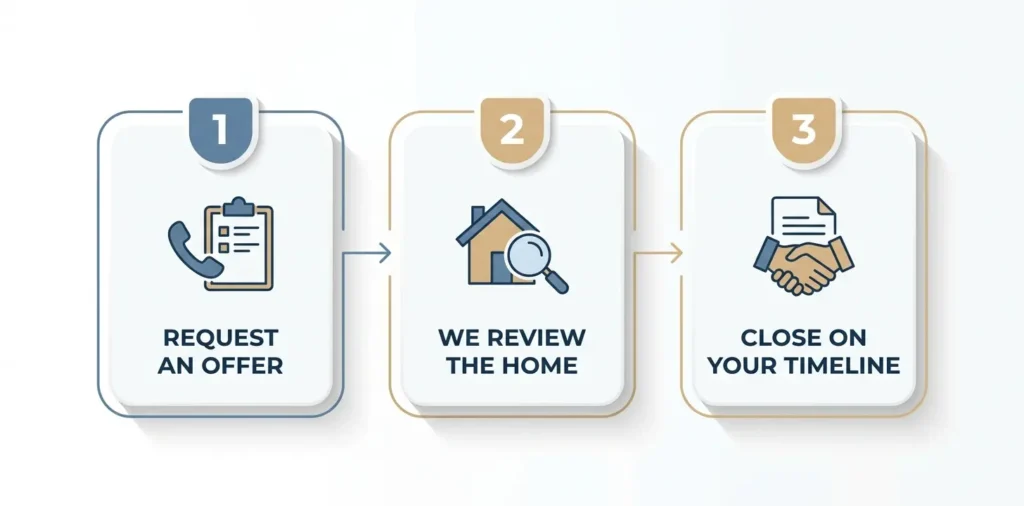
If selling as-is is the right fit, the process is short and there is no obligation to accept anything.
- Request an offer. Tell us about the house, the storm damage, and where your claim stands. It takes a few minutes and there is no commitment.
- We look at the damage and the numbers. We estimate the repairs and build them into a fair cash offer, with the math shown rather than hidden, so you can compare it with repairing.
- Close on your timeline. If the offer works, we handle the paperwork, your claim rights stay with you in writing if you want them, and you close when you are ready.
Run the repair numbers first. If the claim covers most of the work and you want to keep the house, that is probably the right answer, and we will say so.
Panama City, Pensacola, and Fort Walton Beach Specifics
This is not abstract right now. Hurricane Isaias made landfall near Destin around 8:30 p.m. on October 9 with maximum sustained winds of 105 mph, and Okaloosa, Santa Rosa, and Escambia are cleaning up now. Each part of the Panhandle also has its own storm memory. Bay County still carries the lessons of Hurricane Michael, when Panama City area owners learned how long claims and repairs can really take. Pensacola and the rest of Escambia County remember Hurricane Ivan and Hurricane Sally in 2020, which pushed water into neighborhoods along the bays and bayous. Fort Walton Beach and coastal Okaloosa County sit between the two, with many older homes close to the water.
The insurance market shapes the decision here too. Higher premiums and percentage deductibles mean more Panhandle homeowners are paying a larger share of storm damage themselves, which makes the repair road more expensive than it used to be. For context, read about the Panhandle insurance backdrop and how it has shifted.
Whichever county you are in, the order of operations is the same: protect the house, document, report on time, then decide with real numbers. Hurricane season home selling in the Panhandle goes best for owners who do those steps first instead of making a big decision in week one.
Frequently Asked Questions
Should I file a hurricane claim or just sell the house?
You can do both. Filing a claim does not stop you from selling, and selling does not cancel a claim. If the damage is clearly bigger than your hurricane deductible, reporting it usually protects money you are owed, and you can keep those claim rights when you sell. If the damage is close to the deductible, the claim may pay little.
How long do I have to file a hurricane claim in Florida?
Florida law bars a new or reopened property claim unless notice is given within 1 year after the date of loss, and a supplemental claim within 18 months. Those deadlines are in section 627.70132 of the Florida Statutes. Report early anyway, because evidence fades and later repairs can blur what the storm actually did.
Does filing a claim make my house harder to sell?
Usually not by much. Claims go on the property’s insurance claims history, which insurers can see for up to seven years, and Florida’s flood disclosure asks sellers about past flood claims. A documented claim with finished, permitted repairs rarely scares buyers. Unrepaired damage is what shrinks the buyer pool, not the claim itself.
What if my claim is denied or underpaid?
Ask the insurer for the decision and its reasons in writing. Florida’s Department of Financial Services runs a property insurance mediation program, and by law the insurer bears the cost of the mediation conference. Your policy may also allow appraisal, and an attorney can help with large disputes. A denial does not stop you from selling.
Can I sell before the claim is settled?
Yes. Many owners sell with the claim still open. The purchase contract should say whether you keep the claim rights or transfer them to the buyer, and Florida’s ban on assigning post-loss benefits does not apply to a transfer to a buyer of the property. Have an attorney review that language before you sign.
After a storm, the worst decision is a rushed one. Protect the house, get the claim reported on time, and then put the repair road and the selling road side by side with real numbers before you commit to either.
If you want to know what your Panama City, Pensacola, or Fort Walton Beach house is worth as-is, storm damage and open claim included, we are happy to give you a straightforward answer. No obligation, no pressure. Request a cash offer from Panhandle Real Estate Investments.

About Panhandle Real Estate Investments
I’m Peyton Saluto, founder of Panhandle Real Estate Investments. For over seven years, I’ve helped homeowners across the Florida Panhandle find fair and stress-free ways to sell their homes—no repairs, no commissions, and no pressure. My goal is always to put people first and make a real difference in our communities by restoring distressed properties and rebuilding neighborhoods. If you’re thinking about selling, reach out for a no-obligation cash offer. I’d love the opportunity to help you find the best path forward.