
Published by Panhandle Real Estate Investments, a locally owned real estate solutions company serving Bay County, Okaloosa County, Santa Rosa County, and Escambia County. We buy houses and land across the Florida Panhandle.
Last Updated: September 7, 2026
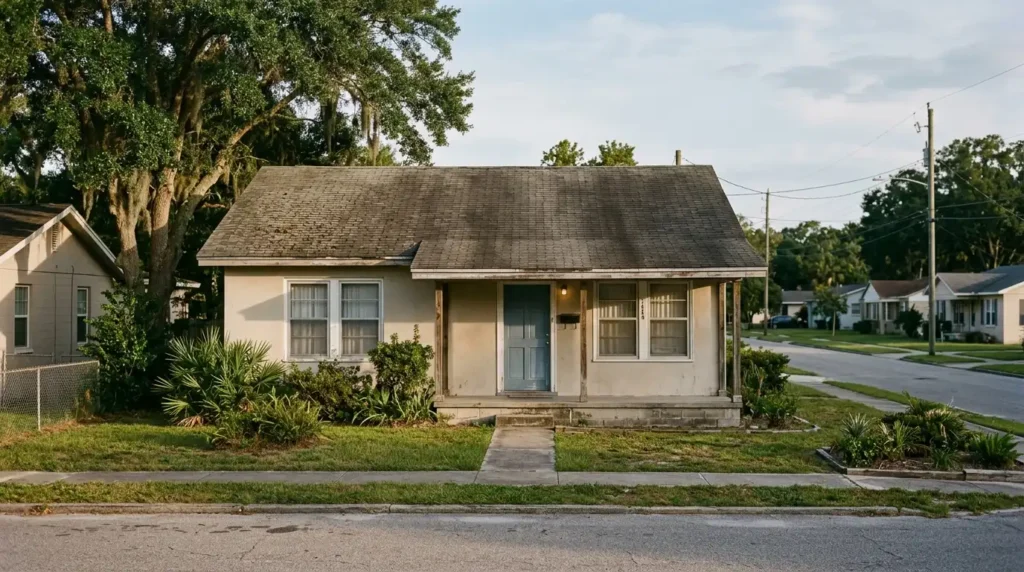
A non-renewal notice is not the same as a bill you can pay to make go away. It is your carrier telling you that when your current term ends, they are done, and in the Panhandle that letter has been landing on well-kept homes that never filed a claim. If you are in Pensacola or anywhere in Escambia County, you are not being singled out. Carriers are pulling back from coastal Florida, and your roof age or your ZIP code is often the whole reason.
The important thing is what the notice does to two things at once: your mortgage and your ability to sell. A lender requires hazard insurance, and a financed buyer cannot close on a house they cannot insure. So a non-renewal quietly puts pressure on both ends.
The good news is that Florida law gives you real time to act, and you have more than one way out. This post walks through why it happened, exactly what to do in your notice window, and the options in front of you if replacing the policy is not realistic.
Key Takeaways
- Non-renewal is usually about the risk, not about you. Roof age, prior claims on the property, or a carrier shrinking its Florida book drive most of it, even on homes in good shape.
- You get at least 120 days of written notice. Florida law requires it for a personal residential policy, and that notice has to state the reason. That window is time to act, not time to panic.
- A lapse triggers force-placed insurance. If you go uncovered, your mortgage servicer can buy lender-placed coverage and bill you for it. It is expensive and it protects the lender, not you.
- Non-renewal shrinks your buyer pool. A financed buyer needs their own policy to close, so an uninsurable home quietly loses most traditional buyers.
- You can still sell. A cash buyer does not need a new policy to close, so a non-renewed or uninsurable home can be sold as-is without fixing the roof first.
Table of Contents
- Why Florida insurers are non-renewing Panhandle homes
- Your 120-day notice window: what to do now
- Your options after a non-renewal
- How selling to Panhandle Real Estate Investments works
- Pensacola, Gulf Breeze, and Escambia County specifics
- Frequently asked questions
Why Florida Insurers Are Non-Renewing Panhandle Homes
Most non-renewals on the Gulf Coast come down to risk math, not to anything the owner did. Carriers reprice hurricane exposure every year, and when the numbers stop working for a stretch of coastline, they stop renewing policies there. A home with an older roof, a past claim, or simply a wind-exposed address can be dropped while the house itself is perfectly sound.
This is the same pressure that has pushed premiums up across the region. If you want the background on that, we covered why Panhandle insurance costs keep climbing in a separate post, and non-renewal is the sharper edge of the same trend.
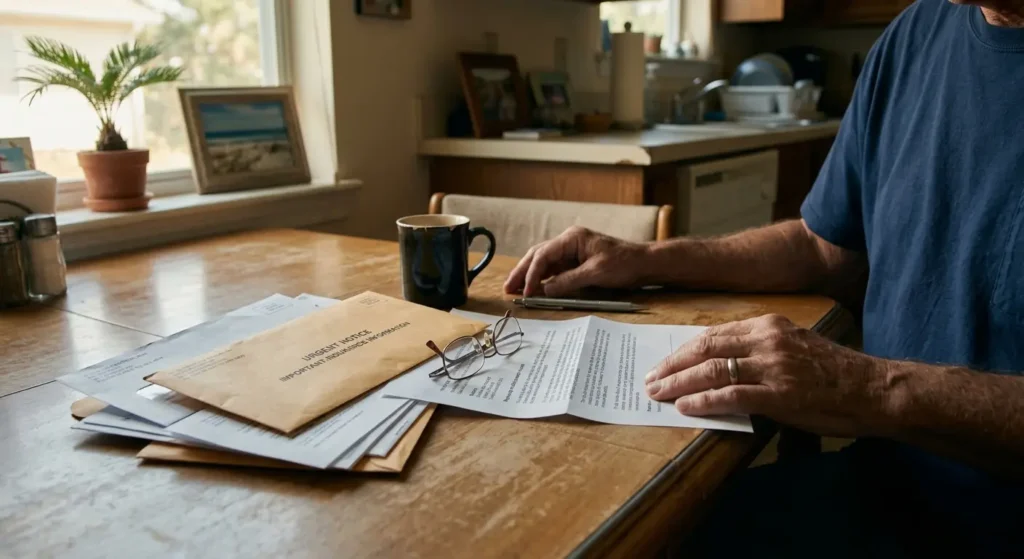
It helps to know the difference between two words. Cancellation is the insurer ending your policy mid-term, which is rare and tightly limited. Non-renewal is the insurer declining to continue once your current term ends, which is what most Panhandle owners are seeing. Non-renewal is more common and, because of the notice you are owed, more workable.
Your 120-Day Notice Window: What to Do Now
Florida does not let a carrier drop a personal residential policy without warning. Under Florida Statutes 627.4133, the insurer must give you at least 120 days of written notice before a non-renewal takes effect, and the notice has to state the reason. That is roughly four months to line up a plan before your coverage actually ends.
Here is a straight order of operations for that window.
- Find the exact non-renewal date. It is on the notice. That date, not the day the letter arrived, is your real deadline.
- Ask your agent for the specific reason. Roof age, a prior claim, or the carrier leaving Florida each point to a different fix. The reason tells you whether coverage is even recoverable.
- Shop the private market first. Have your agent run other carriers before you assume you are out of options. Some writers still take Panhandle homes that others drop.
- Check Citizens if the private market says no. Citizens Property Insurance is the state-backed insurer of last resort, and you may qualify if no comparable private offer is available.
- Price any required repair against the home’s value. If a new policy hinges on a roof you cannot fund, weigh that cost against what the house is worth as-is. Sometimes the repair does not pencil out.
- Tell your mortgage servicer where you stand. A lapse lets them force-place coverage, so it is better to stay ahead of that conversation than to be surprised by it.
If you work down that list and replacing coverage is not realistic, the last move is to find out what the home is worth as-is before the window closes, so a clean sale stays on the table.
Your Options After a Non-Renewal
You have three real paths, and the right one depends on why you were dropped and how much time and money you want to put into the house.
Replace the coverage and keep the home. If the reason is fixable and a private carrier or Citizens will write you, replacing the policy is the cleanest outcome, especially if you plan to stay. This is the goal for most owners who can get there.
Repair, then list on the open market. If the home becomes insurable after a repair and you have the time and cash, a traditional listing can net the most. The catch is that your buyer still has to secure their own policy, and on a home a carrier just dropped that is not guaranteed. If the property is storm damaged or genuinely hard to insure, it is worth reading how we approach selling a storm damaged or uninsurable home in the Panhandle.
Sell as-is to a cash buyer. A cash buyer does not need a new policy to close, so a non-renewal does not stop the sale the way it stops a financed one. The tradeoff is a price below full retail. This is the strongest fit when the fix is a roof you do not want to pay for, or when you simply want out before the coverage lapses. If your home is in Escambia County you can sell your Pensacola house as-is without putting a dollar into insurability first.
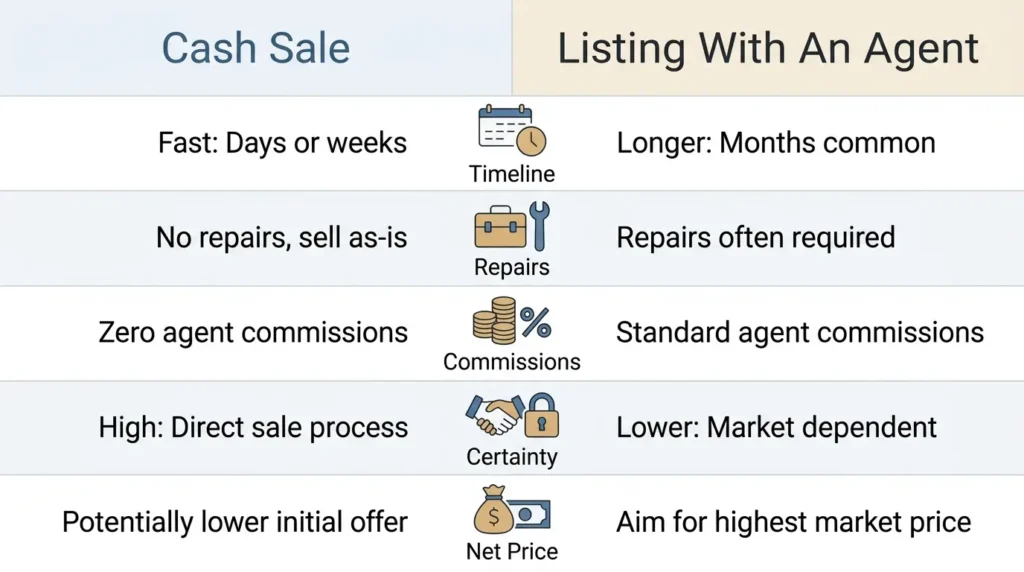
| Factor | Cash Sale (As-Is) | Listing With an Agent |
|---|---|---|
| Timeline | Often within a few weeks | Typically 60 to 120 days or more |
| Insurance to close | Not required | Buyer must secure their own policy, hard on a non-renewed home |
| Repairs (roof, etc.) | None | Often needed to make it insurable and to sell |
| Commissions | None | Typically 5 to 6 percent |
| Financing risk | None | Buyer’s loan can die if they cannot insure it |
| Certainty of close | High | Subject to financing, insurance, inspection, appraisal |
| Net price | Below market | Closer to market, before costs |
For a side-by-side on the tradeoffs, we keep an honest cash offer versus agent listing comparison that lays it out without the sales spin.
How Selling to Panhandle Real Estate Investments Works
If a cash sale is the right exit, our process is short and there is no obligation to accept anything.
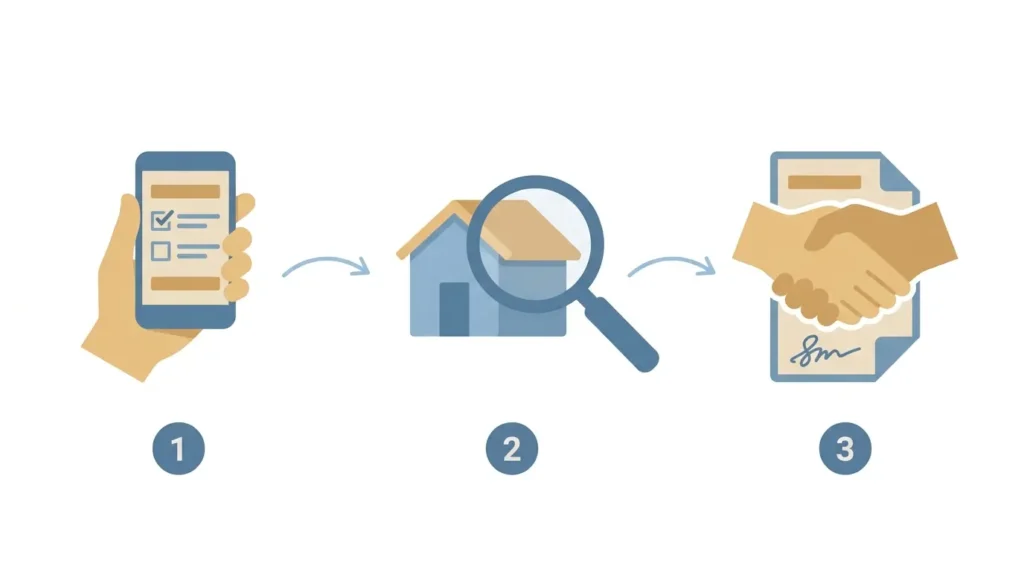
- Request an offer. Tell us about the home and where things stand with the insurance. It takes a few minutes and there is no commitment.
- We review the home and its insurability. We look at condition, the reason for the non-renewal, and what it would take to make the home insurable, then present a fair cash offer based on the real picture.
- Close on your timeline. If the offer works, we handle the paperwork and close when you are ready, with no new policy to secure, no agents, no fees, and no repairs.
Not every owner should sell to us. If a carrier or Citizens will write you and you want to stay, keeping the home is the better move, and we will tell you that plainly if it is true for your situation.
Pensacola, Gulf Breeze, and Escambia County Specifics
Pensacola sits in Escambia County and Gulf Breeze sits across the bay in Santa Rosa County, and both carry the wind exposure that makes carriers nervous. Homes close to the water, and older homes anywhere in the two counties, tend to see non-renewals first when a carrier trims its Florida book. It is a local pattern, not a personal one.
If your home is in Santa Rosa County, you can sell your Gulf Breeze house as-is the same way, without securing a new policy first. Either way, the move is to use the notice window rather than wait it out, because your options are widest while the current policy is still in force.
Frequently Asked Questions
Why was my homeowners insurance non-renewed in Florida?
Usually because of the risk the home represents, not anything you did. Roof age, a prior claim on the property, or a carrier reducing its Florida exposure drive most non-renewals. In the Panhandle, coastal wind risk makes it common even on well-maintained homes, and the notice you receive has to state the specific reason.
How much notice does an insurer have to give before non-renewal?
At least 120 days of written notice for a personal residential property policy in Florida, under Florida Statutes 627.4133. That notice must also state the reason. Use the window to shop the private market, check Citizens, price any required repair, or line up a sale before the policy lapses.
What happens if I cannot get insurance on my Florida home?
Your options narrow to a few. You may qualify for Citizens Property Insurance as the insurer of last resort, a surplus-lines carrier may write you, or you can sell to a buyer who does not need a policy. Going uninsured on a mortgaged home is not a real option, because the lender will force-place coverage.
Will my lender force-place insurance and what does it cost?
Yes. If your policy lapses, your mortgage servicer can buy force-placed insurance and add the cost to your loan. It is typically far more expensive than a normal policy, and it protects the lender’s interest in the property, not your belongings or your living expenses if something happens.
Can I sell a house that has no insurance?
Yes. A cash buyer does not need to secure a new policy to close, so an uninsured or uninsurable home can still be sold as-is. A financed buyer usually cannot, because their lender requires hazard insurance to fund the loan, which is exactly why a non-renewal shrinks the traditional buyer pool.
A non-renewal notice is a deadline, not a dead end. Whether you replace the policy and stay, repair and list, or sell as-is before the coverage lapses, the 120 days you are owed is enough time to choose on your terms instead of the carrier’s.
If you want to know what your Pensacola or Gulf Breeze home is worth as-is, insurance trouble and all, we are happy to give you a straightforward answer. No obligation, no pressure. Request a cash offer from Panhandle Real Estate Investments.

About Panhandle Real Estate Investments
I’m Peyton Saluto, founder of Panhandle Real Estate Investments. For over seven years, I’ve helped homeowners across the Florida Panhandle find fair and stress-free ways to sell their homes—no repairs, no commissions, and no pressure. My goal is always to put people first and make a real difference in our communities by restoring distressed properties and rebuilding neighborhoods. If you’re thinking about selling, reach out for a no-obligation cash offer. I’d love the opportunity to help you find the best path forward.