
Published by Panhandle Real Estate Investments, a locally owned real estate solutions company serving Bay County, Walton County, Okaloosa County, Santa Rosa County, and Escambia County. We buy houses and land across the Florida Panhandle.
Last Updated: August 24, 2026
On this page
- What the SIRS report actually triggered
- What happens if you cannot pay the assessment
- Four exits when you cannot cover the assessment
- How selling to Panhandle Real Estate Investments works
- Bay and Walton County specifics
- Frequently asked questions
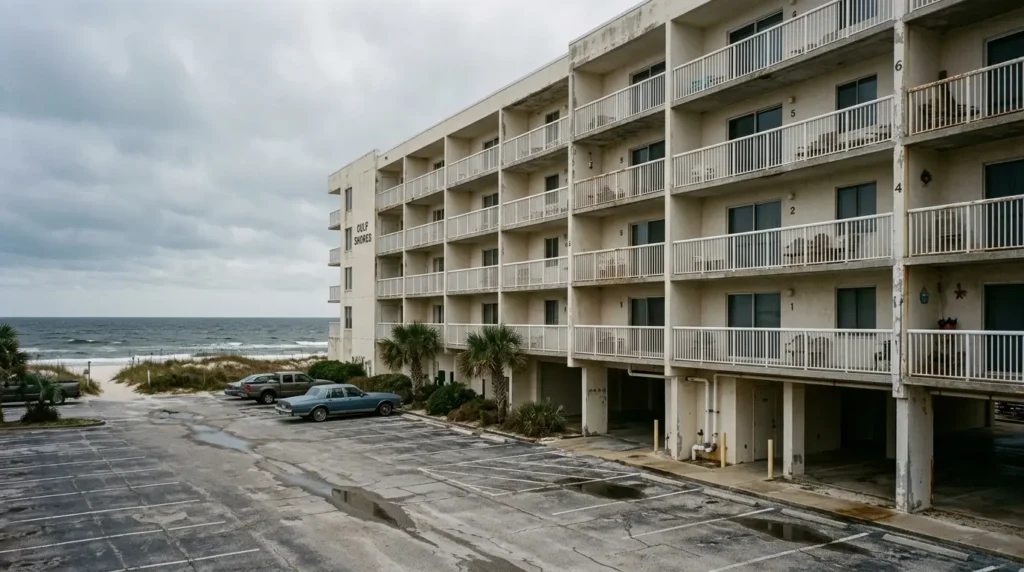
Every residential condominium building in Florida that stands three stories or more was required to complete a structural integrity reserve study, and owners can no longer vote to skip funding those reserves for budgets adopted on or after December 31, 2024. That single change is why so many condo owners along the Panhandle coast, from Panama City Beach to Miramar Beach, opened their mail this year to a special assessment with a number on it they never planned for.
If your building’s SIRS report came back and the board voted an assessment you genuinely cannot cover, you are not out of options, and you are not alone in Bay County or Walton County. The pressure is real, but a rushed decision made in the first week is usually the wrong one.
This post walks through what the SIRS report actually triggered, what happens if the assessment goes unpaid, and four honest exits, including the ones that do not involve selling to us. By the end you should know which path fits your situation and what to do next.
Key Takeaways
- A SIRS report drives a reserve funding requirement, and Florida law now blocks unit owners from waiving reserves for the components it lists.
- An unpaid special assessment can become a lien on your unit, and the association can foreclose that lien in the same way a mortgage is foreclosed.
- You have four real exits: fund it, list it, sell as-is for cash, or use a creative structure such as subject-to or seller financing.
- Selling to a cash buyer usually nets less than a clean listed sale, so it is the right move for owners who cannot carry the assessment or the wait, not for everyone.
- Whatever you decide, doing nothing is the one option that reliably makes it worse.
What the SIRS Report Actually Triggered
A structural integrity reserve study, or SIRS, is a professional inspection of the parts of a condominium that keep the building standing: the roof, load-bearing walls, floor, foundation, structural systems, waterproofing, and more. It estimates each component’s remaining useful life and the cost to replace it, then sets a reserve funding schedule so the money is there when the work is due.
For years, boards across Florida let owners vote to waive or underfund reserves to keep monthly dues low. After the Surfside collapse, the Legislature ended that practice for structural components. The board of directors of a unit-owner-controlled association that must obtain a SIRS may not decide to provide no reserves, or less than the study requires, for the items it lists.
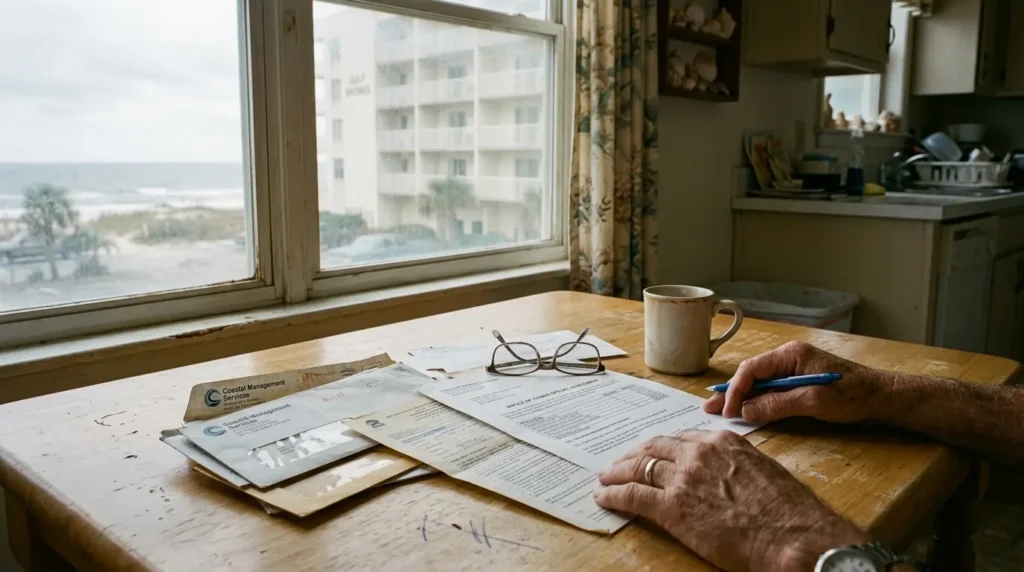
When a building has spent years underfunding reserves against a wall of deferred maintenance, the catch-up money has to come from somewhere. That is the special assessment. It is not your board being careless in most cases, it is a reserve funding requirement colliding with a repair bill that was postponed for a decade.
There is some newer flexibility worth knowing about. The 2025 reforms let associations fund SIRS reserves through regular assessments, special assessments, lines of credit, or loans, and even pause reserve contributions for up to two budget years after a milestone inspection while repairs are underway, if members approve and the state signs off on an alternative funding plan. If your board has not explored those, it is a fair question to raise. For the broader picture of what an association can do when an assessment goes unpaid, it is worth understanding the association’s collection powers before you decide anything.
What Happens If You Cannot Pay the Assessment
Ignoring the assessment is the most expensive option, because Florida gives condominium associations real teeth. Under Florida Statutes 718.116, an unpaid assessment becomes a lien on your unit, and the association can bring an action to foreclose that lien in the same manner a mortgage of real property is foreclosed.
Here is the escalation, in order, so nothing is a surprise:
- Late fees and interest start adding to the balance the moment you fall behind.
- A claim of lien is recorded against your unit in the county public records.
- A written notice of intent to foreclose must be sent, and no foreclosure judgment can be entered until at least 45 days after that notice.
- A foreclosure action can follow, and the association can also seek a money judgment against you personally for what is owed, plus its attorney fees.
The 45-day notice window matters. It is not a lot of time, but it is a real window to act, and acting inside it is far better than waiting for the courthouse steps. An owner who moves early almost always keeps more of their equity than one who waits for the association’s attorney to file.
Four Exits When You Cannot Cover the Assessment
There is no single right answer here. The right exit depends on how much equity you have, how much time you have, and whether you want to keep the unit at all. Here are the four real paths.
Exit 1: Fund the assessment
If you have equity, income, or savings to draw on, paying the assessment and keeping the unit is often the cheapest long-run choice, especially if you like where you live. Ask the board about a payment plan, and ask whether the association is using a loan or line of credit to spread the cost across all owners rather than demanding lump sums. Many boards will work with owners who communicate early. This is the best exit for owners who can carry it, and we will tell you so plainly.
Exit 2: List the unit with an agent
If your condo is in good shape, you have time before the assessment comes due, and the building is still attractive to retail buyers, listing on the open market usually nets the most money. The catch after a SIRS report is disclosure. You have to tell buyers about the assessment, and buyers using financing may run into lenders who are cautious about buildings with open structural work or thin reserves. A local agent who knows the Panama City Beach and Walton County condo market can tell you honestly whether your building will attract financed buyers right now.
Exit 3: Sell as-is to a cash buyer
When the assessment is larger than you can cover and the clock is running, selling as-is for cash removes the assessment problem from your plate without repairs, showings, or financing contingencies. This is exactly the situation we handle, the same way we help owners turning equity into cash when the money is not there. We buy the unit knowing the assessment exists and factor it in, so you are not chasing a retail buyer who walks the moment they read the disclosure. If your property is in a market like Santa Rosa Beach, you can sell a Santa Rosa Beach property as-is without touching the repairs or the paperwork.
A cash sale almost always nets less than a clean listed sale would in a healthy building. That tradeoff is the whole point: you are buying speed and certainty. For an honest comparison of selling directly versus listing, look at the numbers side by side before you decide.
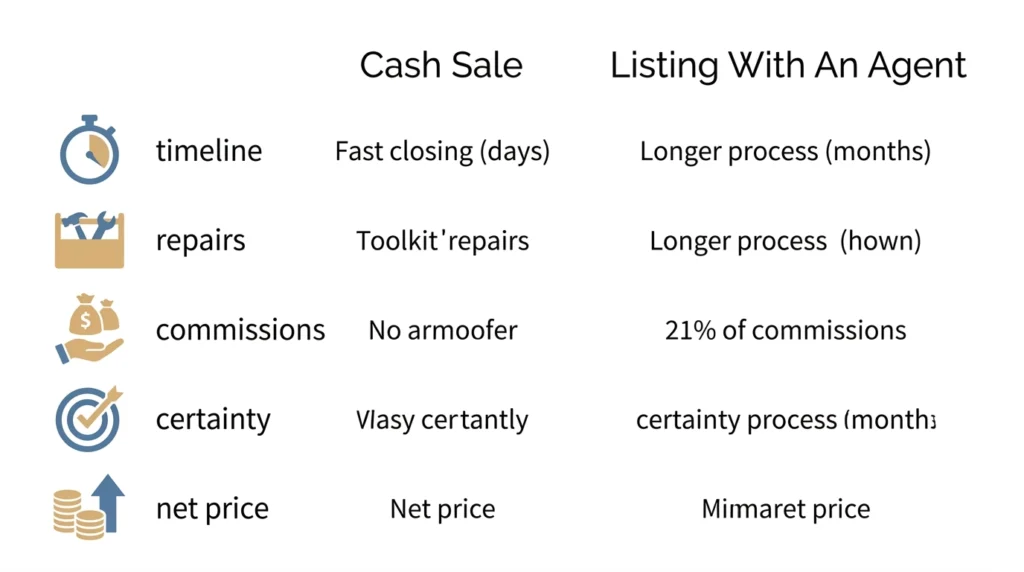
| Factor | Cash Sale (As-Is) | Listing With an Agent |
|---|---|---|
| Timeline | Often within a few weeks, depending on your situation | Typically 60 to 120 days in a healthy building |
| The assessment | Factored into the offer, off your plate at closing | Disclosed to buyers, can slow or scare financed offers |
| Repairs | None | Often requested by buyers |
| Commissions | None | Typically 5 to 6 percent |
| Certainty of close | High | Subject to financing, inspection, and appraisal |
| Net price | Below market, adjusted for condition and the assessment | Closer to market, before costs |
| Best for | Owners who cannot carry the assessment or the wait | Move-in-ready units, patient timelines |
Exit 4: Use a creative structure
If you owe little on the unit, or the numbers do not work for a straight cash sale, a creative purchase structure sometimes fits. With subject-to, we take over the existing mortgage payments and title transfers to us, while the loan stays in your name. With seller financing, you receive payments over time instead of a lump sum. These are not right for every owner, and we walk through every detail before anything is signed, but for the right situation they can solve an assessment that a traditional sale cannot.
Which exit fits your situation? A quick check:
- You can afford it and want to stay: Exit 1. Ask about a payment plan or association financing first.
- Good unit, some time, healthy building: Exit 2. List it and net the most.
- Assessment is bigger than you can carry, and the clock is ticking: Exit 3. Sell as-is for cash.
- Little or no mortgage, or a straight sale does not pencil out: Exit 4. Ask about subject-to or seller financing.
- You are not sure and the 45-day notice has started: Talk to someone this week, not next month.
How Selling to Panhandle Real Estate Investments Works
If Exit 3 or Exit 4 is where you land, our process is short and there is no obligation to accept anything.
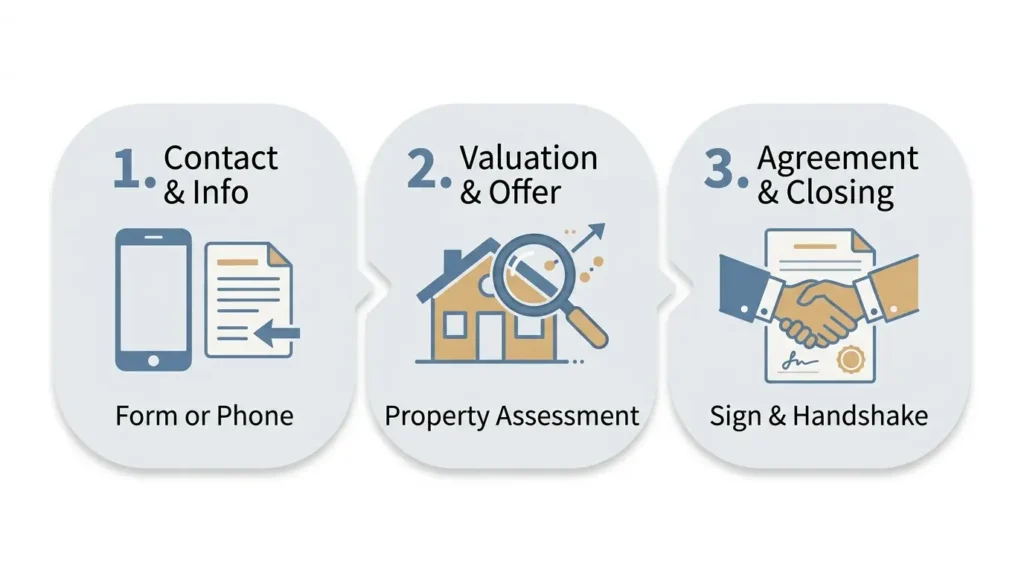
- Request an offer. Tell us about the unit, the building, and the assessment. It takes a few minutes and there is no commitment.
- We review the property. We look at the condition, the assessment, and the local market, then present a fair cash offer that already accounts for the assessment.
- Close on your timeline. If the offer works, we handle the paperwork and close when you are ready, often faster than a traditional listing, with no agents, no fees, and no repairs.
Not every owner should sell to us, and we will say so if your situation points to Exit 1 or Exit 2. That honesty is the point.
Bay and Walton County Specifics
The condo buildings feeling this most in our market are the older mid-rise and high-rise towers along the coast in Panama City Beach, Miramar Beach, and the Santa Rosa Beach area of Walton County. Many were built decades ago, which means real deferred maintenance and reserve funding that never kept pace, exactly the profile that produces a large SIRS-driven assessment.
If you believe your board is mishandling the assessment or the reserve study, the state agency that oversees condominium associations is the Florida DBPR Division of Condominiums, Timeshares, and Mobile Homes, which handles unit owner complaints and disputes. That is the right first call for a governance problem. For a financial problem, meaning you simply cannot pay, none of those complaint paths change what you owe, so the four exits above are where your real decisions are.
Frequently Asked Questions
What is a structural integrity reserve study?
A structural integrity reserve study, or SIRS, is a required inspection of a condominium’s structural components, including the roof, load-bearing walls, foundation, and waterproofing. It estimates each component’s remaining life and replacement cost, then sets a reserve funding schedule. Florida requires it for residential condominium buildings three stories or higher.
What happens if I do not pay my condo special assessment?
If you do not pay, late fees and interest accrue, the association records a lien on your unit, and under Florida Statutes 718.116 it can foreclose that lien the same way a mortgage is foreclosed. It can also seek a money judgment against you personally, plus attorney fees. No foreclosure judgment can be entered until at least 45 days after the association’s written notice.
Can my condo association foreclose on my unit?
Yes. A Florida condominium association can foreclose on your unit for unpaid assessments, and Florida Statutes 718.116 lets it do so in the same manner a mortgage is foreclosed. The association must first record a lien and give at least 45 days written notice of its intent before a foreclosure judgment can be entered.
Can I sell my condo to avoid paying the assessment?
Yes, you can sell before the assessment is fully paid, but the obligation does not simply vanish. It is typically settled at closing out of the sale proceeds or negotiated between buyer and seller. Selling as-is to a cash buyer who factors the assessment into the offer is often the cleanest way to resolve it when you cannot pay out of pocket.
Will the buyer take over the remaining assessment payments?
It depends on how the sale is structured and what the association allows. In many sales the outstanding balance is paid at closing so the buyer takes clean title. In others, buyer and seller negotiate who carries the remaining installments. We make this part explicit in any offer, so you know exactly who is responsible for the assessment before you sign.
A SIRS report and an assessment you cannot afford feel like a trap, but they are a problem with known exits, not a dead end. Whether the right move is funding it, listing it, selling as-is, or a creative structure, the owners who act inside the notice window keep the most control and the most of their equity.
If you want to know what your Panama City Beach, Miramar Beach, or Santa Rosa Beach condo could be worth as-is, assessment and all, we are happy to give you a straightforward answer. No obligation, no pressure. Request a cash offer from Panhandle Real Estate Investments here.

About Panhandle Real Estate Investments
I’m Peyton Saluto, founder of Panhandle Real Estate Investments. For over seven years, I’ve helped homeowners across the Florida Panhandle find fair and stress-free ways to sell their homes—no repairs, no commissions, and no pressure. My goal is always to put people first and make a real difference in our communities by restoring distressed properties and rebuilding neighborhoods. If you’re thinking about selling, reach out for a no-obligation cash offer. I’d love the opportunity to help you find the best path forward.