
Published by Panhandle Real Estate Investments, a locally owned real estate solutions company serving Bay County, Okaloosa County, Santa Rosa County, and Escambia County. We buy houses and land across the Florida Panhandle.
Last Updated: September 1, 2026
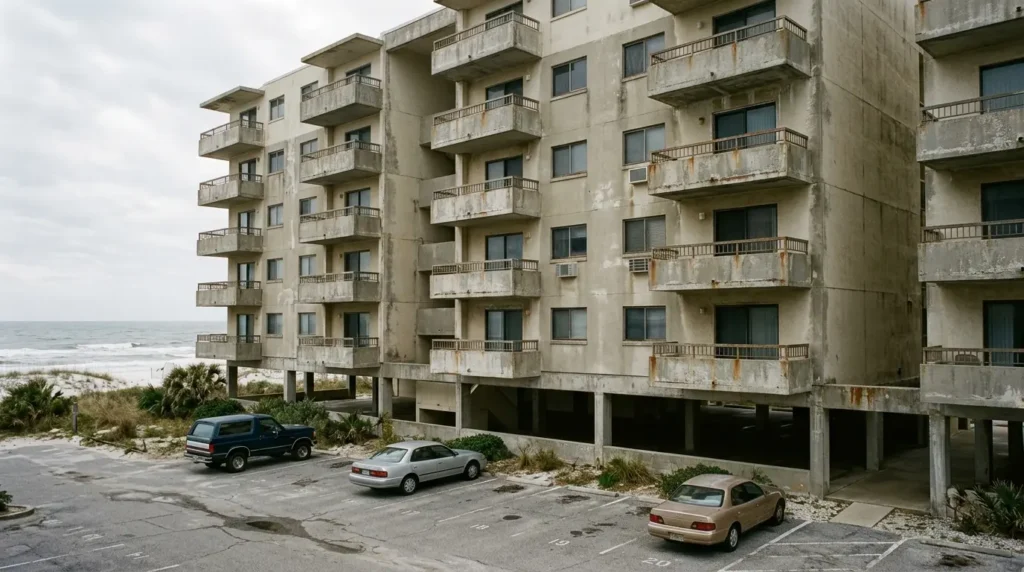
Most homeowners assume that only the bank can take their home. In Florida, that is not the whole story. A homeowners association or a condominium association can foreclose on your home over unpaid dues and assessments, and Florida law gives them a clear path to do it, under Florida Statutes 720.3085 for HOAs and Florida Statutes 718.116 for condominiums.
If you are behind on assessments in Panama City or Pensacola and the letters from the association have started to sound serious, this is worth understanding fully, because the association foreclosure process is real, but it is also slow enough to give you a window to act.
This post explains how an association lien turns into a foreclosure in Bay County and Escambia County, how long it takes, and the honest options you have to get out from under it before the courthouse steps.
Key Takeaways
- Yes, a Florida association can foreclose. Both HOAs and condominium associations can record a lien for unpaid assessments and foreclose it the same way a mortgage is foreclosed.
- Your mortgage being current does not protect you. The assessment lien is separate from your mortgage.
- The process is judicial and gives you notice. The association must send written notice and wait out statutory periods before it can foreclose, which is your window to act.
- You can sell a home with an association lien on it. The lien is typically paid from the sale proceeds at closing, settled against the estoppel certificate.
- Doing nothing is the one path that reliably ends at a foreclosure sale.
Table of Contents
- Can an association really foreclose?
- The Florida association foreclosure timeline
- Your options before it gets to a sale
- How selling to Panhandle Real Estate Investments works
- Bay and Escambia County specifics
- Frequently asked questions
Yes, a Florida Association Can Foreclose on Your Home
When you fall behind on association dues, the debt does not just sit there. Under Florida Statutes 720.3085, a homeowners association can record a claim of lien against your parcel for unpaid assessments, and once that lien exists, the association can bring an action to foreclose it. For a condominium, Florida Statutes 718.116 does the same thing and lets the association foreclose the assessment lien in the same manner a mortgage of real property is foreclosed.
The important part is that this lien is its own separate claim against your home. It does not matter whether you are current on your first mortgage. A unit owner who never misses a mortgage payment can still face an association foreclosure over unpaid dues, because the two obligations are entirely separate.
Florida is a judicial foreclosure state, which means the association cannot simply take the home. It has to file a lawsuit and win a judgment first, and that takes time and notice. We break down exactly how an association lien becomes a foreclosure in Escambia County in a companion post, and the same steps apply in Bay County.
The Florida Association Foreclosure Timeline
The process is not instant, and each step comes with a notice you will actually see. Here is how it escalates, in order, so nothing catches you off guard.
- You fall behind. Late fees and interest start adding to the balance the moment an assessment goes unpaid.
- Notice of intent to record a lien. For an HOA, the association must give you written notice, at least 45 days under Florida Statutes 720.3085, before it records a claim of lien.
- The claim of lien is recorded. The assessment lien is filed in the county public records through the clerk, for example the Bay County Clerk of Courts, and now clouds your title.
- Notice of intent to foreclose. The association must send a further written notice of its intent to foreclose, again at least 45 days, before it files suit.
- The foreclosure lawsuit is filed. Because Florida uses judicial foreclosure, the association sues in the circuit court, and it can also seek a money judgment against you personally for what is owed plus its attorney fees.
- Judgment and sale. If the association wins, the court can order the home sold at a foreclosure sale, and in some cases the association can pursue a deficiency for any shortfall.
Those two 45-day notice windows matter. They are not a lot of time, but they are real, and an owner who acts inside them almost always keeps more of their equity than one who waits for the sale date to be set.
Your Options Before It Gets to a Sale
You are not out of moves once a lien is recorded. The right one depends on how much you owe, how much equity you have, and how much time is left on the clock.
Pay or settle the balance. If you can bring the account current or negotiate a payment plan with the association, that is usually the cheapest way to stop the process, especially if you want to keep the home. Many associations will work with an owner who communicates early rather than pay a lawyer to foreclose.
List the home with an agent. If you have real equity, time before a sale date, and a home in good shape, listing on the open market can net the most. The catch is speed. A recorded lien and a pending association action have to be disclosed, and a slow listing can run past the foreclosure timeline.
Sell as-is to a cash buyer. When the clock is short or the home needs work, selling as-is for cash lets you resolve the lien at closing without repairs or showings. A cash buyer is comfortable closing with the lien attached, and we explain how a cash sale closes with liens attached so there are no surprises. If your home is in Escambia County, you can sell your Pensacola house as-is and let the lien be settled from the proceeds.
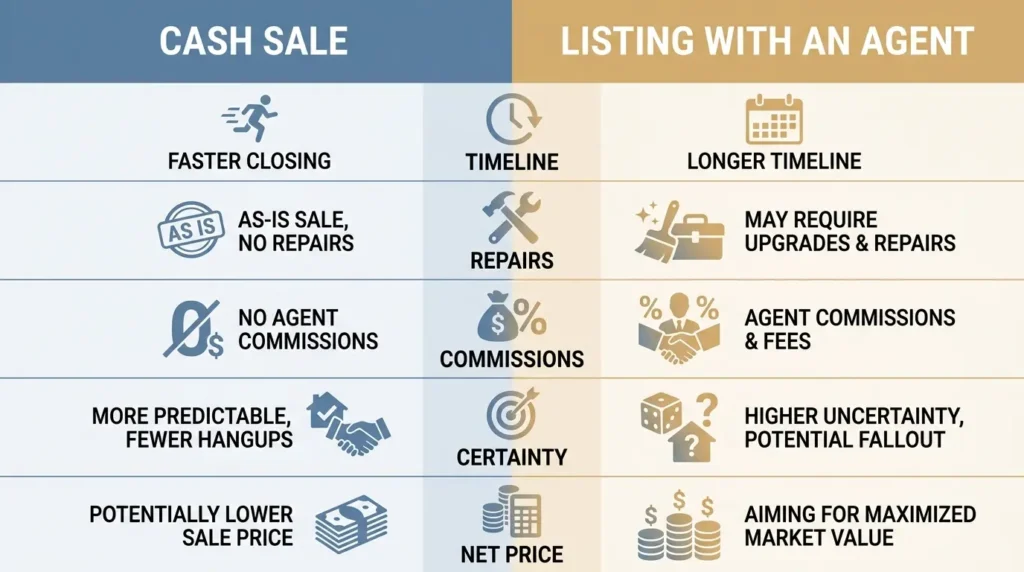
| Factor | Cash Sale (As-Is) | Listing With an Agent |
|---|---|---|
| Timeline | Often within a few weeks, depending on your situation | Typically 60 to 120 days |
| The lien | Paid from proceeds at closing, off your plate | Disclosed to buyers, can slow financed offers |
| Repairs | None | Often requested by buyers |
| Commissions | None | Typically 5 to 6 percent |
| Certainty of close | High | Subject to financing, inspection, appraisal |
| Net price | Below market, adjusted for condition and the lien | Closer to market, before costs |
| Best for | Owners short on time or facing a sale date | Homes in good shape with a patient timeline |
For a side-by-side on the tradeoffs, we keep an honest cash offer versus agent listing comparison you can look at before deciding.
How Selling to Panhandle Real Estate Investments Works
If a cash sale is the right exit, our process is short and there is no obligation to accept anything.
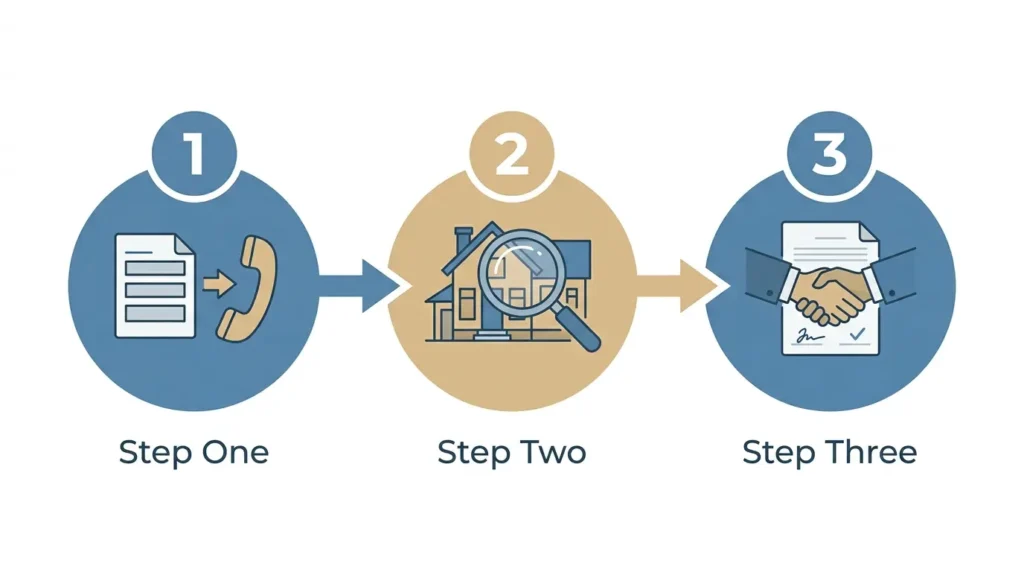
- Request an offer. Tell us about the home, the association, and roughly what is owed. It takes a few minutes and there is no commitment.
- We review the property. We look at the condition, the lien, and the local market, then present a fair cash offer that already accounts for what has to be cleared at closing.
- Close on your timeline. If the offer works, we handle the paperwork, coordinate the payoff of the association lien, and close when you are ready, with no agents, no fees, and no repairs.
Not every owner should sell to us. If you have the income to settle the balance and want to stay, that is the better move, and we will tell you so. We handle these alongside owners who are selling a house already in foreclosure in Florida, because the exits overlap.
Bay and Escambia County Specifics
In Bay County, an association lien is recorded and a foreclosure is filed through the Bay County Clerk of Courts, and in Escambia County it runs through that county’s clerk. These are the same courts that handle mortgage foreclosures, which is why an association foreclosure looks so much like a bank foreclosure once it reaches the courthouse.
One nuance worth knowing is the safe harbor. Under both statutes, when a first mortgagee, meaning your lender, takes title through its own foreclosure, its liability for the prior owner’s unpaid assessments is capped, to the lesser of twelve months of assessments or one percent of the original mortgage debt. That safe harbor protects the lender, not you and not an ordinary buyer, so it does not erase what you owe. It is simply part of how these liens sort out when both a mortgage and an association are involved.
Frequently Asked Questions
Can an HOA foreclose on my home if my mortgage is current?
Yes. An association’s assessment lien is separate from your mortgage, so staying current on your loan does not stop an HOA or condominium association from foreclosing over unpaid dues. Under Florida Statutes 720.3085 and 718.116, the association can record a lien and foreclose it regardless of your mortgage status.
How much do I have to owe before an HOA can foreclose in Florida?
Florida law sets no fixed dollar minimum for an HOA to foreclose an assessment lien. Once you fall behind and the association follows the required notice steps under Florida Statutes 720.3085, it can lien and foreclose. In practice, many associations wait until the balance plus fees justifies the legal cost, but there is no guaranteed floor.
How long does an HOA foreclosure take in Florida?
It varies, but it is not fast. The association must give written notice before recording a lien, at least 45 days for an HOA, then a further notice of intent to foreclose, again at least 45 days, before filing a judicial foreclosure. Add the court process on top, and it commonly takes several months from first notice to any sale.
Can I sell my house with an HOA lien on it?
Yes. You can sell a home that has an association lien on it. The lien is typically paid off from the sale proceeds at closing, settled against the amount stated on the association’s estoppel certificate. A cash buyer who is comfortable closing with a lien attached can often do this faster than a traditional listing.
Does the buyer inherit the unpaid HOA dues?
Usually yes for an ordinary buyer. Under Florida Statutes 720.3085 and 718.116, a new owner can be jointly and severally liable with the prior owner for unpaid assessments, which is exactly why the balance is settled at closing using the estoppel certificate. The statutory safe harbor cap applies only to a foreclosing first mortgagee, not to a regular buyer.
An association foreclosure feels like a trap, but it is a slow, notice-driven process with real exits, not a dead end. Whether the right move is settling the balance, listing, or selling as-is, the owners who act inside the notice windows keep the most control and the most of their equity.
If you want to know what your Panama City or Pensacola home could be worth as-is, lien and all, we are happy to give you a straightforward answer. No obligation, no pressure. Request a cash offer from Panhandle Real Estate Investments.

About Panhandle Real Estate Investments
I’m Peyton Saluto, founder of Panhandle Real Estate Investments. For over seven years, I’ve helped homeowners across the Florida Panhandle find fair and stress-free ways to sell their homes—no repairs, no commissions, and no pressure. My goal is always to put people first and make a real difference in our communities by restoring distressed properties and rebuilding neighborhoods. If you’re thinking about selling, reach out for a no-obligation cash offer. I’d love the opportunity to help you find the best path forward.