
Published by Panhandle Real Estate Investments, a locally owned real estate solutions company serving Santa Rosa County, Escambia County, Okaloosa County, and Bay County. We buy houses and land across the Florida Panhandle.
Last Updated: October 8, 2026
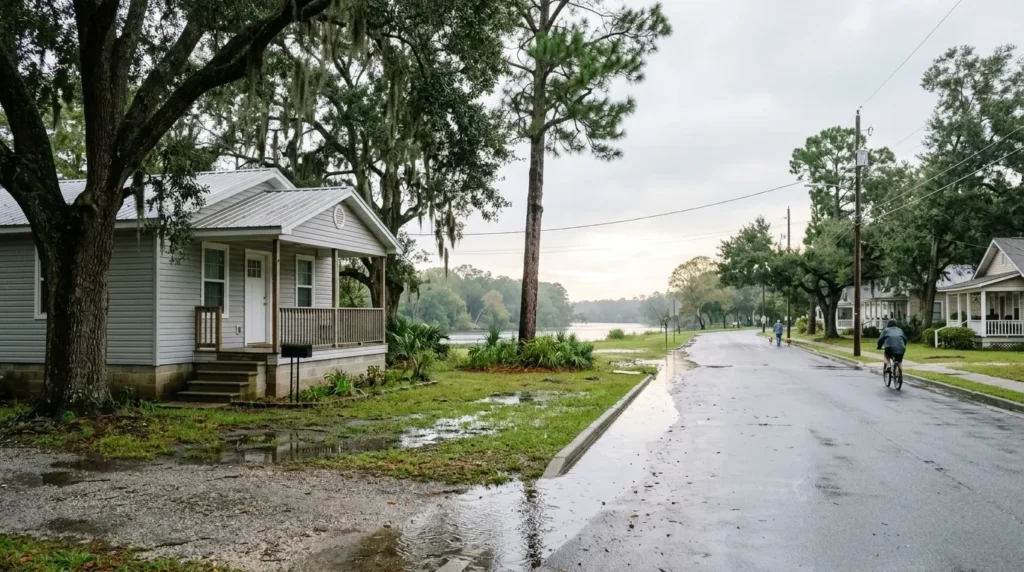
If you own a home near the Blackwater River in Milton, along East Bay in Pace, or a few blocks off Santa Rosa Sound in Navarre, someone has probably asked you for an elevation certificate. Maybe it was your flood insurance agent, maybe a buyer’s agent, maybe a lender. Most owners have never seen one and are not sure whether they need it, where to get it, or what it will cost.
An elevation certificate is one of the most useful pieces of paper a flood-zone home can have. It can lower a flood insurance quote, support a request to take your home off the flood map, and answer a buyer’s biggest question before they ask it. And many Santa Rosa County owners already have one on file with the county without realizing it.
This post explains what the certificate is, how to find or order one in Santa Rosa County, what it does for your premium and your sale, and what to do if the numbers still do not work.
Key Takeaways
- An elevation certificate is a FEMA form that records how high your home sits compared with the base flood elevation on the flood map.
- Check for an existing one first. Santa Rosa County’s floodplain management office keeps copies of elevation certificates on file.
- It is optional for flood insurance, but FEMA will consider it when rating your policy, and it can bring the premium down.
- A good certificate does not expire unless the building itself changes, so an older one may still work for a sale.
- It can support a letter of map amendment, which can remove the federal flood insurance requirement if the home sits above the base flood elevation.
Table of Contents
- What an elevation certificate actually is
- How to get one in Santa Rosa County
- What it does for your premium and your sale
- Your options if the numbers still do not work
- How selling to Panhandle Real Estate Investments works
- Milton, Pace, Navarre, and Santa Rosa County specifics
- Frequently asked questions
What an Elevation Certificate Actually Is
An elevation certificate is a standard FEMA form, filled out and certified by a licensed professional, that records the elevation of your building and compares it with the base flood elevation shown on the Flood Insurance Rate Map. The key numbers are the height of your lowest floor, the ground right around the house, and the machinery like your air conditioner and water heater.
In plain terms, it answers one question: is the living space above or below the level where floodwater is expected to reach in a major flood? Your flood zone tells an insurer the neighborhood’s risk. The certificate tells them where your specific house sits inside that risk, and that difference can be large.

That matters more every year as flood and homeowners coverage both get more expensive. If you are trying to make sense of the wider Panhandle insurance picture, the elevation certificate is one of the few tools that can actually move a flood number in your favor.
How to Get One in Santa Rosa County
Start by checking whether one already exists. Santa Rosa County’s floodplain management office lists copies of elevation certificates among its services and serves as the county’s archive for flood information, including flood maps and letters of map amendment. If your home was built or substantially improved in a flood zone, there is a good chance a certificate was filed with the permit.
If nothing is on file, you hire a licensed professional to produce one. FEMA requires the elevation information to be certified by a licensed land surveyor or registered professional engineer, and in practice most owners call a local surveying firm. The surveyor visits, shoots the elevations, photographs the building, and completes the form.
How to get an elevation certificate, step by step
- Ask the county first. Contact Santa Rosa County Floodplain Management and ask whether an elevation certificate is on file for your address.
- Check your own paperwork. Closing packages, old flood policies, and building permit files sometimes include one.
- Get surveyor quotes if needed. Prices vary with the property and site access, so ask two or three local surveyors.
- Send it to your flood agent. Ask them to re-rate the policy with the certificate and compare the quote.
You may not need a new one at all. FEMA says a complete and correct elevation certificate does not expire unless there is a physical change to the building that invalidates what was certified, and a map change alone does not require a new one.
Does your existing certificate still count?
| What changed since it was certified | Need a new one? |
|---|---|
| Nothing, the house is the same | No |
| The flood map was updated, but the house did not change | No |
| Repairs that do not change floor height, grade, or equipment height | No |
| An addition, raised equipment, or regrading around the house | Yes |
| The home was substantially improved | Yes |
What It Does for Your Premium and Your Sale
On the insurance side, the certificate is optional but powerful. FEMA’s own guidance says an elevation certificate is not required to purchase flood insurance, but if you provide one it will be considered for rating. Under Risk Rating 2.0, a home that sits higher than FEMA’s default assumptions can come back with a lower quote once the real elevations are on file.
The certificate is also the starting point for a letter of map amendment, often called a LOMA. If the lowest ground touching your house is at or above the base flood elevation, FEMA can issue a letter that officially removes the structure from the special flood hazard area. FEMA charges no review or processing fee for a LOMA request, and once issued, it eliminates the federal flood insurance purchase requirement for federally backed loans.
For a sale, that adds up to a real advantage. Florida law does not require you to hand a buyer an elevation certificate, but buyers’ insurers and agents ask for one constantly, and a good certificate turns a scary unknown into a specific premium quote. We covered the wider rules in what a zone AE designation means for a sale, and the certificate is the document that answers most of those questions in one page.
Your Options If the Numbers Still Do Not Work
Sometimes the certificate confirms what you feared: the home sits below the base flood elevation, the premium stays high, and buyers who need financing back away. At that point you have a few honest paths.
List it anyway, with the certificate in hand. Even an unfavorable certificate is better than none, because it gives buyers a real number instead of a worst-case guess. If the home is otherwise in good shape, a traditional listing may still net you more.
Improve the elevation picture first. Some homes can lower their rating by raising the air conditioner and other equipment or adding flood openings. Get advice from your surveyor and flood agent before spending money, and keep the project small enough that it does not count as a substantial improvement.
Sell directly to a cash buyer. If the flood premium is pricing out financed buyers, or the house also needs work, a cash sale takes the lender requirement off the table. You can sell your Milton house as-is or sell your Navarre house as-is without ordering a new survey first.
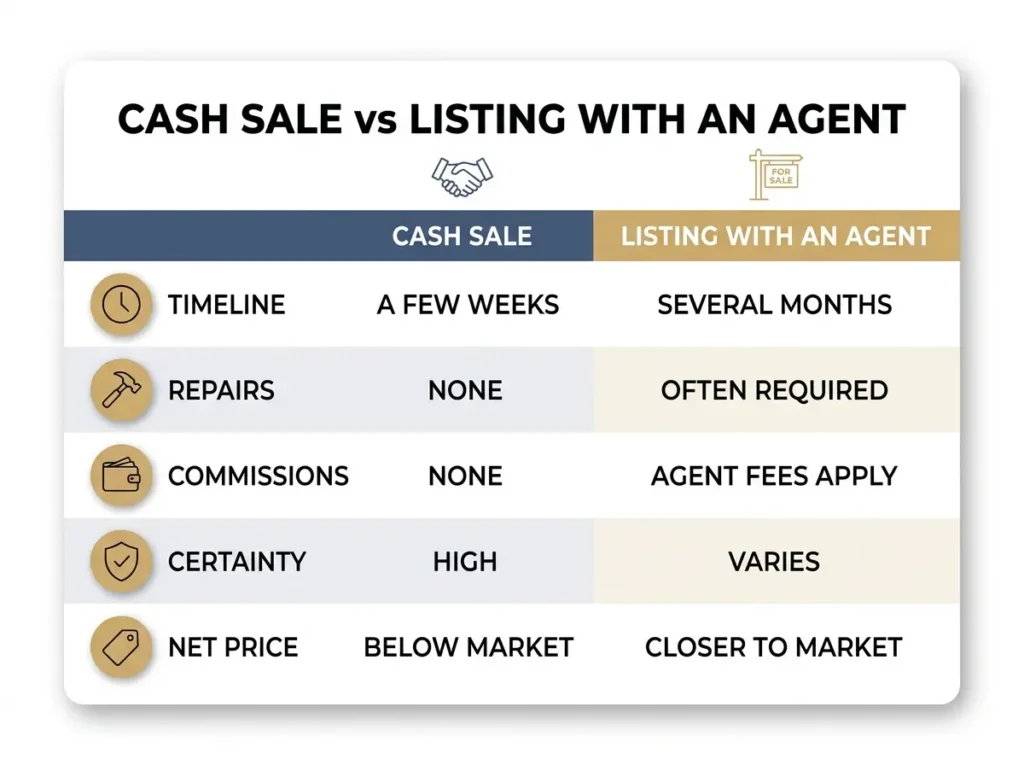
| Factor | Cash Sale (As-Is) | Listing With an Agent |
|---|---|---|
| Timeline | Often within a few weeks | Typically 60 to 120 days or more |
| Elevation certificate | Not needed, we buy as-is | Buyers and their insurers often ask for one |
| Flood insurance requirement | No lender, so no required policy | Buyer’s lender requires a policy in a high-risk zone |
| Repairs | None, we buy as-is | Often negotiated after inspection |
| Commissions | None | Typically 5 to 6 percent |
| Certainty of close | High | Subject to financing, flood quote, inspection, appraisal |
| Net price | Below market, no repairs or fees | Closer to market, before costs and concessions |
For a side-by-side on the tradeoffs, we keep an honest cash offer versus agent listing comparison that lays it out without the sales spin. If your certificate comes back favorable, the listing column often wins, and that is worth knowing before you call anyone.
How Selling to Panhandle Real Estate Investments Works
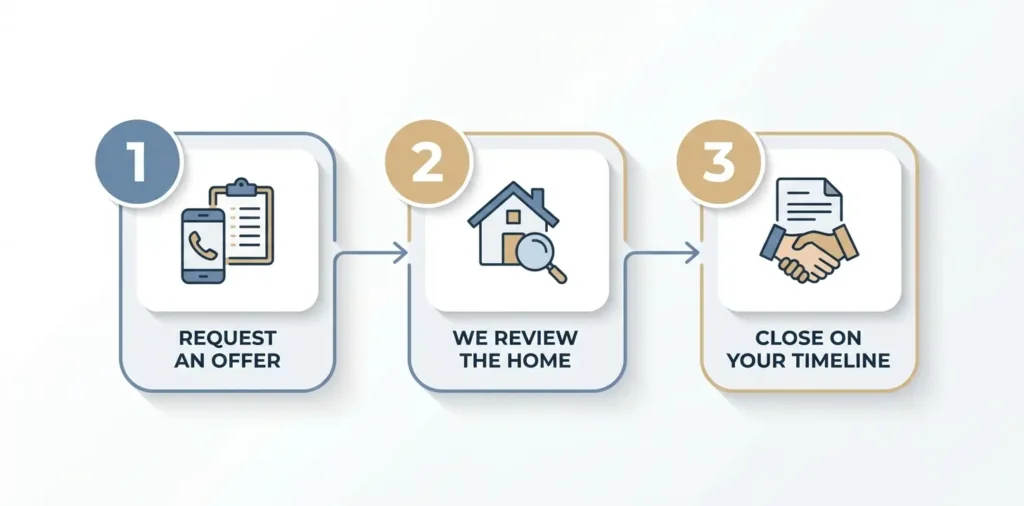
If a cash sale is the right fit, the process is short and there is no obligation to accept anything.
- Request an offer. Tell us about the home, its flood zone, and your elevation certificate if you have one. It takes a few minutes and there is no commitment.
- We look at the house and the numbers. We factor in the elevation, the flood risk, and any repairs, and build them into a fair cash offer, with the math shown rather than hidden.
- Close on your timeline. If the offer works, we handle the paperwork and close when you are ready, with no survey to order first.
If your home sits above the base flood elevation and carries a reasonable premium, you may do better on the open market, and we will tell you so plainly when that is true for your situation.
Milton, Pace, Navarre, and Santa Rosa County Specifics
Santa Rosa County’s flood risk follows its water. In Milton it is the Blackwater River and its creeks, in Pace and the Bagdad area it is East Bay and Escambia Bay, and in Navarre it is Santa Rosa Sound and the low ground between the sound and Highway 98. Hurricane Sally in 2020 brought flooding to parts of all three, which is why buyers here ask about elevation early.
The county also makes the research easier than most. Santa Rosa County has a flood risk portal, run with a company called Forerunner, that lets owners, agents, and insurers look up flood information for individual properties, and the floodplain office offers help with letters of map amendment. Before you pay a surveyor, it is worth a call to that office.
Vacant land works a little differently. An elevation certificate describes a building, so a bare lot does not have one, but a surveyor can still establish the lot’s elevation and FEMA can issue a letter of map amendment for property, not just structures. If you are looking to sell vacant land in Pace or elsewhere in the county, flood questions on the lot are something we look at directly as part of an offer.
Frequently Asked Questions
What is an elevation certificate and who issues it?
An elevation certificate is a FEMA form that records your building’s elevation compared with the base flood elevation on the flood map. It is completed and certified by a licensed land surveyor or professional engineer, not by FEMA or the county. In Santa Rosa County, the floodplain management office keeps copies of certificates that have been filed.
How much does an elevation certificate cost in Florida?
There is no set price. A new certificate is a private surveyor’s fee that varies with the property, site access, and how busy local surveyors are, so it pays to get a few quotes. Before paying anyone, ask Santa Rosa County Floodplain Management whether one is already on file, because an existing certificate may still be valid.
Do I need an elevation certificate to sell my house?
No. Florida law does not require you to provide one to sell, and FEMA does not require one to buy flood insurance. Buyers, agents, and insurers often ask for it, though, because it shows where the home sits against the base flood elevation and turns an unknown flood premium into a real quote.
Can an elevation certificate lower my flood insurance?
It can. Under Risk Rating 2.0, a certificate is optional, but FEMA will consider it when rating your policy. If your home sits higher than FEMA’s default assumptions, the real elevations can bring the premium down. If it sits lower, the certificate may not help, so ask your agent to compare quotes with and without it.
How do I get my property removed from a flood zone?
Request a letter of map amendment from FEMA. If the lowest ground touching your home is at or above the base flood elevation, FEMA can officially remove the structure from the special flood hazard area. You need elevation information certified by a licensed surveyor or engineer, and FEMA charges no fee to review the request.
An elevation certificate will not change where your house sits, but it can change what everyone believes about it. Find out whether one exists, see what it says, and then decide whether to list, improve, or sell as-is with real numbers in front of you.
If you want to know what your Milton, Pace, or Navarre home is worth as-is, flood zone and all, we are happy to give you a straightforward answer. No obligation, no pressure. Request a cash offer from Panhandle Real Estate Investments.

About Panhandle Real Estate Investments
I’m Peyton Saluto, founder of Panhandle Real Estate Investments. For over seven years, I’ve helped homeowners across the Florida Panhandle find fair and stress-free ways to sell their homes—no repairs, no commissions, and no pressure. My goal is always to put people first and make a real difference in our communities by restoring distressed properties and rebuilding neighborhoods. If you’re thinking about selling, reach out for a no-obligation cash offer. I’d love the opportunity to help you find the best path forward.