
Published by Panhandle Real Estate Investments, a locally owned real estate solutions company serving Bay County, Walton County, Okaloosa County, Santa Rosa County, and Escambia County. We buy houses and land across the Florida Panhandle.
Last Updated: August 17, 2026
What this post covers
- What a pending special assessment actually changes
- Do you have to disclose it in Florida?
- Who pays, you or the buyer?
- Your four real options
- How selling to Panhandle Real Estate Investments works
- What this looks like in Bay and Walton counties
- Frequently asked questions
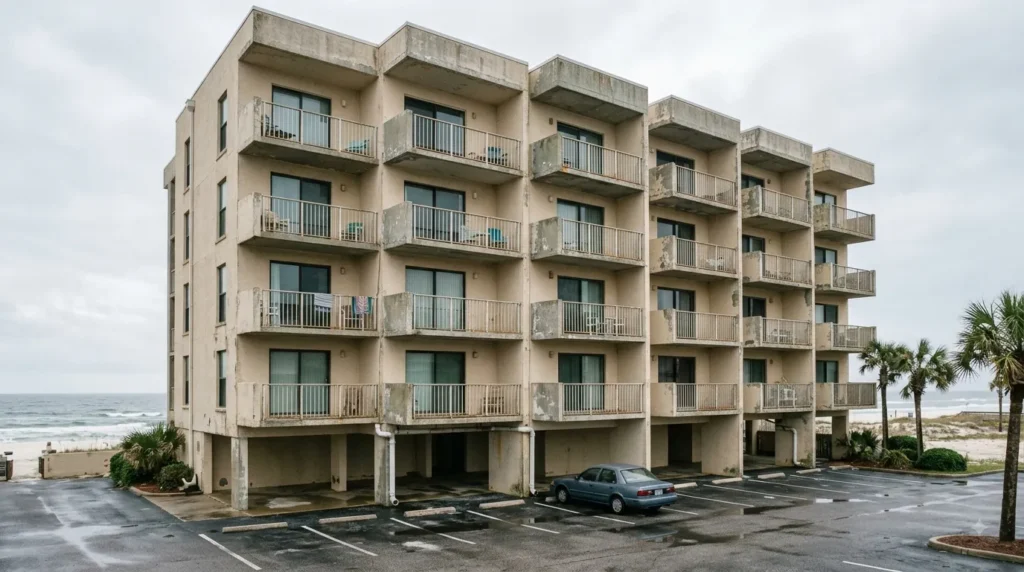
Florida condominium associations that existed on or before July 1, 2022 and are controlled by unit owners had until December 31, 2025 to complete a structural integrity reserve study for every building on the property three stories or higher. Those studies are finished now. The numbers inside them are what is showing up in mailboxes in Panama City Beach, Destin, and Miramar Beach this year.
The second half of that law is the part most owners did not see coming. For a budget adopted on or after December 31, 2024, members of a unit-owner-controlled association that must obtain a structural integrity reserve study can no longer vote to fund those reserves at zero or at a reduced amount, with narrow exceptions for multicondominiums using a funding method approved by the state. The old escape hatch, voting the reserves down every year to keep dues flat, is closed for roofs, structure, waterproofing, plumbing, and electrical.
So the question is not whether the money gets raised. It is who ends up paying it, and whether you can sell your unit before you do. You can sell. What follows is what changes, what you are legally required to hand a buyer, who is on the hook for the balance, and the four exits that actually exist.
Key Takeaways
- A pending special assessment does not block a sale. It changes disclosure, pricing, and which buyers can still get to closing.
- You cannot quietly leave it behind. The association’s estoppel certificate itemizes every assessment owed and every amount scheduled to come due, and Florida law requires you to give a buyer the association’s most recent structural integrity reserve study or a statement that none was completed.
- A buyer who takes title is jointly and severally liable with you for unpaid assessments that came due up to the transfer, which is exactly why buyers negotiate hard once they see the estoppel.
- Financing is usually the thing that breaks, not the price. Lenders and secondary-market guidelines get cautious about buildings with open structural assessments.
- A cash sale is not automatically your best move. If your unit is in good shape, the assessment is small, and you are not on a deadline, listing it will usually net more.
What a Pending Special Assessment Actually Changes
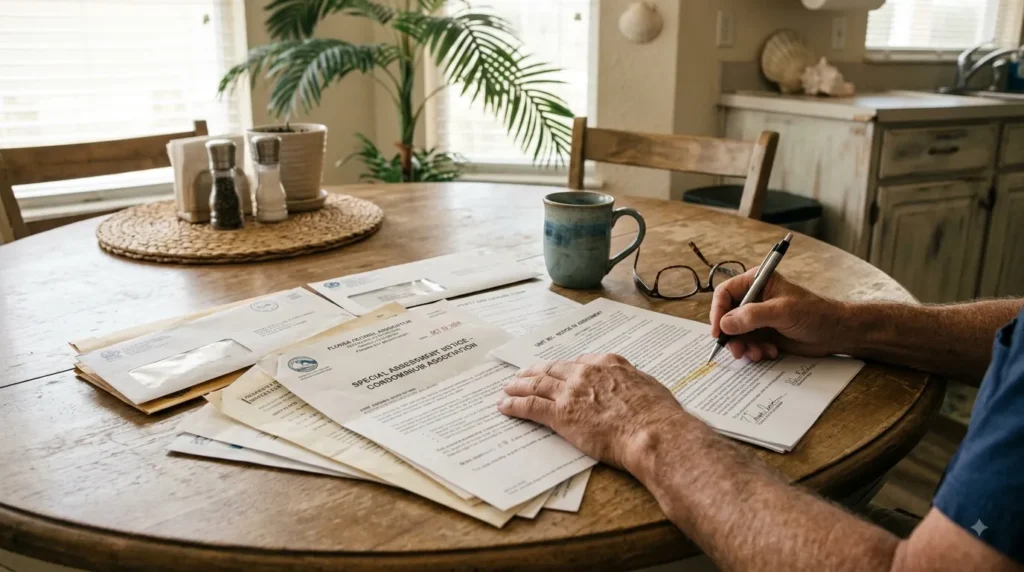
A special assessment is a one-time charge the board levies on top of regular dues to pay for something the reserves cannot cover. Under Florida Statutes 718.112, written notice of a meeting where a nonemergency special assessment will be considered has to reach unit owners and be posted on the condominium property at least 14 days before that meeting, with an affidavit filed in the association’s records proving it. That 14-day window is often the first hard signal an owner gets.
The money is also fenced in. Florida Statutes 718.116 requires the specific purpose of a special assessment to be stated in the written notice sent to each owner, and the funds collected can only be spent on that stated purpose. Anything left over after the work is finished becomes common surplus. If you want to understand the sequence before the bill lands, we walked through how special assessments hit condo owners before the bill lands in an earlier post.
If that inspection turns up problems, the situation changes again, and we laid out the options after a failed milestone inspection in a separate guide.
Why the bills are landing in 2026
The structural integrity reserve study, usually shortened to SIRS, is a visual inspection driven study that has to be completed at least every 10 years for each building three habitable stories or higher. It covers the roof, load-bearing structure, fireproofing and fire protection systems, plumbing, electrical, waterproofing and exterior painting, windows and exterior doors, plus any other item with a deferred maintenance or replacement cost above the $25,000 threshold set in the statute.
Once that study exists, the board has a documented number it can no longer ignore. Reserves for those items may be funded through regular assessments, a special assessment, a line of credit, or a loan, and a special assessment, line of credit, or loan requires approval by a majority of the total voting interests of the association. That last point matters for sellers: a special assessment is one funding path among several, so it is worth reading the board packet before assuming the worst version is final.
“Pending” versus “levied” is the distinction that decides everything
Buyers, title companies, and lenders treat these two states very differently, and the language in your contract will turn on which one you are in.
| Stage | What exists | Effect on your sale |
|---|---|---|
| Discussed at a board meeting | Minutes, a study, a bid | Disclosable, rarely priced in yet |
| Noticed for a vote | The 14-day written notice | Buyers start asking for a credit |
| Approved and levied | A dollar amount and due dates | Shows on the estoppel, gets negotiated directly |
| Unpaid past the due date | Interest, late fees, lien exposure | Financing becomes difficult, cash buyers take over |
The timeline, step by step
- The association completes the milestone inspection or the structural integrity reserve study.
- The board identifies a funding shortfall for a covered item.
- Written notice of the meeting goes to owners and gets posted on the property at least 14 days ahead.
- The membership or board approves the funding method, which may be a special assessment, a line of credit, or a loan.
- A written notice of assessment goes out stating the specific purpose and the amounts due.
- Installments come due. Unpaid amounts bear interest at the rate in the declaration, and if the declaration is silent, at 18 percent per year, plus an administrative late fee of up to the greater of $25 or 5 percent of the delinquent installment where the governing documents allow it.
- The association records a claim of lien and can move to enforce it.
Do You Have to Disclose a Pending Special Assessment in Florida?
Yes, and the practical answer is stronger than the legal one: you could not hide it even if you wanted to.
Florida Statutes 718.503 requires every unit owner who is not a developer to provide a prospective purchaser, at the seller’s expense, with the declaration, the articles and bylaws, the association’s annual financial statement and budget, the inspector-prepared summary of the milestone inspection report where one applies, and the association’s most recent structural integrity reserve study or a statement that the association has not completed one. The buyer also gets a governance form and the Frequently Asked Questions and Answers document.
There is more. If the association was required to complete a milestone inspection or a structural integrity reserve study and has not done so, any contract for the sale of a residential unit entered into after December 31, 2024 must say so in conspicuous type. And a resale contract has to carry a clause giving the buyer the right to void the agreement within 7 days, excluding Saturdays, Sundays, and legal holidays, after execution and receipt of those documents. Any attempted waiver of that voidability right has no effect.
The estoppel certificate closes the last gap
Within 10 business days of a written request from a unit owner or a mortgagee, the association has to issue an estoppel certificate. Under Florida Statutes 718.116, that certificate must include an itemized list of all assessments, special assessments, and other money owed on the unit as of the date of issuance, plus an itemized list of any additional assessments and special assessments scheduled to become due during the certificate’s effective period.
The fee is capped. An association may charge up to $250 when nothing is delinquent, up to $100 more for delivery within 3 business days, and up to $150 more if a delinquent amount is owed. If the association misses the 10 business day deadline, it cannot charge for that certificate at all. There is a protection for the buyer built into the same section: an association waives the right to collect amounts above what the estoppel certificate states from anyone who relied on it in good faith, and from their successors.
Order your own estoppel early. Seeing the number before a buyer does is the difference between negotiating and reacting.
Who Pays the Special Assessment, You or the Buyer?
Florida Statutes 718.116 says a unit owner is liable for all assessments that come due while they are the owner, and that a unit owner is jointly and severally liable with the previous owner for all unpaid assessments that came due up to the time title transferred. The new owner keeps whatever right they have to recover those amounts from the seller, but the association can look to the unit either way.
In practice, that statute is why the contract, not the statute, decides the outcome. Here is how it usually gets split in Bay and Walton county closings.
| Situation | Who typically absorbs it | How it is handled |
|---|---|---|
| Assessment levied, installments already past due | Seller | Paid from seller proceeds at closing per the estoppel |
| Assessment levied, future installments remain | Negotiated | Credit to buyer, or seller pays the balance in full |
| Approved but not yet billed | Negotiated | Price adjustment or an escrow holdback |
| Discussed, not noticed or voted | Usually buyer’s risk | Disclosed, priced into the offer |
A buyer paying cash can accept an unknown. A buyer using financing often cannot, because the lender is underwriting the building as well as the borrower. That is the single most common reason a condo sale with an open structural assessment falls apart at week five instead of week one.
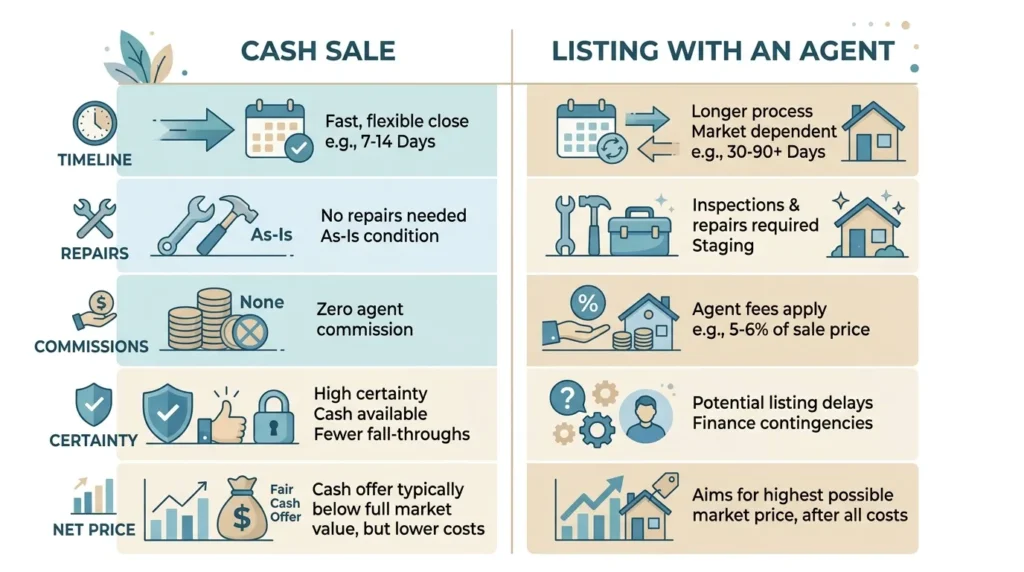
Your Four Real Options
1. Pay the assessment and keep the unit
If the assessment is manageable and the building’s work is nearly finished, paying it is frequently the best financial outcome. A completed roof, new waterproofing, and a funded reserve schedule make the unit easier to sell later and easier for a buyer to finance. Ask the board how much of the scope is already under contract before you decide.
2. List with a real estate agent
For a unit in good condition, in a building where the assessment is defined and the work is underway, listing will usually produce a higher gross price. Expect the assessment to come up in negotiation, expect a longer time to contract than the building had two years ago, and expect the buyer’s lender to ask questions about the association’s reserves. You can compare selling directly against listing with an agent before you commit either way.
3. Sell as-is to a cash buyer
A cash sale removes the lender from the equation, which removes the part of the transaction most likely to fail in a building with open structural work. The tradeoff is real and we will not pretend otherwise: a cash offer is generally below what a fully marketed listing would produce in a clean building. What you get instead is certainty, no repairs, no showings, and no commission. Owners who need out before the next installment comes due often find that the net difference is smaller than they expected once carrying costs, dues, and the assessment itself are counted. We buy units this way across the Panhandle, including owners who want to sell your Destin condo as-is.
4. A creative structure
Seller financing or a subject-to purchase, where we take title and continue the existing mortgage payments without refinancing the loan into our name, can work when equity is thin or the timing is awkward. These are not right for every seller, they depend heavily on what the declaration and the lender allow, and we walk through every detail before anything is agreed to.
| Factor | Cash sale | Listing with an agent |
|---|---|---|
| Timeline | Typically faster, varies by situation | Longer, plus time in contract |
| Repairs and unit prep | None | Often requested by buyers |
| Commissions | None | Typically 5 to 6 percent |
| Financing risk | None | The main failure point in assessed buildings |
| Certainty of closing | High | Subject to appraisal, inspection, and lender review of the association |
| Net price | Below market | Closer to market before costs |
| Best for | Deadlines, deferred maintenance, unaffordable assessments | Good condition, small assessment, no time pressure |
If your unit is in good shape, the assessment is modest, and nothing is forcing your hand, list it. That is the honest answer, and we would rather you hear it from us.
How Selling to Panhandle Real Estate Investments Works
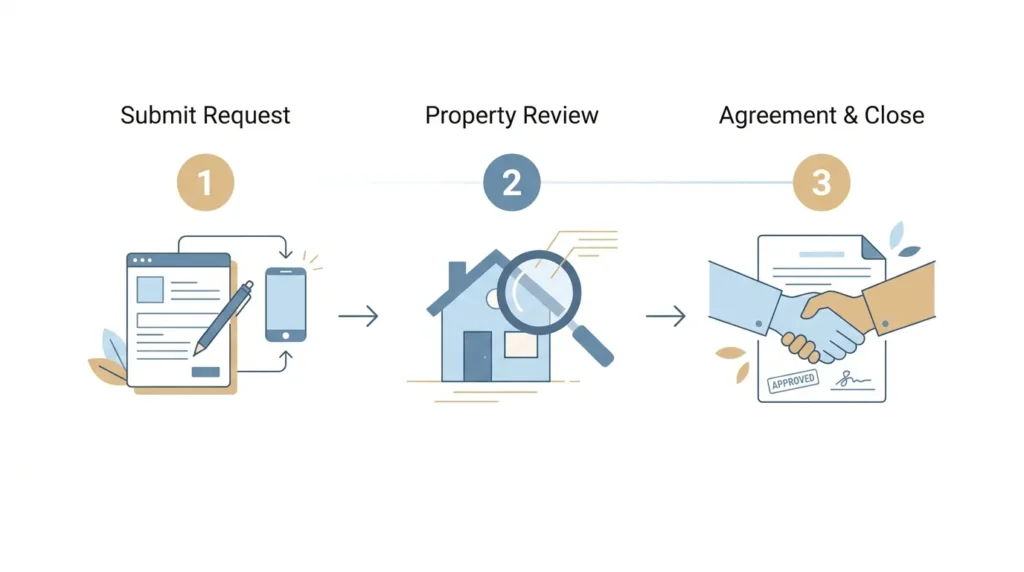
- Tell us about the unit. Building, county, and what the board has sent you so far. If you already have the estoppel certificate or the reserve study summary, that speeds things up considerably. No commitment.
- We review the unit and the building. We look at the assessment, the milestone status, and the association’s financials, then present a fair cash offer based on condition and the local market. More detail on how we buy houses and condos across the Panhandle is on our process page.
- You choose the closing date. We handle the paperwork and coordinate the estoppel with the association. No agents, no commissions, no repairs, and no cleaning out the unit first.
We are not the right buyer for everyone, and we will tell you when listing is the better path for your situation.
What This Looks Like in Bay and Walton Counties
The milestone inspection requirement in Florida Statutes 553.899 applies to buildings three habitable stories or more that are under condominium or cooperative ownership. The inspection is due by December 31 of the year the building reaches 30 years of age, measured from the certificate of occupancy, and every 10 years after that. Buildings that turned 30 before July 1, 2022 were due by December 31, 2024, and buildings that reached 30 between July 1, 2022 and December 31, 2024 were due by December 31, 2025.
The coastal detail is the one that catches Panama City Beach and Miramar Beach owners off guard. The statute lets the local enforcement agency determine that local conditions, including proximity to salt water, require the milestone inspection at 25 years instead of 30. That decision sits with the local building official, which along Front Beach Road is the City of Panama City Beach building department, in Destin is the City of Destin, and in unincorporated Walton County around Miramar Beach is the Walton County building department. Two buildings of identical age on opposite sides of a city line can be on different schedules.
Bay County’s beachfront mid-rise stock is heavily 1980s and 1990s construction, which is precisely the cohort now cycling through first milestone inspections and first fully funded reserve budgets at the same time. Gulf-front exposure means salt, wind-driven rain, and concrete and rebar wear that a comparable inland building does not accumulate. When those two studies land in the same budget year, the assessment is larger than owners expect.
Associations also have real teeth. The association’s lien for unpaid assessments relates back to the recording of the original declaration of condominium, which is why it sits ahead of nearly everything except a first mortgage of record. A recorded claim of lien stops being effective one year after recording unless the association commences an action to enforce it within that year. For a fuller picture of what an association can and cannot do to your unit, we covered association authority and foreclosure in a separate post.
Frequently Asked Questions
Can I sell my condo if there’s a pending special assessment?
Yes. A pending or levied special assessment does not prevent a sale in Florida. It has to be disclosed, it appears on the association’s estoppel certificate, and it becomes part of the negotiation over price and credits. The practical obstacle is usually the buyer’s lender rather than the law itself, which is why cash purchases close more reliably in assessed buildings.
Do I have to disclose a special assessment to a buyer in Florida?
Yes. Florida Statutes 718.503 requires a non-developer seller to provide the buyer, at the seller’s expense, with the association’s budget and financial statement, the milestone inspection summary where applicable, and the most recent structural integrity reserve study or a statement that none was completed. If a required inspection or study was not completed, the contract itself must say so in conspicuous type.
Who pays a special assessment, the buyer or the seller?
The contract decides it, but the law backs the association either way. Under Florida Statutes 718.116, a new owner is jointly and severally liable with the previous owner for unpaid assessments that came due up to the transfer of title. Most Panhandle closings resolve it by paying past-due amounts from seller proceeds and negotiating future installments as a credit or price adjustment.
Will a special assessment kill my condo sale?
Not by itself. Assessments most often break a sale through financing, when a lender reviews the association’s reserves, the milestone status, or an open structural project and declines. Sales fall apart late for this reason, weeks into the contract. Pricing the assessment honestly at the start, or selling to a buyer who does not need financing, prevents most of those failures.
Can a condo association put a lien on my unit for an unpaid assessment?
Yes. Florida Statutes 718.116 gives the association a lien on each condominium parcel to secure payment of assessments, and that lien relates back to the recording of the original declaration of condominium. Unpaid amounts also accrue interest at the rate in the declaration, or 18 percent per year if the declaration is silent, plus an allowable administrative late fee.
A pending special assessment narrows your options, but it does not remove them. Whether the right move is paying it and holding, listing the unit while the work is underway, or taking a certain sale and closing the chapter, the decision gets much easier once you have the estoppel certificate and the reserve study in front of you.

If you want to know what your Panama City Beach, Destin, or Miramar Beach condo is worth as-is, assessment and all, we are happy to give you a straightforward answer. No obligation and no pressure. Request a cash offer from Panhandle Real Estate Investments and we will take it from there.

About Panhandle Real Estate Investments
I’m Peyton Saluto, founder of Panhandle Real Estate Investments. For over seven years, I’ve helped homeowners across the Florida Panhandle find fair and stress-free ways to sell their homes—no repairs, no commissions, and no pressure. My goal is always to put people first and make a real difference in our communities by restoring distressed properties and rebuilding neighborhoods. If you’re thinking about selling, reach out for a no-obligation cash offer. I’d love the opportunity to help you find the best path forward.