
Published by Panhandle Real Estate Investments, a locally owned real estate solutions company serving Escambia County, Santa Rosa County, Okaloosa County, and Bay County. We buy houses and land across the Florida Panhandle.
Last Updated: November 23, 2026
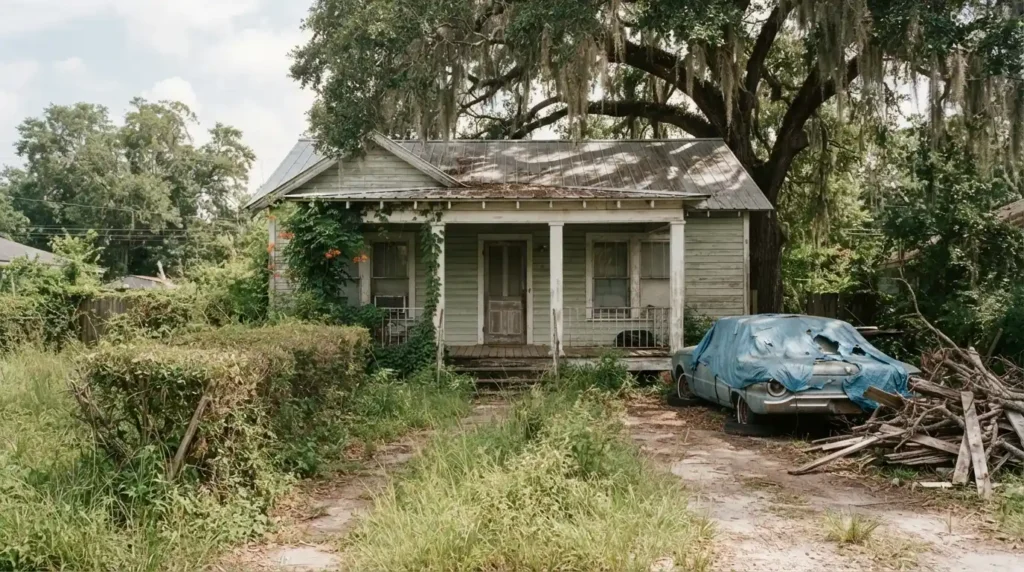
Florida’s code enforcement law generally caps a fine at $250 a day for a first violation and $500 a day for a repeat violation, and the fine keeps running until the property comes into compliance. Once the order imposing the fine is recorded, it becomes a lien on the land.
In Escambia County, that is how an overgrown yard, a pile of debris, or an unsafe shed in Pensacola, Cantonment, or Century turns into a number that can rival what the house is worth. The good news is that a code lien is not the end of the road. Florida lets the local government reduce or release it, and Escambia County has a written process for asking.
This guide covers how a violation becomes a lien, why the balance keeps growing, how to ask Escambia County for a reduction, and how to sell a house with a code lien attached.
Key Takeaways
- Fines stop when the violation is fixed. Under Florida law, a daily fine keeps accruing until you comply, so fixing the problem comes first.
- A recorded order becomes a lien. It attaches to the property and to other real or personal property the violator owns.
- Reductions are possible, not guaranteed. Florida law lets the enforcement board reduce a fine, and Escambia County reviews written relief requests under a Board policy.
- A homestead cannot be foreclosed for a code lien. Other property can be, starting three months after the lien is filed.
- You can sell with a lien attached. The payoff, or a reduced payoff, is paid from your proceeds at closing.
Table of Contents
- How a code violation becomes a lien
- Why a code lien keeps growing
- Can the county foreclose on a code lien?
- How to ask Escambia County for a reduction
- Selling a house with a code lien
- Your options, side by side
- Pensacola, Century, and unincorporated Escambia
- Frequently asked questions
How a Code Violation Becomes a Lien
Every code case in Florida follows the same basic path under Chapter 162 of the Florida Statutes. Under section 162.06, the code inspector notifies the owner and gives a reasonable time to fix the problem. If it is not fixed, the case goes to a hearing.
In unincorporated Escambia County, that hearing is usually in front of a Special Magistrate. The county’s Environmental Enforcement page says Special Magistrate hearings are the most common enforcement action, and the magistrate is an attorney contracted by the county who hears from both the officer and the owner.
If the magistrate finds a violation and the owner misses the deadline to comply, a daily fine starts. A certified copy of the order imposing the fine can then be recorded in the public records, and from that point it is a lien. For how the same steps play out in Bay County, see how a cash sale clears code violations and liens in Panama City.
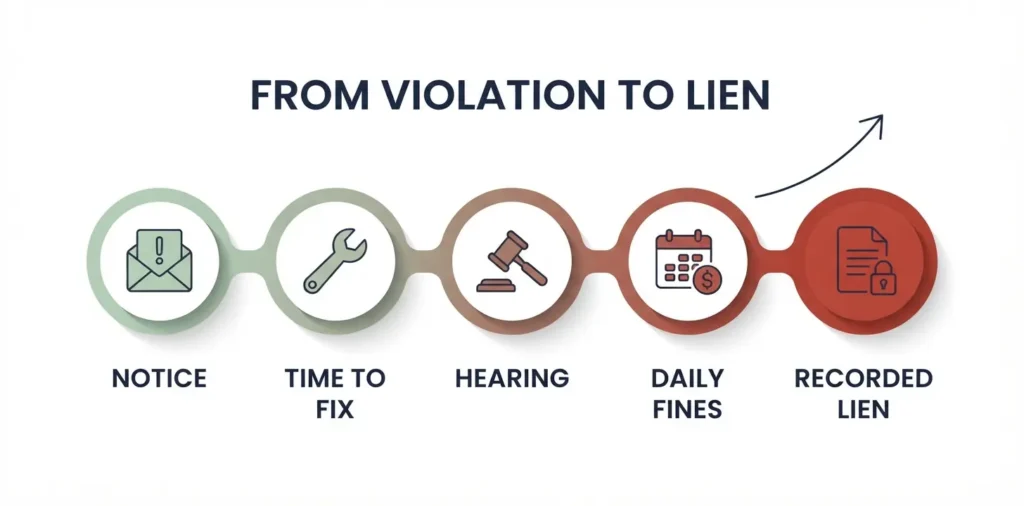
- Notice of violation. The inspector tells you what is wrong and sets a date to fix it.
- Time to fix. If you correct it, the case can end here.
- Hearing. If it is not fixed, the Special Magistrate hears the case and can order compliance by a set date.
- Daily fines. Missing that date starts a fine for each day the violation continues.
- Recorded lien. The order is recorded, and the lien attaches to the property.
Why a Code Lien Keeps Growing
The fine does not stop when the lien is recorded. Under section 162.09, a fine keeps accruing until the violator comes into compliance or a court enters judgment. A $50 daily fine left for a year is more than $18,000, before costs. Larger counties and cities can also adopt higher limits by ordinance, so check the daily amount in your own order.
Three more rules make it worse the longer it sits:
- Repair costs can be added. For violations that threaten health or safety, the county can make reasonable repairs and add the cost to the fine.
- It reaches other property. The recorded order is a lien on the land with the violation and on any other real or personal property the violator owns.
- It lasts a long time. A code lien can last up to 20 years after the order is recorded, and longer if the county files suit to enforce it in that time.
Can the County Foreclose on a Code Lien?
It depends on whether the property is your homestead. Section 162.09 says that three months after a lien is filed, the enforcement board may authorize the county attorney to foreclose on it or sue for a money judgment. But no code lien may be foreclosed on real property that is a homestead under the Florida Constitution.
That protection has limits. It covers your homestead only, not a rental, an inherited house you do not live in, or a vacant lot. The lien still sits on the homestead’s title, so it has to be dealt with before you can sell or refinance.
Code liens and tax problems often show up together. If you are also behind on property taxes, our Escambia County tax deed playbook explains why unpaid county liens can even survive a tax deed sale.
How to Ask Escambia County for a Reduction
Florida law gives the local government room to bend. Section 162.09 says an enforcement board may reduce a fine, and the local government may execute a satisfaction or release of the lien. Nothing requires it to, so the strength of your request matters.
Escambia County handles these under a Board policy titled “Guidelines for Relief from Environmental (Code) Enforcement Special Magistrate Liens.” Past Board of County Commissioners agenda items show how it works: an owner makes a written request, staff checks it against the policy’s criteria, and when the criteria are met the County Administrator can grant relief for the Board. Requests outside the criteria go to the County Commission.
Before you ask, do these five things
- Fix the violation. Bring the property into compliance and ask Environmental Enforcement to confirm it, since the fine keeps running until you do.
- Get the exact balance. Find the case and the recorded order, and ask the county for a current payoff.
- Collect proof. Keep before-and-after photos, receipts, permits, and dates showing what you fixed and when.
- Explain the circumstances. Note if you inherited the property, bought it with the lien already on it, or faced a hardship such as illness or storm damage.
- Put the request in writing. Say what you are asking for: a full release, a reduced payoff, or a partial release so a sale can close.
If the lien is large or the request goes to the County Commission, a Florida real estate attorney can help present it.
Selling a House With a Code Lien
A code lien does not stop a sale, but it has to be paid or released before the buyer gets clear title. The title company finds the lien in its search, gets a payoff from the county, and pays it from your sale proceeds at closing. The county then records a satisfaction or release.
If you sell after being served in a code case but before the hearing, Florida adds paperwork. Under section 162.06, the owner must disclose the case to the buyer in writing, give the buyer copies of the notices, tell the buyer they will be responsible for compliance, and notify the code official within 5 days after the transfer. Skipping those steps creates a presumption of fraud.
A reduction request and a sale can work together. Some owners ask the county for a reduced payoff, then close once the new number is approved. Our post on how we close with liens attached walks through that payoff process.
Your Options, Side by Side
Which path makes sense depends on the size of the lien, the condition of the house, and how much time and money you have.
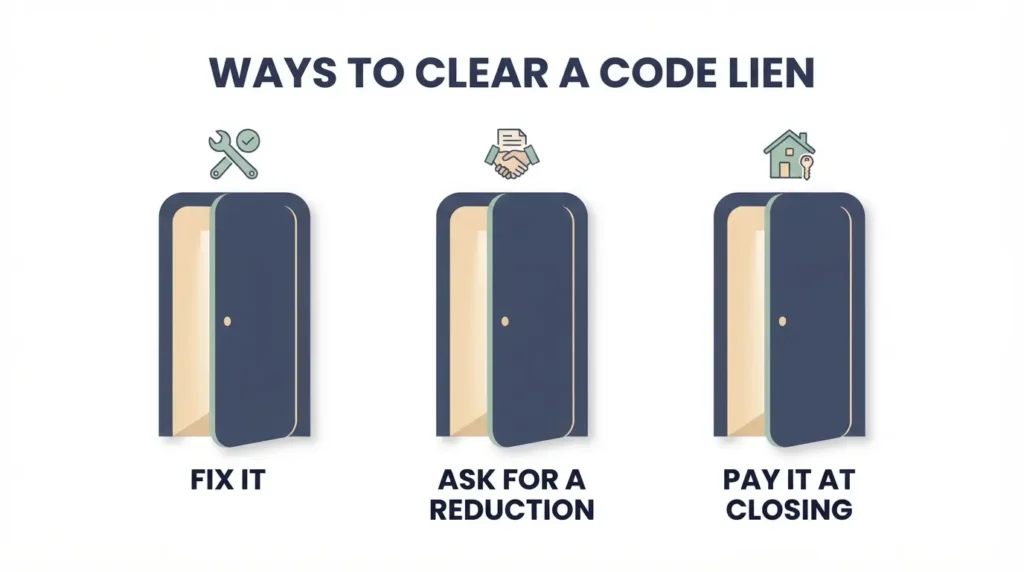
| Option | What it takes | Keep the house? | Main risk |
|---|---|---|---|
| Fix and pay in full | Money for repairs and the full payoff | Yes | The full balance may be more than you can pay |
| Fix and ask for a reduction | Repairs, proof, and a written request | Yes | The county can say no, and fines run until you comply |
| List with an agent | A house that shows well and a buyer whose lender accepts the condition | No | Financing and inspections can stall over open violations |
| Sell as-is for cash | A buyer who takes the violation and the lien payoff at closing | No | A price below full market value |
If the house is in good shape and the lien is small, fixing it and listing may bring the most money, and we will tell you that. Our general guide to selling a house with code violations in Florida covers the disclosure side, and our cash offer versus agent listing comparison lays out the tradeoffs.
When the repairs are big or the fines keep growing, an as-is sale stops the clock. You can sell your Pensacola house as-is with the violation still open and the lien paid at closing.
How a sale with us works
- Tell us about the house and the code case. Share the notices or the case number if you have them. There is no obligation.
- We check the title and the lien payoff. Then we make a fair cash offer with the math shown.
- Close when it works for you. The title company pays the lien and any other payoffs at closing, and you receive the rest.
Pensacola, Century, and Unincorporated Escambia
Start by finding out who imposed the lien. Escambia County’s Environmental Enforcement Division covers the unincorporated county in three areas, north, central, and south, and its page links to a code enforcement case search and Chapter 30 of the county code. Properties inside Pensacola city limits or the Town of Century fall under city or town code, and a lien runs to the government that imposed it, so the recorded order tells you who to ask for a payoff or reduction.
Not every case reaches a hearing. Escambia County can also issue civil citations, and its page says those fines run from $50 to $400 per violation, with 10 days to pay or contest in County Court.
If storm damage from Hurricane Isaias is behind a new notice, tell the officer what you are doing and when, and keep proof of every repair. That record matters if you later ask for relief.
Frequently Asked Questions
How do code enforcement fines become a lien in Florida?
A fine becomes a lien once a certified copy of the order imposing it is recorded in the public records. Before that, the owner gets a notice of violation, time to fix it, and a hearing. If the owner misses the compliance date, a daily fine starts, and the recorded order attaches to the property and the violator’s other property.
Can a code enforcement lien be reduced or settled?
Yes, but it is up to the local government. Florida law lets an enforcement board reduce a fine and lets the county or city release a lien. In Escambia County, staff review written relief requests under a Board policy, and the County Administrator or the County Commission decides. Fixing the violation first and documenting it makes a request stronger.
Does a code lien stop me from selling my house?
No. You can sell a house with a code lien, but the lien has to be paid or released for the buyer to get clear title. The title company gets a payoff and pays it from your proceeds at closing. If you sell before a pending hearing, Florida requires written disclosures to the buyer and a notice to the code official after the sale.
Can Escambia County foreclose on a code enforcement lien?
Not on a homestead. Florida law bars foreclosing a code lien on homestead property. For other property, such as a rental or vacant lot, the county may foreclose or sue for a money judgment once the lien has been unpaid for three months. Even on a homestead, the lien stays on the title until it is paid or released.
Who pays the code lien at closing, buyer or seller?
Usually the seller. The payoff comes out of the seller’s proceeds at closing so the buyer receives clear title, though the contract can say otherwise. In an as-is cash sale, the buyer’s offer already accounts for the lien, and the title company pays the county directly. Get the payoff in writing before you agree to a price.
A code lien in Escambia County grows every day the violation stays open, but it can be reduced, released, or paid at closing. Fix what you can, get the exact payoff, and choose the path that fits your situation.

If you have a Pensacola, Cantonment, or Century house with code fines or a lien and want to know what it is worth as-is, we are happy to give you a straight answer. No obligation, no pressure. Request a cash offer from Panhandle Real Estate Investments.

About Panhandle Real Estate Investments
I’m Peyton Saluto, founder of Panhandle Real Estate Investments. For over seven years, I’ve helped homeowners across the Florida Panhandle find fair and stress-free ways to sell their homes—no repairs, no commissions, and no pressure. My goal is always to put people first and make a real difference in our communities by restoring distressed properties and rebuilding neighborhoods.
If you’re thinking about selling, reach out for a no-obligation cash offer. I’d love the opportunity to help you find the best path forward.