
Published by Panhandle Real Estate Investments, a locally owned real estate solutions company serving Escambia County, Santa Rosa County, Okaloosa County, and Bay County. We buy houses and land across the Florida Panhandle.
Last Updated: November 12, 2026
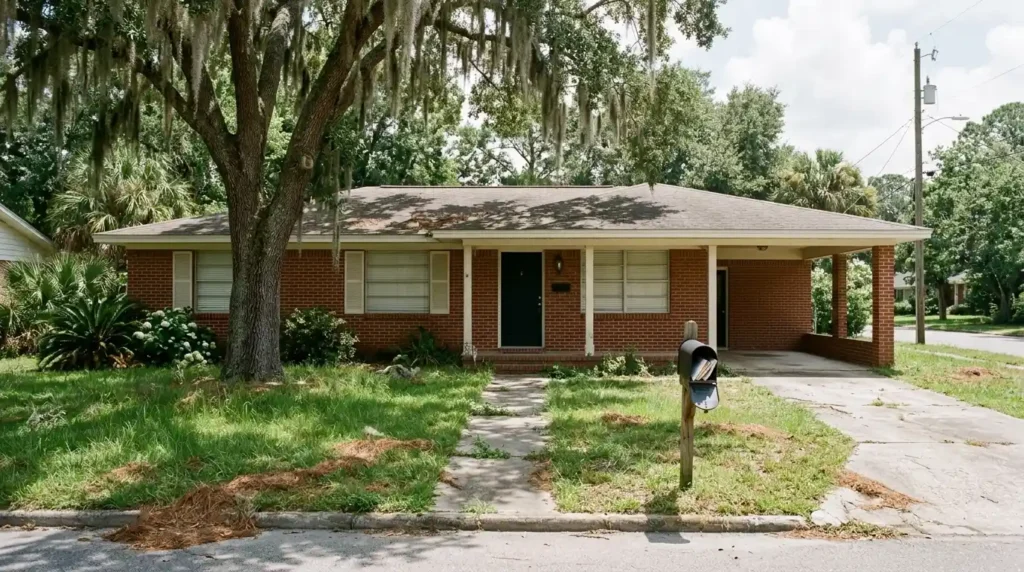
Escambia County does not take a house the day the taxes go unpaid. Property taxes here become delinquent on April 1, and the Escambia County Tax Collector then sells a tax certificate on each delinquent parcel. If that certificate is not paid off within two years, the holder can apply for a tax deed and force the property to a public auction.
If you own a home in Pensacola, Cantonment, or Century and a tax deed application has been filed, the clock is running, but it has not run out. Florida law lets you redeem the certificate right up until the winning bidder pays for the deed, and you can still sell the house before the sale date.
This playbook covers how the process works in Escambia County, what to do at each stage, how redemption works now that it runs through the Tax Collector, what a tax deed does to a mortgage, and your options if you cannot pay.
Key Takeaways
- A certificate is a lien, not a sale. An investor pays the delinquent taxes and earns interest of up to 18 percent a year while you owe them.
- The deed risk starts at two years. An unpaid certificate can lead to a tax deed application and an auction handled by the Clerk of the Circuit Court.
- Escambia redemptions now go through the Tax Collector. If your property is in a tax deed auction, the Tax Collector’s office is the place to get the payoff.
- A tax deed wipes out most liens, including a mortgage lien. Unpaid city and county liens can survive the sale.
- You can still sell before the auction. The back taxes are paid from your proceeds at closing.
Table of Contents
- How the Escambia County tax deed process works
- Your stage-by-stage playbook
- How to redeem in Escambia County
- What a tax deed does to your mortgage and other liens
- Your options if you cannot pay the taxes
- How selling to Panhandle Real Estate Investments works
- Pensacola, Cantonment, and Century specifics
- Frequently asked questions
How the Escambia County Tax Deed Process Works
It starts with the annual tax certificate sale. The Escambia County Tax Collector runs it with electronic bidding that begins at 18 percent, and investors compete by bidding the interest rate down. If nobody bids on a certificate, it is issued to Escambia County at 18 percent interest.
A certificate is a lien for the unpaid taxes. You still own the house, and you can pay the certificate off at any time. Each year the taxes go unpaid can add another certificate, and a holder who applies for a tax deed must pay off all the other outstanding certificates on the property as part of the application, which pushes the opening bid higher.
Once an application is filed, the sale side moves to the Escambia County Clerk of the Circuit Court. The clerk records a notice of the tax deed application in the official records, advertises the sale, mails notices, and holds the auction, and the highest bidder receives a tax deed from the Clerk of the Circuit Court. If you own property across the county line, here is how the same process runs in Santa Rosa County.
The core timeline is set by state law, so our guide to Bay County tax deed sales follows the same steps. What changes from county to county is who you call, how you pay, and how the auction is run.
Your Stage-by-Stage Playbook
Find the row that matches the last notice you received. Each stage leaves you fewer choices, so the earlier you act, the more control you keep.
| Stage | What it means | Your best move |
|---|---|---|
| Taxes delinquent (after April 1) | Interest and costs start adding to the bill | Pay the Tax Collector before the certificate sale if you can |
| Certificate sold | An investor holds a lien and earns interest | Redeem it, or plan a sale while you still have time |
| Two years unpaid | The holder can apply for a tax deed | Get the payoff and decide: redeem, refinance, or sell |
| Tax deed application filed | A notice is recorded and a sale is scheduled | Treat it as urgent and call the Tax Collector for the redemption amount |
| Sale advertised and noticed | The clerk publishes and mails notice of the auction | You are counting weeks: redeem or close a sale before the auction |
| Auction held, deed not paid for | The winning bidder still has to pay in full | You can still redeem until full payment is made |
| Tax deed issued | Ownership has passed to the buyer | No redemption left; file a surplus claim if there is extra money |
The notice rules are strict. The clerk publishes a notice once a week for 4 weeks, and no sale can be held until 30 days after the first notice. The clerk also mails notice to the owner at least 20 days before the sale.
The practical point: there are usually years between the first missed payment and the earliest possible sale. Once a notice from the clerk arrives, though, the window is measured in weeks.
How to Redeem in Escambia County
Redeeming means paying the certificate off. Under Florida law, you pay the tax collector the face amount plus all interest, costs, and charges, and if the interest earned is less than 5 percent of the face amount, a 5 percent minimum applies. You can redeem any time before the tax deed is issued, unless full payment for the deed has already been made to the clerk.
In Escambia County, the office you deal with changed recently. The Escambia County Tax Collector’s tax deed page says applications filed before April 1, 2025 were redeemed through the Clerk of Court, and that owners whose property is in a tax deed auction now call the Tax Collector’s office for redemption information.
If a tax deed application is on your Escambia County property, do this now
- Get the exact payoff from the Tax Collector, in writing and good through a specific date, because the amount keeps growing.
- Check for more than one certificate. Each unpaid year can create its own certificate, and the payoff has to cover them.
- Find the sale date. It is in the published notice and the notice mailed to you, and it tells you how much time you have.
- Ask how payment must be made, so a check or transfer does not hold you up on a deadline.
- Talk to a Florida attorney if something is off, such as a notice you never received, a bankruptcy filing, or a dispute over who owns the house.
If paying in full is not possible, the next two sections explain what an auction would do to your mortgage and how a sale before the auction works instead.
What a Tax Deed Does to Your Mortgage and Other Liens
A tax deed is one of the strongest titles in Florida. Under section 197.552, except as the chapter provides, no right, interest, restriction, or other covenant survives the issuance of a tax deed. That generally includes a mortgage lien. The exception is a lien held by a city, county, special district, or community development district that is still unpaid when the sale money is distributed.
Lenders are not left in the dark. Mortgage holders and other lienholders of record are on the list of people the clerk must notify before the sale. Losing the house at a tax deed sale does not necessarily end what you owe on the loan itself, so talk with your lender and a Florida attorney before the sale date.
If the house sells for more than the opening bid, the difference is surplus. Under section 197.582, the clerk pays government liens first, then holds the balance for 120 days from its notice for the people with an interest in the property, and senior lienholders are paid before the former owner. For a homestead, the opening bid also includes one-half of the latest assessed value, and that amount is treated as surplus too.
Even in the best case, an auction usually leaves an owner with less than a planned sale would. Bidders set the price, not the market, and every lien gets paid before you see anything.
Your Options If You Cannot Pay the Taxes
If redeeming is out of reach, you still have real choices, as long as you act before the auction.
Borrow or refinance to pay the taxes. If the house has equity and your credit allows it, a loan can redeem the certificate and keep the house. The tradeoff is a new payment on top of future tax bills.
List the house with an agent. If the sale date is months away and the house shows well, a listing can bring the highest price, and the title company pays the back taxes at closing. The risk is timing, because a financed buyer’s closing can slip past the auction date.
Sell as-is for cash. A cash sale can close before the auction, with the back taxes paid from the proceeds at closing. Our guide to selling a tax delinquent property in Florida walks through the numbers, and here is how a cash sale handles closing with liens, heirs, or title problems attached. If the house is in the city or nearby, you can sell your Pensacola house as-is.
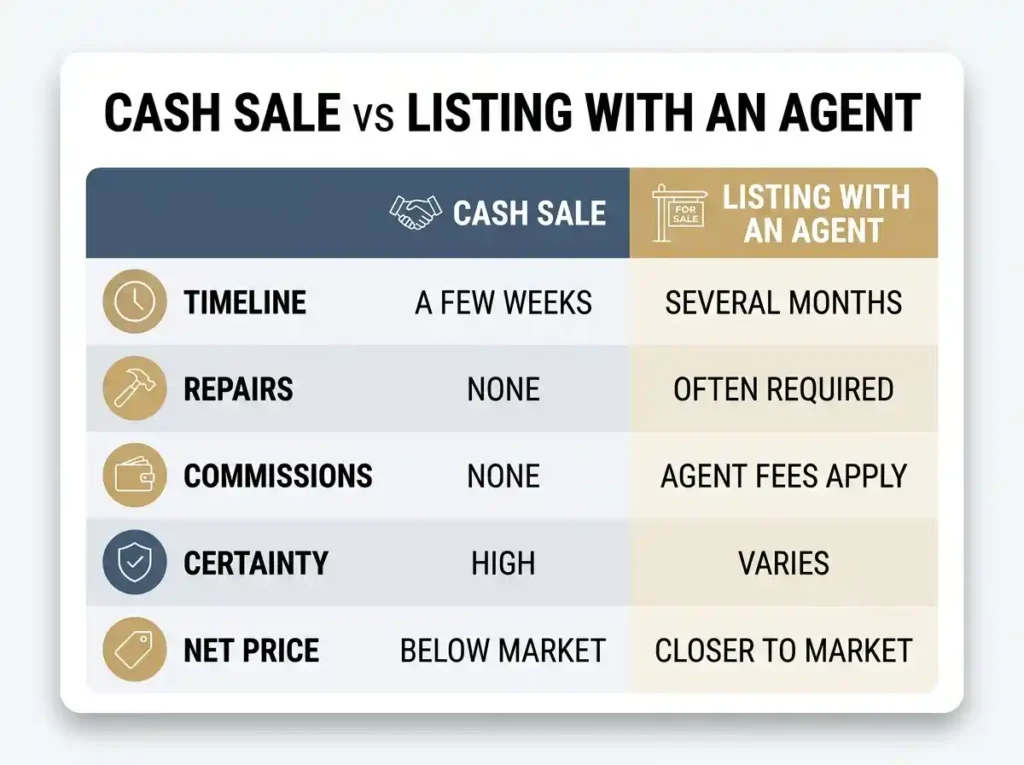
| Factor | Cash Sale (As-Is) | Listing With an Agent |
|---|---|---|
| Timeline | Often within a few weeks | Often several months |
| Back taxes | Paid from the proceeds at closing | Paid from the proceeds at closing, if it closes in time |
| Repairs | None, we buy as-is | Often requested by buyers |
| Commissions | None | Agent commission comes out of the price |
| Certainty of closing before the auction | High | Depends on financing, inspection, and appraisal |
| Net price | Below market, no repairs or fees | Closer to market, after repairs and costs |
For the full tradeoffs, we keep an honest cash offer versus agent listing comparison without the sales spin. If the auction is far off and the house is in good shape, listing may net you more, and we will say so.
How Selling to Panhandle Real Estate Investments Works
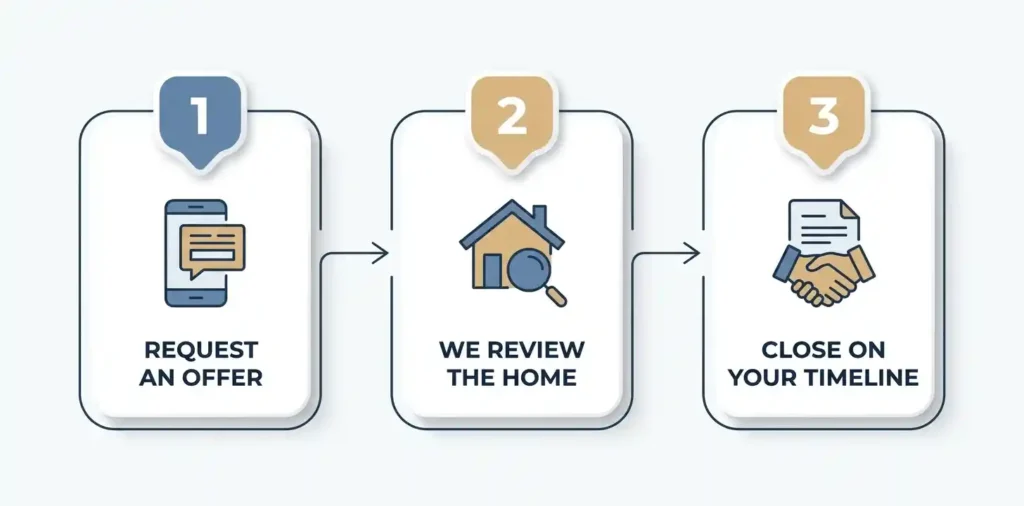
If a cash sale fits, the process is short and there is no obligation to accept anything.
- Request an offer. Tell us about the house, how many years of taxes are behind, and whether a sale date has been set. It takes a few minutes and there is no commitment.
- We review the house and the title. We look at the condition, the certificates, and any other liens, then make a fair cash offer with the math shown.
- Close before the auction. If the offer works for you, the title company pays the back taxes and liens at closing, and you receive the rest.
If you can catch up on the taxes and want to keep the house, redeeming is the better move, and we will tell you that plainly.
Pensacola, Cantonment, and Century Specifics
In Escambia County, the Tax Collector handles delinquent taxes, the yearly certificate sale, and now tax deed redemptions, and the Clerk of the Circuit Court handles the deed sale itself. If you are not sure where your property stands, start with the Tax Collector, because that office can tell you whether a certificate was sold and whether a deed application is pending.
Hurricane Isaias added a new wrinkle this fall. If the storm left your Escambia County home uninhabitable for at least 30 days, Florida’s catastrophic event tax refund may return part of your 2026 property taxes. You apply with the Escambia County Property Appraiser by March 1, 2027, with proof such as utility bills or contractor statements, and the refund is only processed once the 2026 taxes are paid on time.
Escambia County owners fall behind for familiar reasons: a house in Cantonment inherited after a parent’s death, a Pensacola rental that stopped paying, or storm repairs that ate the money set aside for taxes. Whatever the reason, the earlier you act, the more choices you keep.
Frequently Asked Questions
How does the Escambia County tax deed process work?
Taxes become delinquent on April 1, and the Tax Collector sells a tax certificate on each delinquent parcel. If the certificate is not paid off within two years, the holder can apply for a tax deed. The Clerk of the Circuit Court then advertises the sale, notifies the owner and lienholders, and auctions the property to the highest bidder.
How much time do I have after a tax deed application is filed?
It depends on when the clerk sets the sale, and the notices give you the exact date. The clerk must publish notice once a week for 4 weeks, no sale can happen until 30 days after the first notice, and you must be mailed notice at least 20 days before the sale. You can redeem until the winning bidder pays in full.
Can I redeem my property after the tax deed sale?
Only until the winning bidder pays for the deed. Florida lets you redeem any time before the tax deed is issued, unless full payment has already been made to the clerk. Once the deed is issued, the property belongs to the buyer, and your remaining option is to file a claim for any surplus money from the sale.
Does a tax deed wipe out my mortgage?
It generally wipes out the mortgage lien. Under Florida law, no private interest survives a tax deed, though unpaid city and county liens can. Your lender gets notice of the sale and can claim surplus. Losing the house this way may not end what you owe on the loan, so talk to your lender and a Florida attorney first.
Can I sell to a cash buyer before the auction date?
Yes. You own the house until the tax deed is issued, so you can sell it even after a tax deed application is filed. The back taxes, interest, and costs are paid from the sale proceeds at closing, along with any other liens. The key is closing before the auction, which is why owners often choose a cash sale.
A tax deed application is serious, but it is not the end of the road. Get the exact payoff, find the sale date, and decide early whether to redeem, refinance, or sell, while the choice is still yours.
If you are behind on property taxes and want to know what your Pensacola, Cantonment, or Century house is worth as-is, we are happy to give you a straight answer. No obligation, no pressure. Request a cash offer from Panhandle Real Estate Investments.

About Panhandle Real Estate Investments
I’m Peyton Saluto, founder of Panhandle Real Estate Investments. For over seven years, I’ve helped homeowners across the Florida Panhandle find fair and stress-free ways to sell their homes—no repairs, no commissions, and no pressure. My goal is always to put people first and make a real difference in our communities by restoring distressed properties and rebuilding neighborhoods.
If you’re thinking about selling, reach out for a no-obligation cash offer. I’d love the opportunity to help you find the best path forward.