
Published by Panhandle Real Estate Investments, a locally owned real estate solutions company serving Bay County, Okaloosa County, Santa Rosa County, and Escambia County. We buy houses and land across the Florida Panhandle.
Last Updated: September 14, 2026
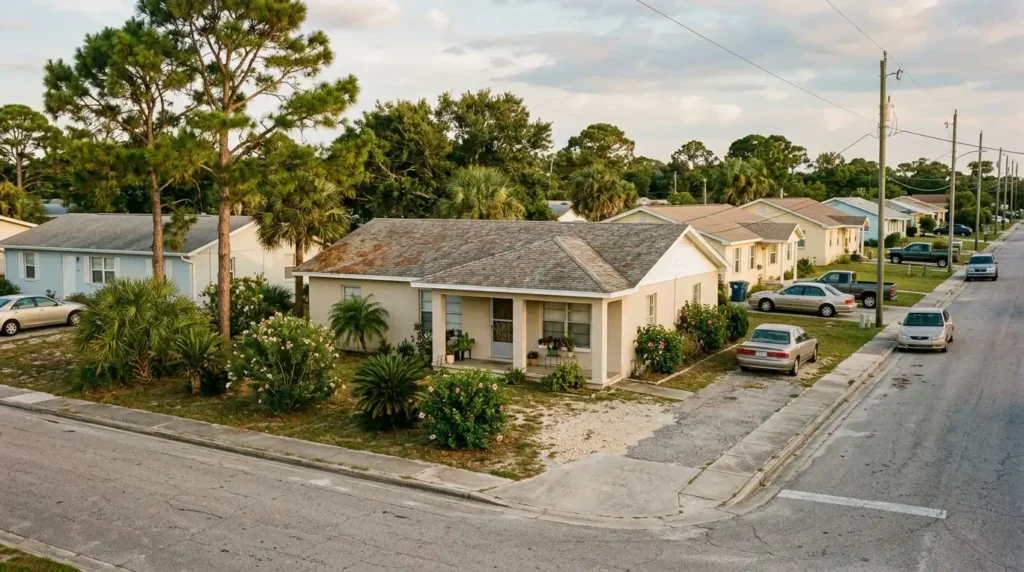
If your roof is getting up there in years and a Florida carrier has started asking questions, you are not imagining the pressure. Roof age is now one of the fastest ways a Fort Walton Beach or Niceville home goes from insurable to a problem, and it forces the same decision every time: replace the roof, or sell the house as-is.
The honest answer is that it depends on your numbers, not on a slogan. Replacing a sound roof can bring carriers back and let you list for top dollar. But if the roof is at the end of its life and the cash or the time is not there, selling as-is to a buyer who does not need insurance can net you more once you subtract what the repair would have cost.
This post lays out the rule Florida insurers actually follow on roof age, what an old roof does to your pool of buyers, and how to run the replace-or-sell math before anyone pressures you into a roof you may not need to pay for.
Key Takeaways
- 15 years is the line that matters. Florida law bars carriers from dropping you for roof age alone under 15 years, and gives you an inspection right once the roof is older.
- An old roof mostly blocks financed buyers, not cash buyers. The lender needs insurance the roof may prevent, so the deal dies in underwriting.
- Replacing pays off only sometimes. If the roof is the one issue and you have the money and the weeks, a new roof can requalify the home and lift the price.
- You can sell with the old roof on. A cash buyer prices the roof into the offer and closes without a new policy.
- Run the numbers before you sign a roofing contract. Sometimes the as-is offer beats the replace-then-list route after costs.
Table of Contents
- Why roof age decides whether Florida will insure your home
- What an old roof actually does to your sale
- Replace the roof, or sell as-is: your options
- How selling to Panhandle Real Estate Investments works
- Fort Walton Beach, Niceville, and Okaloosa County specifics
- Frequently asked questions
Why Roof Age Decides Whether Florida Will Insure Your Home
Florida draws a hard line at 15 years, and it is written into state law. Under Florida Statute 627.7011, an insurer may not refuse to issue or renew a homeowner’s policy solely because of the age of a roof that is less than 15 years old. So if your roof is on the younger side, age alone is not supposed to cost you coverage.
Once the roof reaches 15 years, the rules shift in the carrier’s favor. The same statute lets the insurer require a roof inspection before renewing, and it may decline coverage if the roof has less than five years of useful life remaining. If a licensed inspector says the roof has five or more years left, the carrier is not supposed to drop you on age alone. That single inspection often decides the whole question.

Why do carriers care so much about a roof on the Gulf Coast? Because wind is the risk that dominates their math here, and the roof is the part of the house that faces it first. An aging shingle roof, a failed four point inspection, or a weak wind mitigation report can all push a home out of the standard market, even when it looks perfectly sound from the street.
When the admitted carriers say no, there are still a few doors. Citizens Property Insurance is the state-backed insurer of last resort, and a surplus lines carrier may write what the standard market will not. If none of them will, the home is effectively uninsurable for a financed buyer, and the roof becomes the thing standing between you and a normal sale. That is the same reason investors stay in these deals, and it is worth understanding why we buy homes with roof, HVAC, and foundation problems the open market walks away from.
What an Old Roof Actually Does to Your Sale
The roof itself is rarely what kills a sale. The financing the roof blocks is. When a carrier will not write the home, it quietly removes most of your buyers, and here is the chain that makes that happen.
A lender requires hazard insurance before it will fund a mortgage. That is a condition of the loan, not a preference, and the Consumer Financial Protection Bureau explains why lenders require homeowners insurance to protect the property securing the loan. If the buyer cannot insure the roof, the buyer cannot get the loan, and the sale to that buyer is over.
That is what shrinks your buyer pool to almost nothing on the open market. Financed buyers, who make up most of it, hit a wall in underwriting the moment the carrier flags the roof. The buyer can be well qualified and the appraisal can come in fine, and the deal still dies because there is no policy for the lender to accept.
A cash buyer is the exception, because there is no lender in the deal setting an insurance condition. That is why an old roof narrows your sale to the cash market rather than ending it, and why the roof gets priced into an offer instead of ending the conversation.
Replace the Roof, or Sell As-Is: Your Options
You have three honest paths, and the right one depends on the roof’s condition and how much time and cash you want to put in before you sell.
Replace the roof, then list. If the roof is the only real issue and you have the money and the weeks, a new roof can bring carriers back and let you list on the open market for the highest price. The catch is real cost and real time, and your buyer still has to secure their own policy at closing.
List it as-is and hope for a cash buyer. You can put the home on the MLS with the old roof, but you are now fishing for the slice of the market that can pay cash, and financed offers will collapse in underwriting. This is slower and less certain, because most listing traffic is financed buyers who cannot actually close on it.
Sell directly to a cash buyer. A cash buyer does not need a new policy to close, so this removes the roof-and-insurance problem in one move. You trade some price for certainty and speed, and you skip the roof, the inspection, and the repairs. If your home is in Okaloosa County you can sell your Fort Walton Beach house as-is without putting a dollar into the roof first.
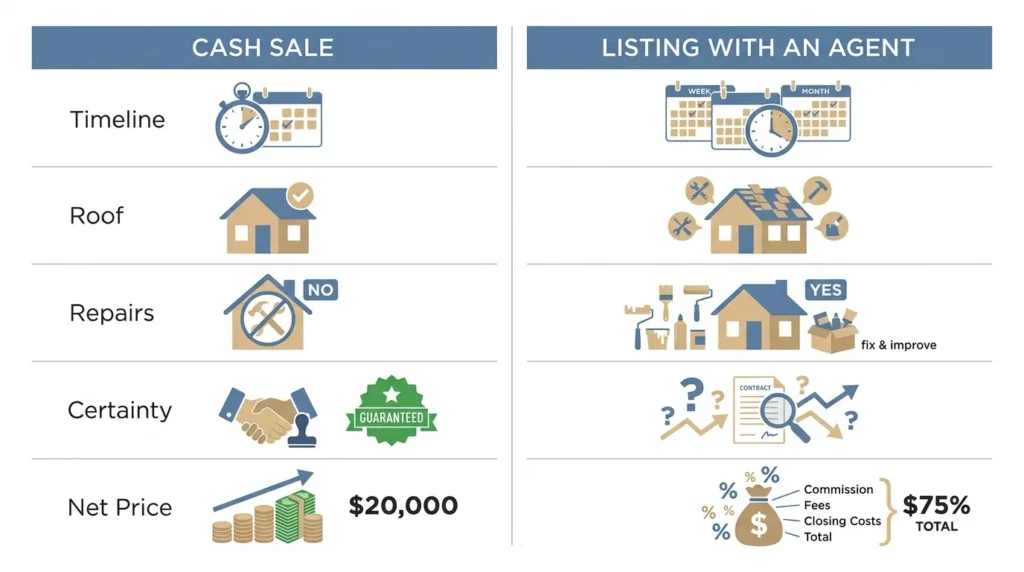
| Factor | Cash Sale (As-Is) | Listing With an Agent |
|---|---|---|
| Timeline | Often within a few weeks | Typically 60 to 120 days or more |
| Roof replacement | Not required, we buy with the old roof | Often required to satisfy the buyer’s insurer |
| Other repairs | None | Often needed to list and to pass inspection |
| Buyer pool | Cash buyers, roof age priced in | Mostly financed buyers whose lender needs a policy |
| Commissions | None | Typically 5 to 6 percent |
| Certainty of close | High | Subject to financing, insurance, inspection, appraisal |
| Net price | Below market, minus no repair bills | Closer to market, before the roof and costs |
For a side-by-side on the tradeoffs, we keep an honest cash offer versus agent listing comparison that lays it out without the sales spin. And because a full-price listing is not the same as a full-price net, it is worth reading why a lower offer sometimes nets more once you subtract a new roof, commissions, and months of carrying costs.
If you are staring at that decision right now, here is a short way to think it through.
Quick replace-or-sell decision guide
- Roof under 15 years old? A carrier cannot drop you for age alone, so insurability is probably not your real problem. Handle the smaller issue and list normally.
- Roof 15 or older but sound? Get the inspection the law entitles you to. If it shows five or more years of useful life, you can likely keep coverage and list without replacing.
- Roof near the end, and you have the cash and the weeks? Replacing can requalify the home and earn a top-of-market listing price. This is the path that pays off.
- Roof shot, and the cash or the time is not there? An as-is cash sale usually wins here, because you skip the roof, the inspection, and the wait, and a cash buyer closes without a new policy.
How Selling to Panhandle Real Estate Investments Works
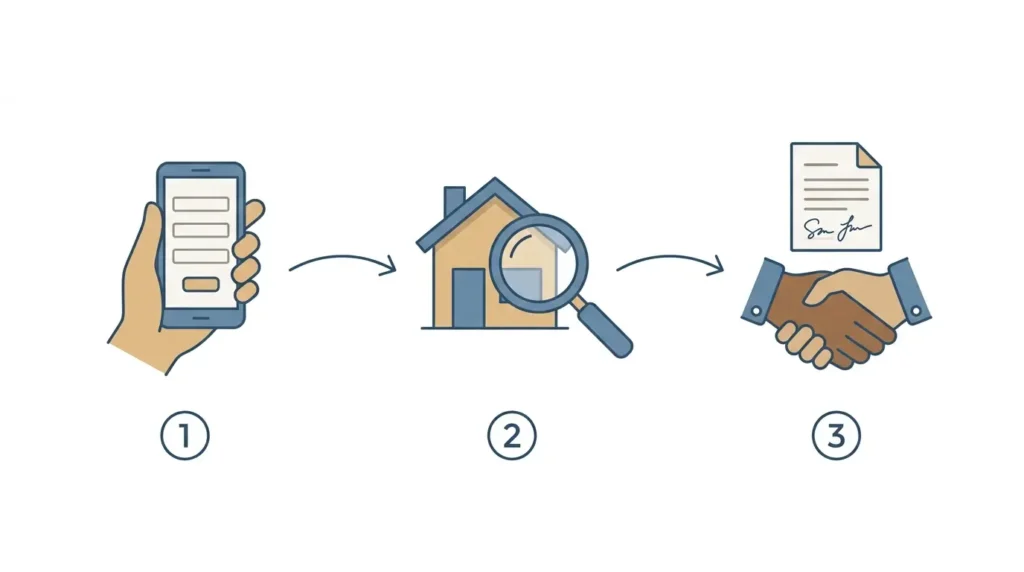
If a cash sale is the right exit, our process is short and there is no obligation to accept anything.
- Request an offer. Tell us about the home, the roof, and where things stand with your carrier. It takes a few minutes and there is no commitment.
- We look at the roof and the numbers. We estimate the roof and any other repairs and build them into a fair cash offer. That is exactly how repair costs factor into our offer, with the math shown, not hidden.
- Close on your timeline. If the offer works, we handle the paperwork and close when you are ready, with no new policy to secure, no agents, no fees, and no roof to replace.
Not every owner should sell to us. If the roof is your only issue and replacing it is affordable, listing may net you more, and we will tell you so plainly when it is true for your situation.
Fort Walton Beach, Niceville, and Okaloosa County Specifics
Okaloosa County carries the coastal wind exposure that makes carriers cautious about roofs, and Fort Walton Beach and Niceville both sit inside that risk zone. Older homes and homes closer to the water tend to see carriers tighten up first, so roof-age trouble shows up here more than it does well inland. It is a local pattern, not a personal one.
If you do decide to replace, a roof in Okaloosa County means a permit and an inspection through the Okaloosa County Building Department, which adds time and cost to the replace-then-list path. That timeline is part of the math, not a footnote to it.
It also means local cash buyers already understand these roofs. A shingle roof past its date or a home a carrier declined is not a deal breaker for an investor the way it is for a retail buyer. If you are weighing whether the insurance won’t cover old roof Florida problem is worth fixing or worth selling around, the cash market in Okaloosa County is the part of the market that stays open to you either way.
Frequently Asked Questions
How old can a roof be and still get insurance in Florida?
There is no single cutoff, but 15 years is the line that matters. Under Florida law, an insurer cannot refuse a policy solely because a roof is less than 15 years old. Once a roof passes 15 years, the carrier can require an inspection and may decline coverage if the roof does not have enough useful life left.
Will insurance cover a roof over 15 years old?
Sometimes, but the carrier gets to require proof first. For a roof at least 15 years old, Florida law lets the insurer ask for an inspection before renewing, and it may decline if the roof has less than five years of useful life remaining. If the inspection is good, age alone is not supposed to cost you the policy.
Is it worth replacing the roof before selling in Florida?
Only if the roof is the main thing between you and a normal sale, and you have the cash and the time. A new roof can requalify the home for standard coverage and a full-price listing. If the home has other issues, or you need to move quickly, the repair often does not pay for itself against an as-is offer.
Can I sell a Florida house with an old roof?
Yes. You can sell as-is with the existing roof, most often to a cash buyer who does not need a lender or a new insurance policy to close. A financed sale is harder, because the buyer’s lender will require coverage the old roof may block. Cash buyers price the roof into the offer instead of walking away.
Do cash buyers care about roof age?
They factor it in, but it does not scare them off. A cash buyer estimates the roof and other repairs and reflects that in the offer, then closes without needing insurance approval. That is the trade: a price that accounts for the roof, in exchange for a sale that does not collapse over insurability or financing.
An old roof narrows your sale, it does not end it. Whether you replace it and list, or sell as-is to a buyer who does not need a policy, the right move comes down to your numbers, and knowing the as-is value is the fastest way to see them clearly.
If you want to know what your Fort Walton Beach or Niceville home is worth as-is, old roof and all, we are happy to give you a straightforward answer. No obligation, no pressure. Request a cash offer from Panhandle Real Estate Investments.

About Panhandle Real Estate Investments
I’m Peyton Saluto, founder of Panhandle Real Estate Investments. For over seven years, I’ve helped homeowners across the Florida Panhandle find fair and stress-free ways to sell their homes—no repairs, no commissions, and no pressure. My goal is always to put people first and make a real difference in our communities by restoring distressed properties and rebuilding neighborhoods. If you’re thinking about selling, reach out for a no-obligation cash offer. I’d love the opportunity to help you find the best path forward.